On this page
Top picks at a glance
As an Amazon Associate I earn from qualifying purchases.
- 1
 Farm Plastic Supply White Shade Cloth 50%9.6/10View on Amazon
- 2
 ColourTree 70% Black Shade Cloth 10 x 10 ft with Grommets9.7/10View on Amazon
- 3
 90% White Shade ClothView on Amazon
- 4
 Farm Plastic SupplyView on Amazon
- 5
 VIVOSUN Mylar Film Black and White Panda FilmView on Amazon
- 6
 White 10 Mil Plastic SheetingView on Amazon
White vs black shade cloth comes down to diffusing light against blocking heat. Choose white shade cloth when you want to diffuse sunlight and keep the growing area cooler while still feeding plants plenty of light; choose black shade cloth when you want the strongest heat blocking and the cloth itself running hotter is acceptable. White reflects and scatters light, black absorbs it. The listings we reference below are all white cloths, so every figure here comes from the white side; the black side is explained from how the material behaves, without invented numbers.
Other options worth a look
 90% White Shade ClothCheck price on Amazon
 Farm Plastic SupplyCheck price on Amazon
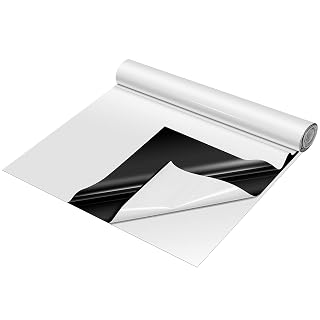 VIVOSUN Mylar Film Black and White Panda FilmCheck price on Amazon
 White 10 Mil Plastic SheetingCheck price on Amazon
GreenhouseGearHQ earns a commission when you buy through links on this page, at no extra cost to you. As an Amazon Associate I earn from qualifying purchases. Affiliate disclosure.
White shade cloth
White shade cloth reflects a share of incoming sunlight and diffuses the rest, so plants get softer, more even light with less leaf scorch. The Royal Shade white sail listing, 12 by 18 ft in 200 GSM HDPE, states 95% UV block, a 10-15 degree cooling effect against unshaded areas, and a 3-year warranty against UV degradation. The DECOHS white non-woven cloth, in 20 by 10 ft and 24 by 10 ft, is described as refracting full-spectrum white light so plants get balanced daylight while strong direct sun is blocked. White options in the listings span shade levels: Mizelu lists 60% shading white cloth in 9.9 by 6.6 ft and 9.9 by 9.9 ft, while Kynthyre lists 90% white shade cloth in 6.6 by 10 ft and 3.3 by 6.6 ft. Because white reflects rather than absorbs, the cloth itself stays cooler, which matters inside a greenhouse where the cloth hangs close to the plants.
Black shade cloth
Black shade cloth absorbs sunlight instead of reflecting it. That makes it the stronger heat blocker at a given weave density: more of the sun’s energy stops at the cloth rather than passing through as light or reflected glare. The trade is that the absorbed energy becomes heat in the cloth itself, which then radiates downward and warms the air beneath. In an open, breezy structure that heat dissipates; in a closed greenhouse with the cloth hung low over plants, it can add warmth exactly where you wanted less. No black cloth figures appear in the reference listings, so treat any claimed percentage for black as unverified unless the listing you buy states it. Choose black where maximum shading matters most and airflow can carry the absorbed heat away; avoid hanging it tight and low over heat-sensitive plants in still air.
White vs black shade cloth: head to head
| Aspect | White shade cloth | Black shade cloth |
|---|---|---|
| Light behaviour | Reflects and diffuses; DECOHS states full-spectrum refraction | Absorbs; stronger blocking at equal density |
| Cloth temperature | Stays cooler by reflecting sunlight | Runs hotter; radiates heat downward |
| Cooling claim | Royal Shade white states 10-15 degrees cooler | No figure in the listings |
| UV block stated | 95% (Royal Shade); 90% (Kynthyre) | No figure in the listings |
| Shade levels listed | 60%, 90%, 95% options | No figure in the listings |
| Best setting | Greenhouses and close-over-plant hanging | Open structures with good airflow |
Every figure in the white column comes from the reference listings; the black column is left without numbers because no black listings were provided.
Which should you buy?
Buy white if
- You grow inside a greenhouse where the cloth hangs near the plants and a cooler cloth matters.
- You want diffused, even light rather than deep shade; the listings offer 60%, 90% and 95% white options.
- You like the stated figures: Royal Shade white claims 95% UV block with 10-15 degrees of cooling and a 3-year warranty.
Buy black if
- You need the strongest heat blocking and have open, breezy conditions to carry absorbed heat away.
- The cloth hangs high or outside the structure, where its radiated heat never reaches the plants.
- You accept that no black-side figures are verified here; buy from a listing that states its own shade percentage.
Hanging it right
Whichever colour you choose, the listings agree on the mechanics: grommets or stainless D-rings at the corners, rope or hooks to structure, and tension without sagging. The Royal Shade listing advises a 0.5 to 2 ft gap between D-rings and poles for cable connections, and curved edges that keep the sail tight. The DECOHS cloth states it can be cut to the required length and hung above plants or over a frame, secured with weight or rope. Leave an air gap between the cloth and the greenhouse roof or the plants wherever possible; moving air is what carries heat away, and it matters twice as much under black cloth.
In the Greenhouse
- Match shade level to crop: the listings show 60%, 90% and 95% white options; heat-sensitive plants want the higher end.
- Hang high: more air between cloth and plants means better cooling, especially with black cloth.
- Tension it well: sagging cloth pools water and flaps in wind; use the corner hardware and keep it taut.
- Check the warranty: the Royal Shade white sail states a 3-year warranty against UV degradation; ask other sellers for theirs.
FAQ for growers
Does white or black shade cloth cool better?
White, in the figures available: the Royal Shade white sail states 10-15 degrees of cooling, and white reflects sunlight so the cloth itself stays cooler. Black blocks strongly but runs hotter; no black cooling figure appears in the listings.
What shade percentage should I get?
The white listings show 60% (Mizelu), 90% (Kynthyre) and 95% UV block (Royal Shade). Higher percentages suit heat-sensitive plants; lower ones suit crops that still want strong light.
Can shade cloth be cut to size?
The DECOHS white cloth states it can be cut to the required length, and Royal Shade offers custom sizes. Cut edges may need hemming to stop fraying.
Keep reading
See every shade cloth guide and all seed starting guides. Also see our best shade cloth for greenhouse roof.
More picks: shade cloth for greenhouse roof, shade cloth for growing vegetables, shade cloth for succulent garden and shade cloth.