On this page
Top picks at a glance
As an Amazon Associate I earn from qualifying purchases.
- 1
 HiThrive 4-3-6 Fertilizer9.6/10View on Amazon
- 2
 Tujoe 4-Pack Drip Ring9.5/10View on Amazon
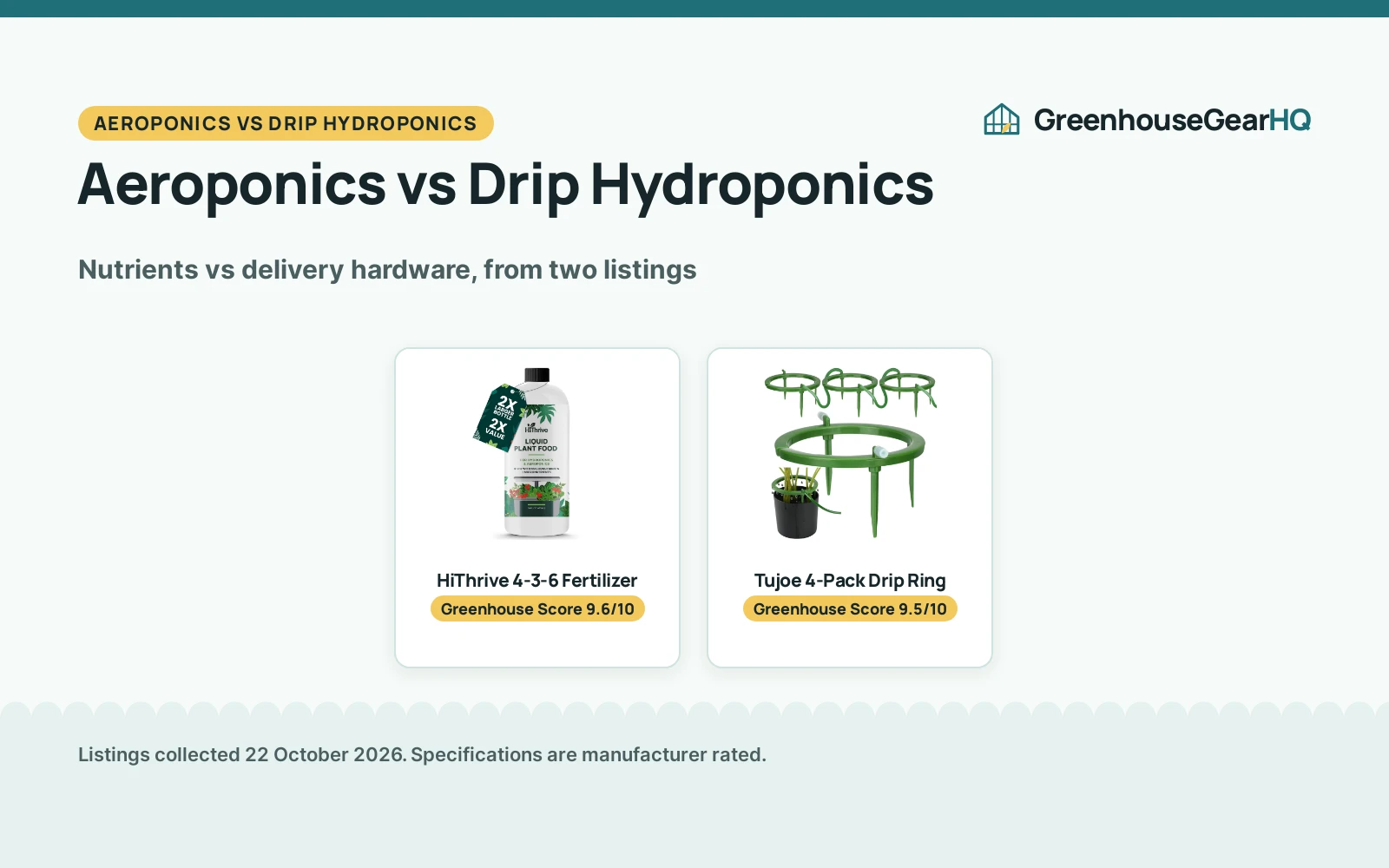
Late winter is seed-starting season, and the reservoir is the first thing to get right: what feeds the plants, and how the feed reaches them. That split is the heart of aeroponics vs drip hydroponics, two soilless growing methods that differ in how nutrients meet the plants. This guide compares two listings that show the divide concretely: a HiThrive 4-3-6 liquid fertilizer for reservoir systems, and a Tujoe 4-pack drip ring that meters water to each plant.
GreenhouseGearHQ earns a commission when you buy through links on this page, at no extra cost to you. As an Amazon Associate I earn from qualifying purchases. Affiliate disclosure.
Quick verdict: choose the aeroponics-style feed if your grow centers on a reservoir with liquid nutrients mixed to a stated ratio. Choose the drip hardware if you want rings that deliver water to each plant’s media and can be cleaned between cycles. The listings do not overlap: one states feed, the other states delivery.
Two examples

HiThrive 4-3-6 Fertilizer
A 16 oz liquid fertilizer with a 4-3-6 NPK formula, mixed at 5 ml per quart every 2 weeks for up to 48 feedings.
Pros
- 4-3-6 NPK ratio with essential micronutrients stated
- Up to 48 feedings per 16 oz bottle
- Mix ratio stated: 5 ml per quart or per 3 pods
- Works for indoor and outdoor growing systems
Cons
- No warranty term is stated
- Only the 16 oz size has detailed figures
- No safety certification is stated
- Every 2 weeks is the only interval stated
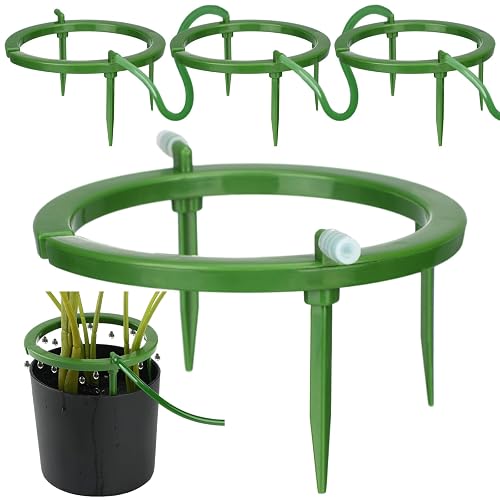
Tujoe 4-Pack Drip Ring
A 4-pack of 5 inch drip rings with 1/8 inch barbed inlets and 3 removable stakes each, for controlled watering in soil or hydroponics.
Pros
- 4 ring sets with 3 removable stakes each
- 1/8 inch barbed inlet fits most hose sizes, per the listing
- Adjustable height to suit watering needs
- Cleans easily between growing cycles
Cons
- Ball valves may be needed for uniform flow in large installations
- No warranty term is stated
- No flow rate is stated
As an Amazon Associate I earn from qualifying purchases.
Other options worth a look
 36 Site Aeroponic Cloning Machine. Expect 100% Success Rates!Check price on Amazon
 90 PCS Micro Sprayer Fan Jet Hydroponic Aeroponic MistersCheck price on Amazon
 Viagrow® Clone Machine 24-Site Plastic Aeroponic HydroponicCheck price on Amazon
 25 Site Aeroponic Cloning Machine Expect 100% Success RatesCheck price on Amazon
 Aeroponic Cloner Machine 24 Site for Cuttings Rooting Using 2Check price on Amazon
 Clone Machine 96 SiteCheck price on Amazon
Aeroponics vs drip hydroponics: side by side
| Product | Greenhouse Score | Side | Type | Key figure | Count | Warranty |
|---|---|---|---|---|---|---|
| HiThrive 4-3-6 Fertilizer | 9.6/10 | Aeroponics | Liquid fertilizer | 4-3-6 NPK, 16 oz | Up to 48 feedings | Not stated |
| Tujoe 4-Pack Drip Ring | 9.5/10 | Drip hydroponics | Drip ring set | 5 inch ring, 1/8 inch inlet | 4 sets | Not stated |
Size and build specs are the manufacturer’s ratings as published on each listing, gathered 22 October 2026. A figure from one listing describes that listing only; the two cover different jobs, so direct spec-for-spec wins are rare.
How to choose: aeroponics vs drip hydroponics
What each listing actually is
The HiThrive is a 16 oz liquid fertilizer with a 4-3-6 NPK formula, mixed at 5 ml per quart of water or per 3 growing pods every 2 weeks, with up to 48 feedings per bottle. The Tujoe is a 4-pack of plastic and rubber drip rings, each about 5 inches wide with a 1/8 inch barbed inlet fitting and 3 removable stakes, sized at 6.1 x 5.91 x 1.97 inches and 0.12 kg. One listing feeds; the other waters. That is the divide in miniature: reservoir growing lives or dies on the nutrient mix, while drip growing lives or dies on even delivery to the media.
Delivery and control
The Tujoe rings promise consistent, controlled delivery of water to the plants, with stakes that adjust height to suit watering needs. The listing notes that ball valves may need adding for uniform flow in large installations, and says the rings clean easily between growing cycles. The HiThrive promises feeding upon application, with nitrogen for greener plants, potassium for stress resilience and phosphorus for robust roots, per the maker. Neither listing states a flow rate, a pressure figure or a coverage count, so delivery claims rest on the makers’ descriptions.
| Listing | Side | What it is | Key stated figure |
|---|---|---|---|
| HiThrive 4-3-6 Fertilizer | Aeroponics | Liquid plant food | 4-3-6 NPK, 16 oz, up to 48 feedings |
| Tujoe 4-Pack Drip Ring | Drip hydroponics | Drip emitter ring set | 5 inch ring, 1/8 inch barbed inlet |
Care between growing cycles
The Tujoe rings work for indoor houseplants or outdoor gardens, in soil or hydroponics, per the listing. The HiThrive mixes fresh every 2 weeks. Neither listing states a warranty term. For a fuller tour of system types, see the NFT vs drip hydroponics comparison and the hydroponics vs soil gardening guide.
How the scoring works
| Product | Greenhouse Score | Perf. /35 | Build /25 | Value /25 | Safety /10 | Warranty /5 |
|---|---|---|---|---|---|---|
| HiThrive 4-3-6 Fertilizer | 9.6 | 28 | 20 | 20 | n/a | 0 |
| Tujoe 4-Pack Drip Ring | 9.5 | 26 | 20 | 19 | n/a | 0 |
Greenhouse Scores use 9.2 as the lowest value and 9.8 as the highest, with weighted points placed between them in proportion. More points always earns more score. Safety applies only to powered equipment or to listings that name safety features; for other items the scale is 90 points.
The Greenhouse Score weighs performance (stated nutrient formula and feed counts, or stated delivery features), build (materials and construction), value for the stated specs, safety and warranty. For these products, safety means stated certifications or safety-relevant features; neither listing states one, so both score zero on safety. Neither listing states a warranty term either. How we pick explains the weights.
Which should you choose?
Choose the aeroponics-style feed if your system runs on a reservoir and you want a stated 4-3-6 formula with a measured mix. Choose the drip rings if you water individual plants in media and want hardware you can stake, adjust and clean between cycles. The two do not compete: a reservoir feed and delivery rings serve different jobs in the same greenhouse.
In the Greenhouse
- Mix the HiThrive at 5 ml per quart of water, or per 3 growing pods, every 2 weeks.
- Stake each Tujoe ring with its 3 removable stakes and set the height to suit watering needs.
- Clean the rings between growing cycles, as the listing describes.
- The 16 oz HiThrive bottle covers up to 48 feedings; the Tujoe pack holds 4 rings.
FAQ for growers
Does the same fertilizer work for aeroponics and drip systems?
The HiThrive listing names both aeroponics and hydroponics, with a 4-3-6 NPK ratio mixed at 5 ml per quart every 2 weeks.
How many plants do the Tujoe rings cover?
The pack holds 4 rings, each about 5 inches wide; plant counts are not stated.
What size are the drip rings?
The title and bullets say 5 inches with a 1/8 inch barbed inlet. The spec table prints 9 inch, which does not match, so trust the title and bullets.
Do these listings state a warranty?
Neither listing states a warranty term.
Keep reading
See every hydroponic system guide and all indoor growing guides.
More picks: NFT vs drip hydroponics, hydroponics vs soil gardening, hydroponic systems for apartments.