On this page
Top picks at a glance
As an Amazon Associate I earn from qualifying purchases.
- 1
 Garvee 8x12 FT Greenhouse with Aluminum Frame9.6/10View on Amazon
- 2
 WUKHG 8x14FT Aluminum Greenhouse with Polycarbonate Panels9.6/10View on Amazon
- 3
 6 x 4 Ft Lean-to GreenhouseView on Amazon
- 4
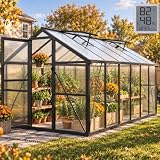 8X12FT Greenhouse with ThermometersView on Amazon
- 5
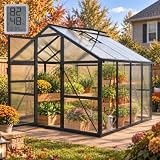 8X8FT Greenhouse with ThermometersView on Amazon
- 6
 Garvee 6x8 FT GreenhouseView on Amazon
- 7
 10X12FT Greenhouse with ThermometerView on Amazon
A cold snap over the first seed trays is the moment a greenhouse earns its keep, and the aluminum vs fiberglass greenhouse question is really a question about frame material, panels and anchoring. On the greenhouses compared here, aluminum frames carry the stated wind and snow figures, with polycarbonate panels and adjustable roof vents, while no fiberglass-framed model is compared here, so a fiberglass choice has to be judged on the same stated figures. The greenhouses below are all aluminum-framed walk-in models with polycarbonate panels, in sizes from 6×8 ft to 8×16 ft.
Other options worth a look
 6 x 4 Ft Lean-to GreenhouseCheck price on Amazon
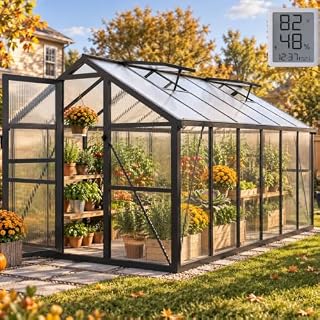 8X12FT Greenhouse with ThermometersCheck price on Amazon
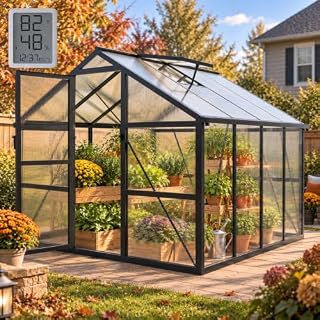 8X8FT Greenhouse with ThermometersCheck price on Amazon
 Garvee 8x12 FT GreenhouseCheck price on Amazon
 Garvee 6x8 FT GreenhouseCheck price on Amazon
 10X12FT Greenhouse with ThermometerCheck price on Amazon
GreenhouseGearHQ earns a commission when you buy through links on this page, at no extra cost to you. As an Amazon Associate I earn from qualifying purchases. Affiliate disclosure.
What the frame material decides
Frame material decides how a greenhouse stands up to wind and snow and how it is anchored. Panels decide light and heat: the listings here state polycarbonate panels with stated UV figures and stated sunlight transmission. Vents and doors decide airflow and access, and size decides how much growing room fits the plot. The table below sets out the listings on those stated figures.
| Greenhouse | Size | Panels | Vents | Stated wind or snow |
|---|---|---|---|---|
| Outsunny 11×6 | 11×6 ft | Polycarbonate, UPF 50+ | Two roof vents, five positions | Level 8 winds, snow loads up to 12.3 lb/ft² |
| HOPETANA 8×16 | 8×16 ft | 4 mm twin-wall polycarbonate | Adjustable roof vents | Not stated |
| Jocisland 8×10 | 8×10 ft | 4mm polycarbonate | 2 top windows | Not stated |
| Esimote 6×8 | 6×8 ft | Polycarbonate | Roof vent, 5 levels | Not stated |
The greenhouses compared
Outsunny 11×6. The listing states a rust-resistant powder-coated aluminum alloy frame with diagonal support poles, UPF 50+ panels allowing 90% sunlight transmission, two roof vents with five adjustable positions, a swing door and dimensions of 131.5 inches x 66.5 inches x 76.8 inches. The listing states that the greenhouse withstands Level 8 winds and snow loads up to 12.3 lb/ft², and lists a weight of 87.0 pounds. This suits a grower who wants the strongest stated wind and snow figures here.
HOPETANA 8×16. The listing states an aluminum alloy frame with rust-resistant connectors and reinforced corners, 4 mm twin-wall polycarbonate panels, adjustable roof vents and a lockable door. The greenhouse measures 189.7 inches x 97.2 inches x 80.7 inches and lists a weight of 168.0 pounds. This suits a grower who wants the largest growing space here.
Jocisland 8×10. The listing states an aluminum frame greenhouse with quick connectors and triple-lock joints for tool-free installation, 4mm panels blocking 99.99% UV rays, dual windows, a gable roof and roof channels that drain rainwater. The listing states that two people can assemble the greenhouse in 2-3 hours. The spec table lists inch dimensions that do not match the 8×10 ft title size, so this guide follows the title and bullets. This suits a grower who wants a stated UV figure with quick connectors.
Esimote 6×8. The listing states reinforced aluminum frames with reinforced side walls and base, an adjustable roof vent with 5 levels, a lockable door with a robust metal handle and dimensions of 95.4 inches x 70.9 inches x 77.2 inches. The door size is 22.6 inches x 60.2 inches and the roof vent size is 23.5 inches x 19.7 inches. This suits a grower who wants the smallest footprint here with a lockable door.
Aluminum vs fiberglass greenhouse: how to choose
Frame and anchoring
The Outsunny listing states a rust-resistant powder-coated aluminum alloy frame with diagonal support poles, and states that the greenhouse withstands Level 8 winds and snow loads up to 12.3 lb/ft². The HOPETANA listing states an aluminum alloy frame with rust-resistant connectors and reinforced corners, and states that the greenhouse should be anchored to the ground before use. The Esimote listing states reinforced aluminum frames with reinforced side walls and base, and states that the footing should be anchored in soil or concrete. The Jocisland listing states cross beams, top braces and corner supports with ground stakes and bolts, and states that stakes or bolts on concrete hold the greenhouse in place. A fiberglass-framed listing has to be read the same way: check the stated frame material, the stated wind figure and the stated anchoring instruction before comparing it with an aluminum frame. See the aluminum vs polycarbonate greenhouse comparison.
Panels and light
The Outsunny listing states UPF 50+ panels allowing 90% sunlight transmission while helping retain warmth. The Jocisland listing states 4mm panels blocking 99.99% UV rays, retaining warmth and providing light transmission for year-round planting. The HOPETANA listing states 4 mm twin-wall polycarbonate panels letting sunlight through while providing insulation and UV protection, helping plants through winter cold and summer sun. The Esimote listing states polycarbonate construction with reinforced aluminum frames, but states no panel thickness. For a fiberglass panel, compare the same stated figures: panel thickness, stated light transmission and stated UV protection, rather than the frame name alone. See the fiberglass vs polycarbonate greenhouse comparison.
Vents, doors and drainage
The Outsunny listing states two roof vents with five adjustable positions and a swing door with improved sealing and a rotating handle. The Jocisland listing states dual windows for airflow, a gable roof that prevents water buildup and roof channels that drain rainwater. The HOPETANA listing states adjustable roof vents and a lockable door. The Esimote listing states an adjustable roof vent with 5 levels and a lockable door with a robust metal handle. The Esimote listing states built-in drainage channels only for other sizes in the line, 8x14ft and 10x12ft, so drainage for this size is not stated.
Size and assembly
The Outsunny greenhouse lists dimensions of 131.5 inches x 66.5 inches x 76.8 inches, a door size of 22.8 inches x 60.6 inches and a weight of 87.0 pounds. The HOPETANA greenhouse lists dimensions of 189.7 inches x 97.2 inches x 80.7 inches and a weight of 168.0 pounds. The Jocisland greenhouse is 8×10 ft, with quick connectors and triple-lock joints for tool-free installation, and the listing states that two people can assemble it in 2-3 hours. The Esimote greenhouse lists dimensions of 95.4 inches x 70.9 inches x 77.2 inches, a door size of 22.6 inches x 60.2 inches and a roof vent size of 23.5 inches x 19.7 inches.
What this guide does not cover
This guide does not state fiberglass frame figures, because no fiberglass-framed listing is compared here. Check a fiberglass listing for the same stated figures: frame material, panel thickness, wind figure, vent count and warranty. This guide also does not give pesticide, herbicide, fungicide or fertilizer dosing instructions; follow the product label and the local extension office.
FAQ for growers
Is an aluminum frame greenhouse strong in wind?
The Outsunny listing states Level 8 winds and snow loads up to 12.3 lb/ft². The HOPETANA listing states reinforced corners and added wind resistance, with anchoring before use. The Jocisland and Esimote listings state ground stakes, bolts or anchored footings rather than a wind figure.
What panels do the greenhouses compared here use?
Each listing here uses polycarbonate panels. The Outsunny panels are UPF 50+ with 90% sunlight transmission. The Jocisland panels are 4mm, blocking 99.99% UV rays. The HOPETANA panels are 4 mm twin-wall. The Esimote listing states polycarbonate construction with no panel thickness stated.
How big are the greenhouses compared here?
The Outsunny greenhouse is 11×6 ft. The Jocisland greenhouse is 8×10 ft. The HOPETANA greenhouse is 8×16 ft. The Esimote greenhouse is 6×8 ft.
Do these greenhouses need anchoring?
The HOPETANA listing states that the greenhouse should be anchored to the ground before use. The Esimote listing states that the footing should be anchored in soil or concrete. The Jocisland listing states that stakes or bolts on concrete hold the greenhouse in place.
Keep reading
See every greenhouses guide.
More picks: walk-in greenhouses, polycarbonate greenhouses and roof vents vs side vents.