On this page
Top picks at a glance
As an Amazon Associate I earn from qualifying purchases.
- 1
 Garvee 8x12 FT Greenhouse with Aluminum Frame9.6/10View on Amazon
- 2
 Outsunny Raised Garden Bed9.6/10View on Amazon
- 3
 Baboni Pet Door for Wall9.2/10View on Amazon
- 4
 Garvee 6x10 FT GreenhouseView on Amazon
- 5
 Year Round Cold Frame Brand: JUWELView on Amazon
- 6
 GIANTEX Wood Cold Frame with Flip-Top RoofView on Amazon
- 7
 Garden Cold Frame Greenhouse ClocheView on Amazon
- 8
 MCombo Wooden Cold Frame Garden Greenhouse Flower Planter 0160View on Amazon
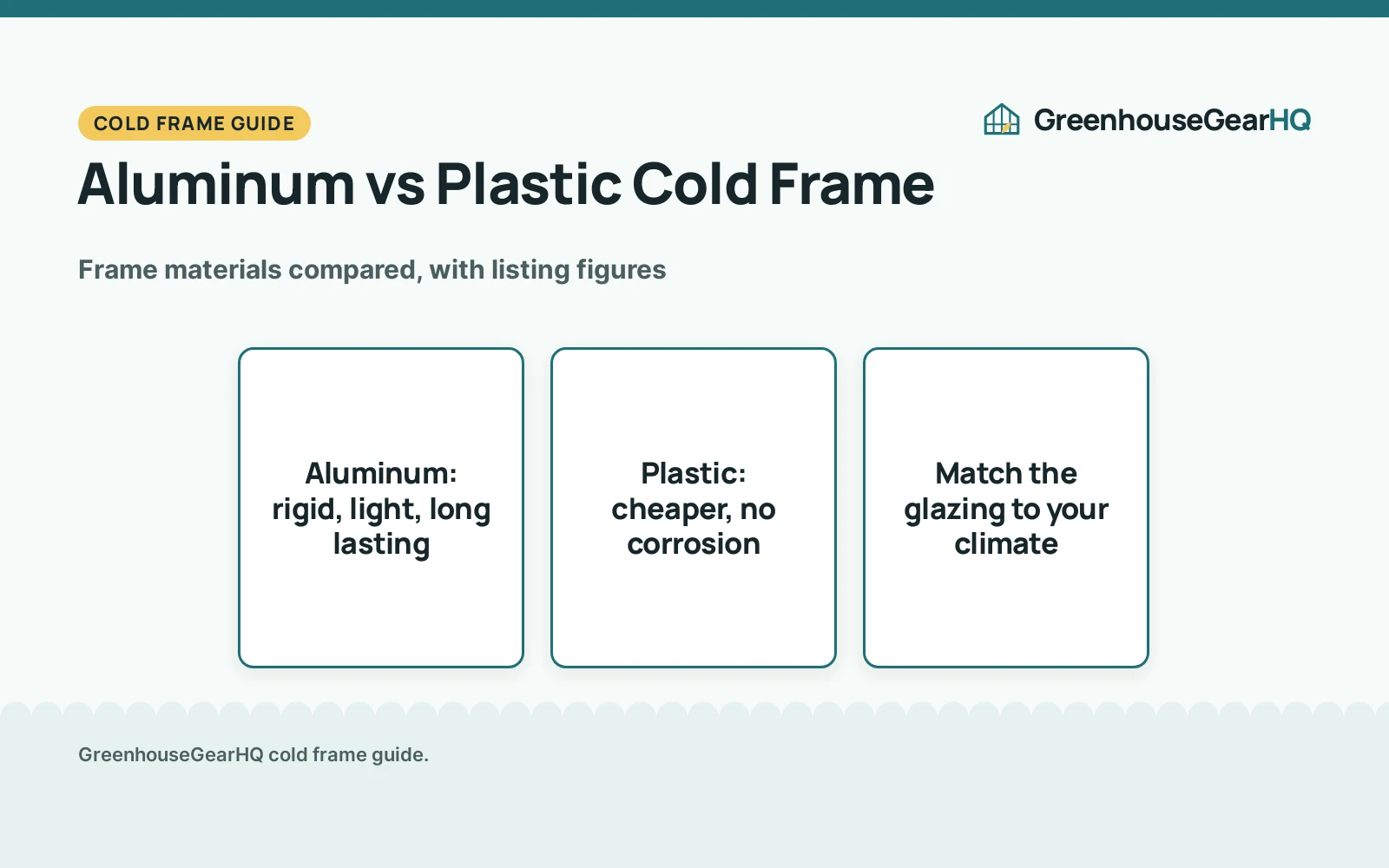
Aluminum vs plastic cold frame comes down to the frame material: aluminum frames are lighter, resist rot and hold glazing panels in a rigid structure, while plastic frames are cheaper, simpler and immune to corrosion. The glazing matters as much as the frame, so the right choice depends on your climate, your budget and how often you plan to move it.
Other options worth a look
 Garvee 6x10 FT GreenhouseCheck price on Amazon
 Year Round Cold Frame Brand: JUWELCheck price on Amazon
 GIANTEX Wood Cold Frame with Flip-Top RoofCheck price on Amazon
 Garden Cold Frame Greenhouse ClocheCheck price on Amazon
 MCombo Wooden Cold Frame Garden Greenhouse Flower Planter 0160Check price on Amazon
GreenhouseGearHQ earns a commission when you buy through links on this page, at no extra cost to you. As an Amazon Associate I earn from qualifying purchases. Affiliate disclosure.
Aluminum vs plastic cold frame: which should you buy?
Buy an aluminum frame if you want a rigid structure that holds polycarbonate panels square, survives winters and moves easily: the Zenport folding aluminum cold frame lists 8 lbs per unit. Buy a plastic frame if you want the lowest cost and zero corrosion, and you accept a less rigid box. If you only need a season of protection for seedlings, plastic is enough; if you want a frame that lasts for years, aluminum earns its price.
The differences at a glance
| Aspect | Aluminum frame | Plastic frame |
|---|---|---|
| Weight | Light: the Zenport folding aluminum cold frame lists 8 lbs | Varies; plastic boxes can be light or bulky |
| Rigidity | Rigid; holds panels square in wind | Less rigid; can flex under load |
| Weather resistance | No rot; aluminum frames pair with polycarbonate glazing | No rot or corrosion; glazing quality varies |
| Snow and wind | Aluminum greenhouse frames list ratings like 110 lbs per sq ft of snow load and 56 mph wind | Rarely rated for snow or wind |
| Cost | Higher | Lower |
| Lifespan | Long with intact glazing | Shorter; plastic can degrade in sun |
Weight and portability
Aluminum cold frames are light enough to move with the season. The Zenport folding aluminum cold frame lists 8 lbs, the JUWEL cold frame lists 17.0 lbs, and the Outsunny cold frame at 35.5 by 22.5 by 38.25 in lists 19 lbs. That makes repositioning for sun or wind a one-person job. Plastic cold frames are often light too, but their bulk and flex can make carrying awkward, and a folding aluminum frame packs flatter for storage.
Strength and weather
This is where aluminum pulls ahead. Aluminum frame structures carry published ratings: the Garvee aluminum frame lists over 110 lbs per sq ft of snow load, and the AMERLIFE greenhouse lists 56 mph wind resistance. A rigid aluminum frame holds polycarbonate glazing square so panels do not pop out in gusts. Plastic frames rarely publish snow or wind ratings, and a heavy wet snow or a strong gust is where they fail first. If your winters are harsh, anchor the frame and choose the rigid option.
Cost and lifespan
Plastic cold frames cost less up front and never corrode, which makes them a fair pick for a single season of hardening off seedlings. Aluminum frames cost more but last longer: the metal does not rot, and polycarbonate glazing outlasts thin plastic film. Over several seasons the aluminum frame usually wins on cost per year, since you replace glazing, not the frame. See how glazing compares in our wood vs polycarbonate cold frame guide.
Which one should you buy?
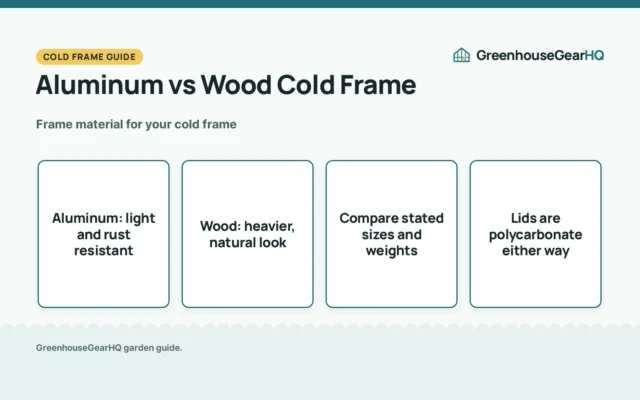
Choose aluminum if you want a cold frame that holds its shape in wind and snow, moves at 8 to 19 lbs, and lasts for years. Choose plastic if the budget is tight, the frame stays in a sheltered spot, and you accept replacing it sooner. Either way, match the glazing to your climate: polycarbonate insulates better than thin film. For frame pairings, see our aluminum vs wood cold frame guide.
FAQ for growers
Is aluminum or plastic better for a cold frame?
Aluminum is more rigid and longer lasting, with published snow and wind ratings; plastic costs less and never corrodes.
How heavy is an aluminum cold frame?
The Zenport folding aluminum cold frame lists 8 lbs, the JUWEL lists 17.0 lbs, and the Outsunny 35.5 in model lists 19 lbs.
Will a plastic cold frame survive winter?
Plastic frames rarely carry snow or wind ratings, so they suit sheltered spots and mild winters better than exposed sites.
Keep reading
See every mini greenhouses guide and all greenhouses guides.
More picks: hoop house vs cold frame, garden cloche vs cold frame, cold frame vs hotbed, heaters for cold frames.