On this page
Top picks at a glance
As an Amazon Associate I earn from qualifying purchases.
- 1
 Gentingbro Lean-to Greenhouse with Roll-Up Zippered Door9.4/10View on Amazon
- 2
 Backyard Discovery Zalie 11 x 7 Ft Cedar Walk-In Greenhouse9.7/10View on Amazon
- 3
 Garvee 6x10 FT Polycarbonate Greenhouse9.6/10View on Amazon
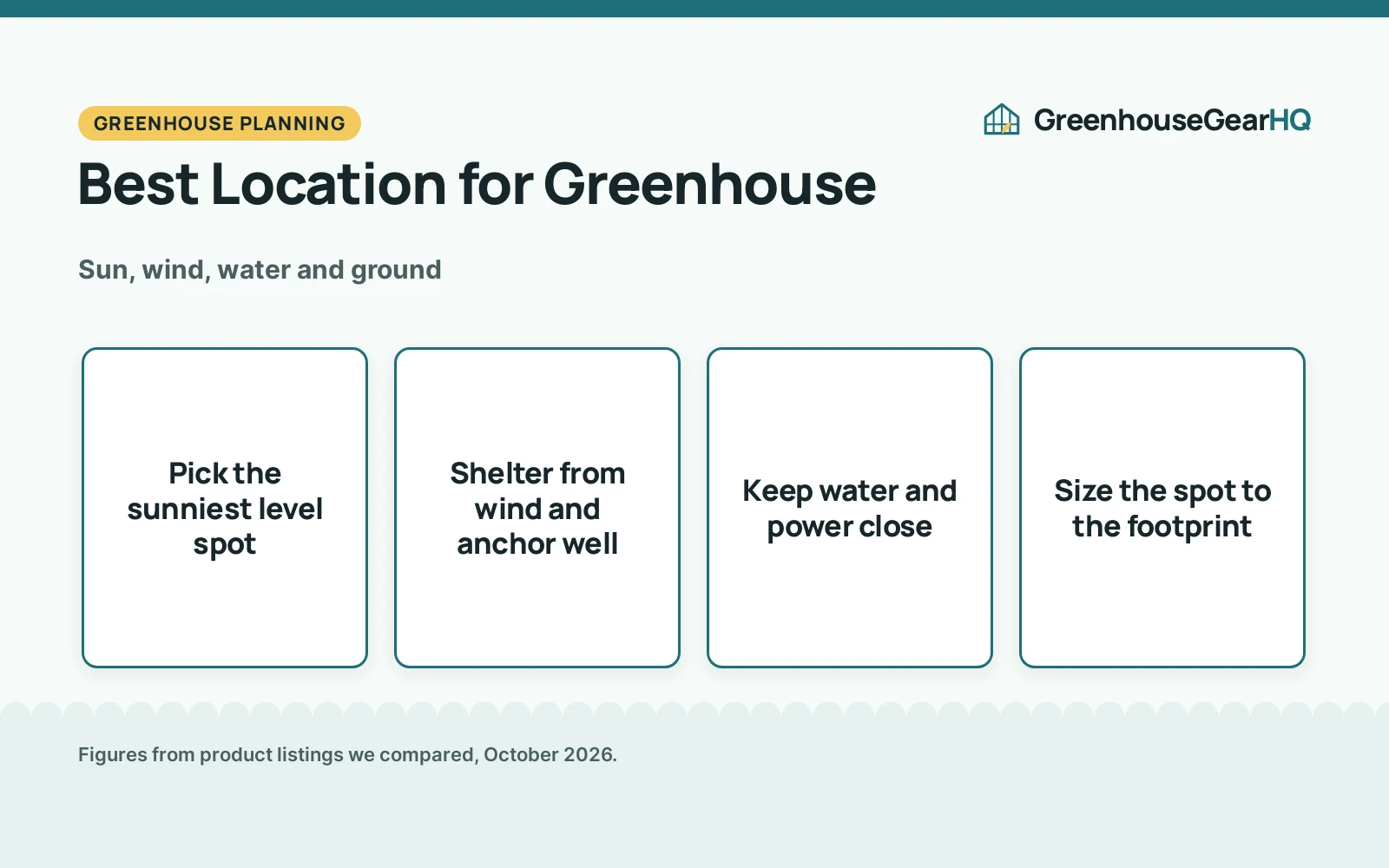
The best location for a greenhouse is a level spot that gets the most sun available, sits close to water and power, and is sheltered from the strongest wind. That single decision affects light, temperature, watering effort and how well the structure survives storms. This guide walks through each factor step by step. Where a number appears, it comes from a product listing we compared, and we name the listing so you can check it.
GreenhouseGearHQ earns a commission when you buy through links on this page, at no extra cost to you. As an Amazon Associate I earn from qualifying purchases. Affiliate disclosure.
What is the best location for greenhouse growing?
The short answer: a level, well-drained spot with the most sun on the property, shelter from the strongest wind, and water and power within easy reach. The sections below break down each factor so you can judge your own yard against it.
Start with sunlight
Sunlight is the reason for the structure, so it comes first. Pick the brightest spot on the property and watch it through the day: morning sun warms the house early, and all-day sun shortens the heating season. Keep the house clear of tree shade, because covers already cut light. The Bamworld mini greenhouse (on Amazon) lists an 85% light transmission PE cover, which means 15% of light is lost before it reaches the plants; starting from full sun matters. If the only open spot is small, a lean-to works: the Gentingbro lean-to (on Amazon) at 79 by 31 by 59 inches is designed to sit against a wall, fence or shed and still catch the sun.
Shelter from wind, and anchor for it
Wind is the main structural threat. A fence, hedge or building on the windward side takes the edge off, but the house still needs anchoring. The Backyard Discovery Zalie (on Amazon) is rated to withstand winds up to 100 mph when anchored as its manual specifies, and it carries up to 30 inches of snow load. Smaller houses anchor differently: the Gentingbro includes 4 wind ropes and 4 ground stakes, the Garvee 6×10 (on Amazon) includes 4 reinforced ground nails, and the Ruelyn 6×4 offers three anchoring options: buried in soil, bolted to concrete, or screwed to wooden planks. Whatever the kit includes, use all of it.
Keep water and power close
Hauling water gets old fast, so site the house near a hose. The Backyard Discovery Zalie includes exterior and interior hose hook-ups for this reason. Power matters too: the Zalie’s PowerPort adds 3 electrical outlets and 3 USB ports for accessories, and indoor setups like the CARPATHEN 4-tier (on Amazon) run 4 LED strips plus 2 heat mats, which need an outlet nearby. A long extension cord across the yard is a trip hazard and a chore; plan the route before assembly.
Pick level ground with drainage
The ground must be level so doors close and panels sit square. Grass works if it is flat, but a gravel or paver base drains better and keeps the interior cleaner. The PHONDIKO 10x7x7 has an extended base designed to be secured with stones or sandbags, which adds both stability and insulation at the ground line. The Gardzen 36 by 36 by 59 inch mini includes a removable waterproof floor mat for the same reason: keeping ground moisture where it belongs.
Match the spot to the footprint
Measure the actual kit, not the headline size. The Garvee 6×10 is 120 by 72 inches at the base, the Zalie is an 11 by 7 foot house with 86 square feet of interior, and the PHONDIKO is 10 by 7 by 7 feet. Add working room around all sides for assembly and airflow; a house crammed against a fence is hard to vent and harder to repair. If the yard is tight, go vertical or go inside: the CARPATHEN indoor 4-tier is 27.2 by 19.3 by 54 inches and fits a corner, and our lean-to orientation guide covers wall-mounted placement.
Plan for snow, heat and airflow
Location decides the climate inside. In snow country, keep the house where drifting is low and the roof can shed: the Zalie’s 30-inch snow load rating shows what a sturdy kit handles, and 4-wall polycarbonate improves heat retention by 30% over double-wall, per its listing. In hot climates, site for airflow and plan ventilation from day one: the Zalie pairs 2 windows with a temperature-activated exhaust fan, and the PHONDIKO lists 6 screen windows for cross-ventilation. A spot that bakes in July needs more vent area than a spot that freezes in January; for cooling hardware, see our misting system for greenhouse guide.
FAQ for growers
How much sun does a greenhouse need?
As much as the site offers. Full-day sun is ideal; covers already filter light, with the Bamworld listing an 85% transmission cover. Morning sun is especially valuable because it warms the house early.
Should a greenhouse face a certain direction?
A long axis running east to west catches the most winter sun in the northern hemisphere. Our lean-to orientation guide covers wall-mounted houses in detail.
How do you use a greenhouse in summer?
Ventilate aggressively: open roof vents and windows, add shade cloth if needed, and water more often. Kits like the PHONDIKO with 6 screen windows are built for cross-ventilation; a temperature-activated fan, like the Zalie’s, automates it.
Can you put a greenhouse on grass?
Yes, if the grass is level and drains well. A gravel or paver base is better long term: it drains, stays clean and gives anchors something solid to bite. The Ruelyn’s three anchoring options cover soil, concrete and wood bases.
How do you keep a greenhouse from blowing away?
Use every anchor the kit includes: stakes, ropes, ground nails or bolts, and weigh the base with stones or sandbags as the PHONDIKO design suggests. Site the house behind a windbreak where possible.
Keep reading
See every greenhouses guide and all growing guides.
More picks: browse greenhouse fan for summer heat, greenhouse heater vs space heater and greenhouse thermometers.