On this page
Top picks at a glance
As an Amazon Associate I earn from qualifying purchases.
- 1
 Outsunny 6' x 4' Aluminum Lean-to Greenhouse9.7/10View on Amazon
- 2
 EAGLE PEAK 10x5 Pop-Up Lean-To Walk-In Greenhouse with Steel9.6/10View on Amazon
- 3
 Outsunny 5' x 4' x 7' Lean to Greenhouse9.6/10View on Amazon
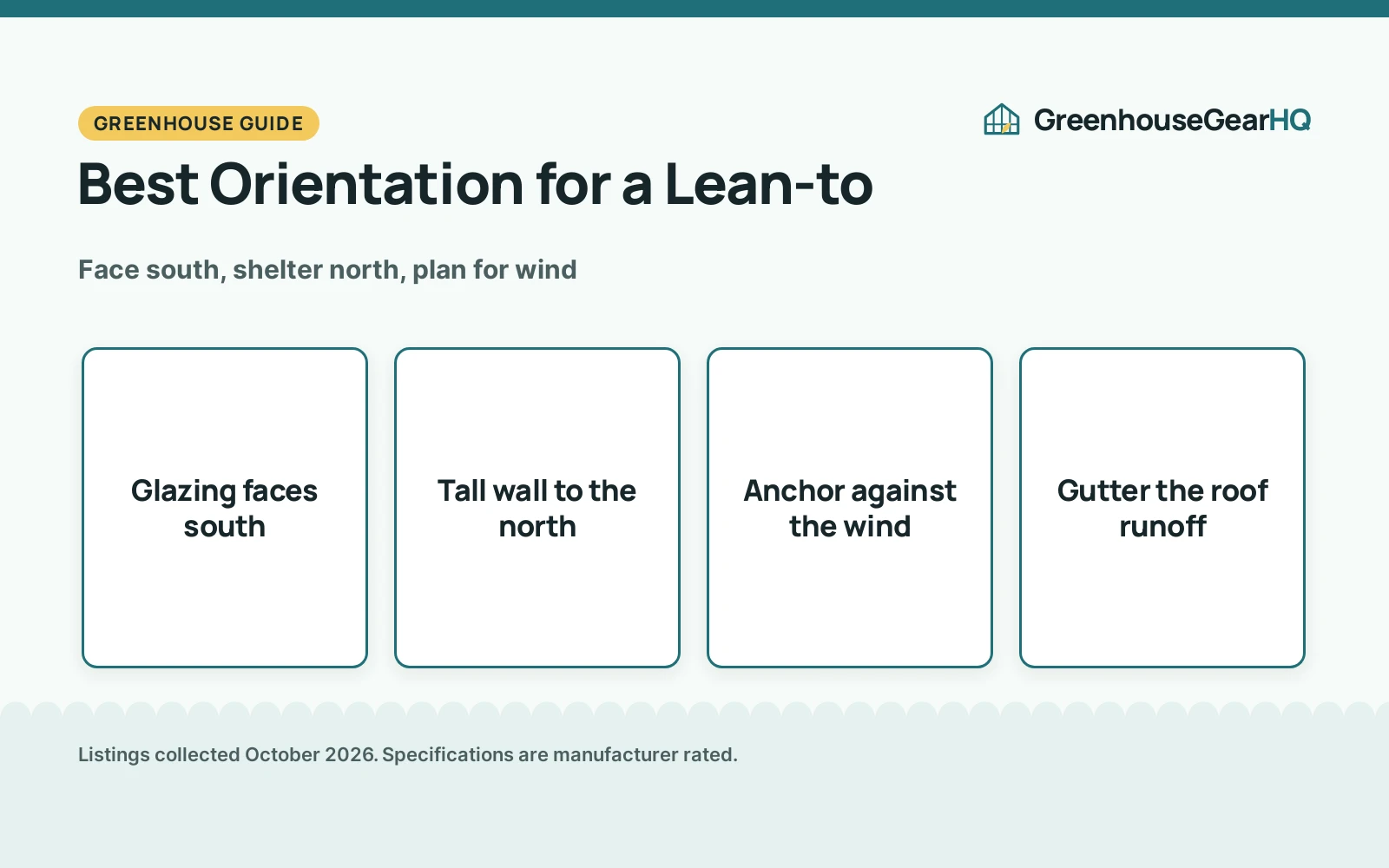
The best orientation for a lean to greenhouse is with the long glazed side facing south and the tall back wall to the north, against the house, fence or shed it leans on. South-facing glazing catches the low winter sun when plants need light most, while the north wall blocks cold winds and reflects heat back inside. That is the whole answer; the rest of this guide covers how to set it up step by step and when a southeast facing wall is the better compromise.
GreenhouseGearHQ earns a commission when you buy through links on this page, at no extra cost to you. As an Amazon Associate I earn from qualifying purchases. Affiliate disclosure.
Best orientation for lean to greenhouse: why south-facing wins
In winter the sun rides low across the southern sky, so a south-facing glazed wall collects the most light hours in the darkest months. Lean-to greenhouses are built for this: the sloped glazed front, in 4mm twin-wall polycarbonate or PE film on the listings here, faces the sun while the tall back sits against the supporting wall. One listing states its twin-wall panels let in 90% of sunlight, which is the figure that makes orientation matter: pointing that glazing south puts the most light behind it through the dark months.
The north wall does quiet work too. It shields the interior from cold north winds and, against a house wall, borrows stored warmth. Dark interior surfaces on that side absorb daytime heat and release it after sunset, stretching the growing day without any equipment.
Step by step: orienting your lean-to
- Find south. Use a compass or a phone app at the spot where the greenhouse will stand, and face the long glazed side that way. Mark the line on the ground before anything is assembled.
- Back it to the north. The tall rear wall goes on the north side, against the house, fence or shed. The listings show lean-tos from 6 by 2 feet up to 10 by 12 feet, and every one is designed with the high side to the wall.
- Check for shade. Walk the spot morning and afternoon. The house itself, trees and neighboring buildings all throw shade, and a south wall on the wrong side would block the very sun the greenhouse needs. Bare winter branches still cut light, so judge shade with the season in mind.
- Check the wind. South and west winds hit the glazing hardest. One listing rates its frame at 56 mph and a 15 psf snow load; use the wind ropes and ground stakes every listing includes, and add anchors on exposed sites. Our lean-to greenhouse for fence picks cover sheltered mounting.
- Plan drainage. Several listings include built-in rain gutters that drain the sloped roof and can feed a hose for watering. Slope the ground away from the house wall so runoff never pools at the base.
Wind, shade and drainage in detail
Wind decides whether orientation survives the first storm. A south-facing glazed wall is a sail, so anchoring is part of orientation, not an afterthought: ropes, stakes and weighted skirts come with the pop-up listings, and the rigid polycarbonate models bolt to a base. Face the door away from the prevailing wind where you can; a door on the sheltered end keeps gusts from slamming it and dust from blowing straight onto seedlings.
Shade is the silent yield-killer. Even an hour of midday shade in winter costs growth, so favor the sunniest wall you have and prune or limb nearby trees before building. Drainage finishes the job: gutters on the Showellgard and Outsunny listings move roof water into a butt or away from the foundation, and the sloped lean-to roof already sheds rain fast. Standing water at the base rots frames and breeds pests.
When southeast beats due south
Due south is the default, but southeast is the better compromise in two cases. Morning sun dries dew off leaves early, which discourages fungal problems, so a slight eastern turn suits damp climates. In hot southern regions, turning a touch east dodges the fiercest afternoon sun and keeps summer temperatures manageable, especially with the roof vents and roll-up doors these listings include for dumping excess heat. If the only available wall faces east or west, take it: some greenhouse beats none, and vents plus shade cloth cover the difference.
What this guide does not cover
Foundations, permits and heating are outside this guide. Check local rules before attaching anything to the house, and see our lean-to vs freestanding greenhouse comparison if you are still choosing the style. For anchoring and seasonal setup, hobby greenhouse tips covers size, anchoring and ventilation in more depth.
FAQ for growers
Can a lean-to greenhouse face east?
It can, but south catches more winter sun. East-facing suits hot climates where skipping the harsh afternoon sun helps.
Does the house wall shade the greenhouse?
A wall on the north side shades the least. A wall on the south side would block the sun the glazing needs, so never back a lean-to to a south-facing wall.
How much wind can a lean-to take?
One listing rates its frame at 56 mph with a 15 psf snow load. Always use the included wind ropes and stakes, and add anchors on exposed sites.
Do I need a gutter on a lean-to greenhouse?
Several listings include built-in rain gutters. They drain the sloped roof and can collect water for your plants, so they are worth having.
Keep reading
See every greenhouse guide and all growing guides. Also see our lean-to vs freestanding greenhouse comparison, lean-to greenhouse for fence picks and hobby greenhouse tips.