On this page
Top picks at a glance
As an Amazon Associate I earn from qualifying purchases.
- 1
 Generic TDP Far Infrared Mineral Heat Lamp9.7/10View on Amazon
- 2
 50W Reptile Heat LampView on Amazon
- 3
 Zoo Med Repticare Infrared Ceramic Heat EmitterView on Amazon
- 4
 2-Pack Ceramic Heat Emitter Lamp 0.2inchView on Amazon
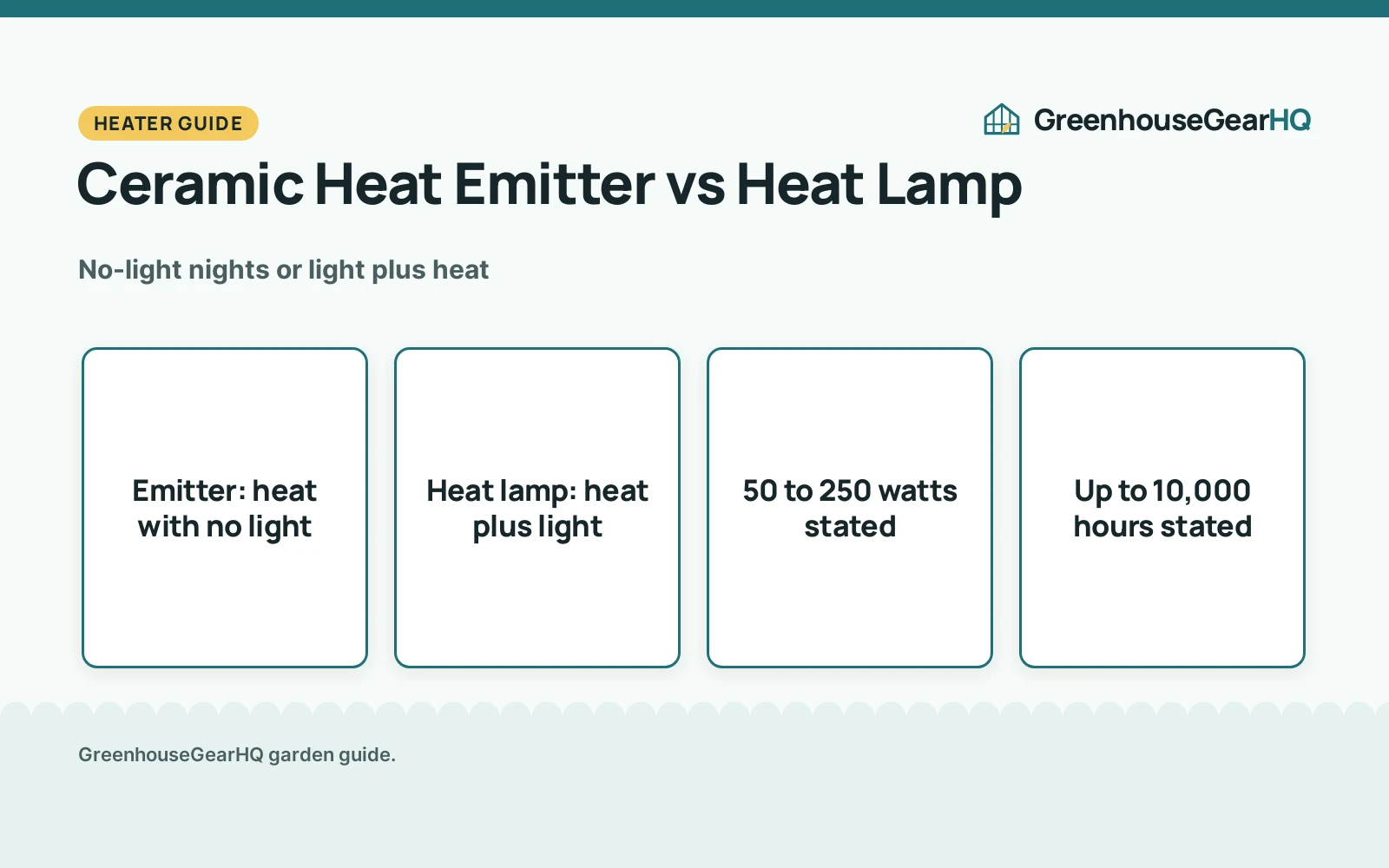
A frost night is forecast and the tender plants cannot come inside, which is when the ceramic heat emitter vs heat lamp question gets practical. The short answer: a ceramic heat emitter gives heat with no light, so it runs all night without disturbing day-length sensitive plants, while a heat lamp gives heat plus light, which suits daytime warming and brooders but can stretch nights. Every listing we compared is a ceramic emitter, so the emitter figures below are stated; the heat lamp side is explained from design, without stated numbers. This guide walks through the choice step by step.
Other options worth a look
 50W Reptile Heat LampCheck price on Amazon
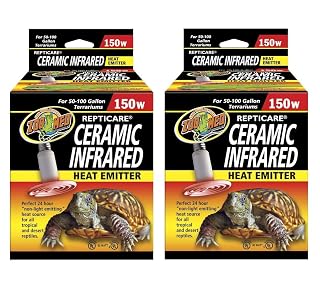 Zoo Med Repticare Infrared Ceramic Heat EmitterCheck price on Amazon
 2-Pack Ceramic Heat Emitter Lamp 0.2inchCheck price on Amazon
GreenhouseGearHQ earns a commission when you buy through links on this page, at no extra cost to you. As an Amazon Associate I earn from qualifying purchases. Affiliate disclosure.
Ceramic heat emitter vs heat lamp: the short answer
Choose a ceramic heat emitter if you heat at night: the LUCKY HERP listings state no light emitted in 50, 75, 100 and 150 watt 2-packs, up to 10,000 hours of life, and a 4 minute climb to rated temperature, all on a standard E26 base at 120 volts. Choose a heat lamp if you want heat plus light in one bulb, for example in a propagation area that also needs light: no light-emitting heat lamp listing appears here, so compare its stated wattage and life against these emitter figures. Emitters last longer per the listings and never light the night; heat lamps add light you may not want. Our greenhouse heater vs space heater guide covers the bigger heating choice.
Wattages and what they heat
Emitter listings run from 50 to 250 watts. The LUCKY HERP lists 50, 75, 100 and 150 watt 2-packs, the REPTI ZOO and REPTI HOME list 100 watt 2-packs, the DOMICA lists a 150 watt 2-pack, and the MIXJOY lists 250 watt 2-packs. A 50 watt emitter suits a small cold frame or propagator; 100 to 150 watts suits a small greenhouse corner; the 250 watt MIXJOY suits a larger space, at 105mm diameter and 115mm length. A heat lamp in the same wattage gives the same heat but adds light, so it suits daytime use and brooders where light does no harm.
| Emitter listing | Wattage | Stated life | Base |
|---|---|---|---|
| LUCKY HERP (2 pack) | 50, 75, 100 or 150 watts | Up to 10,000 hours | E26, 120 volts |
| DOMICA (2 pack) | 150 watts | Not stated | E26, 110-120 volts |
| REPTI ZOO (2 pack) | 100 watts | 10,000 hours | E26, 110 volts |
| REPTI HOME (2 pack) | 100 watts | Up to 10,000 hours | E26, 120 volts |
| MIXJOY (2 pack) | 250 watts | 10,000 hours | E26, 110-120 volts |
Light, sleep and plant cycles
The emitter’s selling point is darkness. The LUCKY HERP listings state the bulb only generates heat and does not emit light, so night heating never adds photoperiod. The DOMICA lists steady heat without disrupting natural photoperiods. A heat lamp adds red or white light, which is fine for chicks in a brooder but can confuse flowering plants that track day length. If your greenhouse holds day-length sensitive crops, the emitter is the safe pick; if it only holds seedlings under grow lights anyway, a heat lamp’s extra light is harmless.
Safety, holders and warranties
Ceramic emitters get hot. The LUCKY HERP listings state you must use good quality ceramic lamp holders, keep more than 30cm distance, and not switch the bulb on and off frequently. The DOMICA lists tolerance up to 500 degrees Fahrenheit and advises a safe distance from flammable materials. Warranties: the REPTI ZOO lists a 90 day warranty, the MIXJOY lists a 6 month warranty with a 1 year warranty description, and the LUCKY HERP lists a 30 day quality service. None of the emitter listings is rated for outdoor use; all state indoor use. For automation, our fan speed controller vs thermostat guide covers controllers.
Which should you choose?
Choose a ceramic heat emitter if you heat at night: the LUCKY HERP 100 and 150 watt 2-packs state up to 10,000 hours on a standard E26 base, and the MIXJOY 250 watt suits larger spaces.
Choose a heat lamp if you want heat plus light in one bulb for daytime warming or brooders: compare its stated wattage and life against the emitter figures above, since no heat lamp listing appears here.
Pair either with a thermostat so it only runs when needed. See our best heater for cold frame roundup for the full picks.
FAQ for growers
Is a ceramic heat emitter or a heat lamp better for a greenhouse?
Emitters suit night heating with no light: the listings state no light emission, up to 10,000 hours and 50 to 250 watts. A heat lamp suits daytime warming where added light does no harm.
What wattages do these emitters state?
The LUCKY HERP lists 50, 75, 100 and 150 watt 2-packs, the REPTI ZOO and REPTI HOME list 100 watt 2-packs, the DOMICA lists 150 watts, and the MIXJOY lists 250 watts.
Do these emitters state a warranty?
The REPTI ZOO lists a 90 day warranty, the MIXJOY lists a 6 month warranty with a 1 year warranty description, and the LUCKY HERP lists 30 day quality service.
What lamp holder do these emitters need?
The listings state a standard E26 base at 110 to 120 volts, and advise good quality ceramic lamp holders rated for the wattage.
Keep reading
See every greenhouse heater guide and all light and heat guides.
More picks: best heater for cold frame, infrared vs oil filled heater and most efficient heater for greenhouse.