On this page
Top picks at a glance
As an Amazon Associate I earn from qualifying purchases.
- 1
 Legigo 19LB Leca Clay Pebbles9.7/10View on Amazon
- 2
 Legigo 20 Quarts Organic Perlite for Plants Indoor9.7/10View on Amazon
- 3
 Hydroton Original Clay PebblesView on Amazon
- 4
 Legigo 15LB Leca Clay Pebbles for Plants 4mm-16mm Clay BallsView on Amazon
- 5
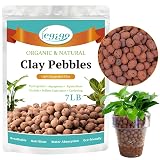 Legigo 7LB Leca Clay Pebbles for PlantsView on Amazon
- 6
 Grow!T Expanded Clay PebblesView on Amazon
- 7
 Riare 8LB Organic Leca Clay Pebbles for PlantsView on Amazon
- 8
 Riare 2LB Organic Leca Clay Pebbles for PlantsView on Amazon
A shelf of seedlings in late winter is when the clay pebbles vs perlite question comes up: clay pebbles win for hydroponics and containers that need drainage with reusable media, while perlite wins as a lightweight mix amendment for seed starting. All four listings we compared are clay pebble products, so this guide compares the two ideas and then ranks the actual gear on bag size, pebble size and stated traits.
Other options worth a look
 Hydroton Original Clay PebblesCheck price on Amazon
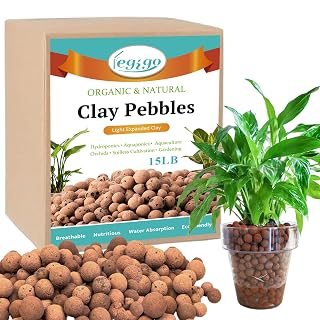 Legigo 15LB Leca Clay Pebbles for Plants 4mm-16mm Clay BallsCheck price on Amazon
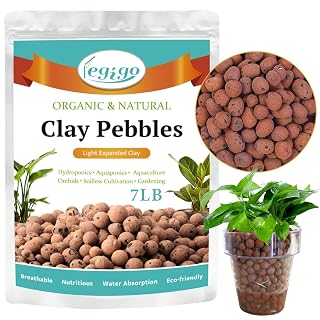 Legigo 7LB Leca Clay Pebbles for PlantsCheck price on Amazon
 Grow!T Expanded Clay PebblesCheck price on Amazon
 Riare 8LB Organic Leca Clay Pebbles for PlantsCheck price on Amazon
 Riare 2LB Organic Leca Clay Pebbles for PlantsCheck price on Amazon
GreenhouseGearHQ earns a commission when you buy through links on this page, at no extra cost to you. As an Amazon Associate I earn from qualifying purchases. Affiliate disclosure.
Clay pebbles vs perlite: the short answer
Clay pebbles win for hydroponic systems, orchid pots and any container where you want a reusable, free-draining medium with good oxygen around the roots. Perlite wins when you want a light amendment to mix into potting soil for seed starting, where its weightlessness keeps the mix fluffy. The listings here all describe expanded clay: fired at high temperatures into round, porous balls that are pH neutral and reusable. None of the four is a perlite listing, which tells you what the market sells for this job.
If you want scored clay pebble packs, our best clay pebbles comparison lines up more options.
The gear: four clay pebble listings compared
| Listing | Bag size | Pebble size | Stated traits |
|---|---|---|---|
| Legigo 15LB | 15 pounds | 4-16 mm | pH neutral, resealable foil pouch |
| Hydroton 10 Liter | 10 liter, 9.5 pounds | Not stated | Made in Germany, reusable, semi-porous |
| Grow!T 40 Liter | 40 liter, 20 pounds | 4-16 mm | Pre-washed, pH and EC stable |
| Riare 8LB | 8 pounds | 4-16 mm | pH-neutral, resealable bag |
Legigo 15LB Leca Clay Pebbles
The Legigo listing ships 15 pounds of leca balls, 4-16 mm in diameter, described as the right size for small to medium pots and garden plants. The listing says the balls are 100% natural clay baked at high temperature, pH neutral, sturdy, odorless and not easy to break, and that they come in a resealable foil pouch that keeps them clean and dry. The combination of stated size range and resealable packaging gives it the top rank.
Hydroton Original Clay Pebbles, 10 Liter
The Hydroton listing is the original brand: 10 liters of expanded clay made in Germany, mined, formed into pellets and kiln fired at high temperatures into tough, lightweight balls, weighing 9.5 pounds. The listing says the clay has balanced capillary action, that Hydroton is semi-porous and generally does not float like other products can, and that it is reusable as long as it is rinsed. The brand heritage and the stated no-float behavior put it second.
Grow!T Expanded Clay Pebbles, 40 Liter
The Grow!T listing ships the largest bag here: 40 liters, 20 pounds, of 4-16 mm brown clay pebbles from Hydrofarm. The listing states the pebbles are extremely stable in both pH and EC, made from 100% natural clay, pre-washed to aid stability, and that they drain freely without holding excess water, providing good oxygen levels around the roots. The listing also states they will not float once fully wet. The 40 liter size suits big systems, which puts it third.
Riare 8LB Organic Leca Clay Pebbles
The Riare listing ships 8 pounds of leca clay pebbles in mixed sizes from about 4 mm to 16 mm, in a resealable bag. The listing says the pebbles are made from natural clay fired at high temperatures, inert, odorless, porous and pH-neutral, and that the varied sizes fit small and medium pots, hydroponic net pots, orchid containers and propagation jars. The smallest bag here puts it fourth.
What the listings agree on
Every listing describes the same product idea: natural clay, formed and fired at high temperatures into round porous balls, pH neutral, reusable and free-draining. Three of the four state a 4-16 mm size range. Bag sizes run from 8 pounds to 40 liters. None of the four states a price, a review count or a warranty term, so the ranking rests on stated bag size, pebble size detail and packaging.
Bag size and pebble size
Pick the bag by the job: the Riare 8 pound bag suits a few houseplants, the Legigo 15 pound bag and Hydroton 10 liter suit a growing shelf, and the Grow!T 40 liter suits a full hydroponic system. The 4-16 mm size range is the stated standard on three of the four; the Hydroton listing states no pebble size, only the brand’s balanced capillary action. For perlite as an amendment instead, our perlite vs vermiculite for seed starting guide compares the mix options.
What this guide does not cover
This guide covers grow media only. It does not cover nutrient schedules, pH adjustment or hydroponic system setup. Rinse the pebbles before first use, as the Hydroton listing recommends.
FAQ for growers
Do clay pebbles float?
The Hydroton listing says its pebbles are semi-porous and generally do not float like other products can, and the Grow!T listing states its pebbles will not float once fully wet. The other two state no float behavior.
Are clay pebbles reusable?
The Hydroton listing states its pebbles are reusable as long as they are rinsed. The other three state no reusability.
What size pebbles should I get?
Three of the four listings state 4-16 mm, described as fitting small and medium pots, hydroponic net pots and orchid containers. The Hydroton listing states no pebble size.
Clay pebbles or perlite for seed starting?
Perlite: it is the lighter amendment for soil mixes. Clay pebbles suit containers and hydroponics where you want a reusable, free-draining medium.
Keep reading
See every hydroponic system guide and all indoor growing guides.
More picks: clay pebbles for hydroponics, clay pebbles for indoor plants and clay pebbles vs rockwool.