On this page
Top picks at a glance
As an Amazon Associate I earn from qualifying purchases.
- 1
 Rechargeable Wireless Magnetic Puck Grow Light9.3/10View on Amazon
- 2
 yadoker 2 Pack LED Grow Light9.3/10View on Amazon
- 3
 Kullsinss 16in Grow Light Strips9.7/10View on Amazon
- 4
 HHNMAHN 120W LED Grow Light Full Spectrum Dimmable for IndoorView on Amazon
- 5
 GooingTop Grow LightView on Amazon
- 6
 MARS HYDRO 100W TS600 2x2ft Dimmable LED Grow Lights forView on Amazon
- 7
 LED Plant Grow LightView on Amazon
- 8
 2 Head LED Plant Grow LightView on Amazon
- 9
 LORDEM Black Full Spectrum LED Grow LightView on Amazon
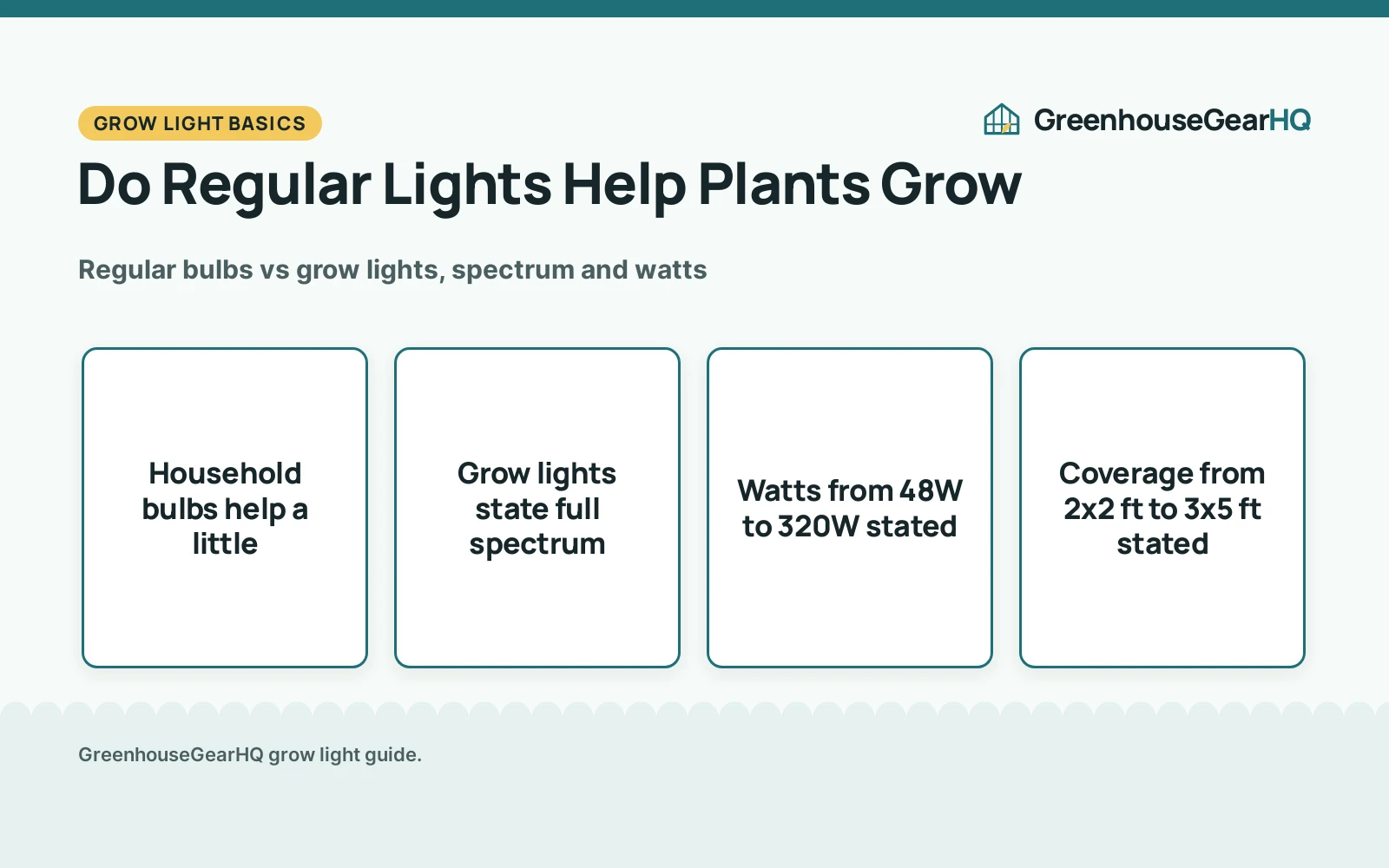
In late winter, seed trays crowd the windowsill and stretch toward the light, while the days stay short and gray. This guide answers do regular lights help plants grow: yes, they help, but only a little. A household bulb gives plants some usable light, while a grow light is built to give the spectrum and the brightness plants need. The sections below explain what regular lights do for plants, where they fall short, and when a grow light is the better tool.
Other options worth a look
 HHNMAHN 120W LED Grow Light Full Spectrum Dimmable for IndoorCheck price on Amazon
 GooingTop Grow LightCheck price on Amazon
 MARS HYDRO 100W TS600 2x2ft Dimmable LED Grow Lights forCheck price on Amazon
 LED Plant Grow LightCheck price on Amazon
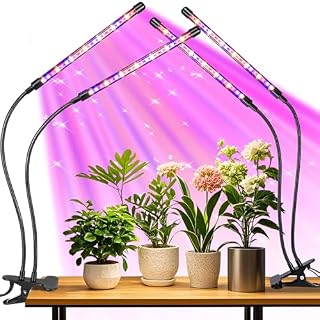 2 Head LED Plant Grow LightCheck price on Amazon
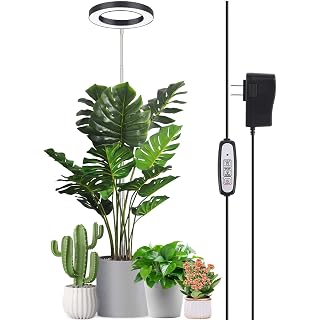 LORDEM Black Full Spectrum LED Grow LightCheck price on Amazon
GreenhouseGearHQ earns a commission when you buy through links on this page, at no extra cost to you. As an Amazon Associate I earn from qualifying purchases. Affiliate disclosure.
What plants need from light
Plants use light for photosynthesis, the process that turns light into growth. What matters is not just that a bulb is on, but what kind of light it gives, how bright it is, how long it stays on, and how much of the plant it covers. A regular household bulb gives some visible light, so it helps a little, but it is not built for any of those points, while a grow light states each point in its listing.
- Spectrum: the mix of wavelengths in the light. Grow lights state full spectrum figures, such as 390nm-730nm with 3000K and 5000K on the VIVOSUN AeroLight A100 (on Amazon), and 3200-4200K, 4800-5000K and 650-665nm on the Spider Farmer G4500 (on Amazon).
- Brightness: how much light reaches the leaves. Grow lights state watts and efficiency, such as 320W at 2.85 umol/J on the Spider Farmer G4500 and 100W standard power at 2.2-2.8 umol/J on the HHNMAHN 120W light.
- Hours: how long the light stays on each day. Grow lights add timers, such as 3, 9, 12 and 16 hour cycles on the GLOWRIUM 48W light (on Amazon).
- Coverage: how much area the light covers. Grow lights state coverage, such as 2×2 ft on the VIVOSUN AeroLight A100 and 2×4 ft or 3×5 ft on the Spider Farmer G4500.
Do regular lights help plants grow, step by step
Step 1: Check what kind of light you have
Start with the bulb in the room. A household LED or fluorescent tube gives visible light that plants can use, so a plant near it will grow better than a plant in the dark. An old incandescent bulb gives mostly heat and little usable light, so it helps the least. The listings in this guide are all grow lights, not household bulbs, so none of them state what a regular bulb gives: judge a household bulb by the plant, not by the box.
Step 2: Compare the spectrum
Spectrum is where regular lights and grow lights part ways. A grow light states its spectrum in the listing: the VIVOSUN AeroLight A100 states full spectrum light at 390nm-730nm with 3000K and 5000K, and the Spider Farmer G4500 states 3200-4200K, 4800-5000K and 650-665nm, with Osram Hyper Red in the bar. Red wavelengths sit at the 650-665nm end of that range, and they support flowering and fruiting, which is why grow lights list them. A regular household bulb states no spectrum for growing, so there is no figure to compare against the grow light figures above.
Step 3: Check the watts and the coverage
Watts and coverage decide whether the light is strong enough for the space. The reference grow lights in this guide state 48W, 100W, 120W and 320W, with coverage from 2×2 ft to 3×5 ft. A small light suits a shelf of seedlings, while a 320W bar suits a 2×4 ft tent, so match the watts and the coverage to the space before you buy. A regular bulb that lights a room will not match those figures, because it spreads its light across the room instead of down onto the plants.
| Grow light | Stated watts | Stated coverage | Stated efficiency |
|---|---|---|---|
| GLOWRIUM 48W | 48W | Not stated | Not stated |
| Spider Farmer G4500 | 320W | 2×4 ft or 3×5 ft | 2.85 umol/J |
| VIVOSUN AeroLight A100 | 100W | 2×2 ft or 2×4 ft | Not stated |
| HHNMAHN 120W | 120W | 2×2 ft | 2.2-2.8 umol/J |
Watts alone do not tell the whole story: the Spider Farmer G4500 states 320W with 2.85 umol/J, while the HHNMAHN light states 100W standard power with a 120W maximum and 2.2-2.8 umol/J. Compare watts with efficiency and coverage together, and treat a light with no stated figures as silent on those points.
Step 4: Set the hours with a timer
Plants need a steady day and night, not light around the clock. The GLOWRIUM 48W light has a built-in timer with 3, 9, 12 and 16 hour cycles, and the Spider Farmer G4500 works with an app for custom light schedules and sunrise and sunset simulation. A regular bulb on a household timer can give the same steady hours, but it still gives the same weak spectrum and brightness. Set the hours, then leave the light alone to run the same schedule each day.
Step 5: Watch the plants and adjust
The plants will show whether the light is enough. Seedlings that stretch tall and pale toward the window need more light, or a light hung closer, while plants that hold their shape and color under the bulb are getting enough. The GLOWRIUM 48W light adjusts from 23 to 79 inches high on a 4-section pole with a 360-degree gooseneck, and the Spider Farmer G4500 and HHNMAHN 120W lights dim from 10-100% and 0-100%, so a grow light lets you move and dim the light as the plants grow. With a regular bulb, the only adjustment is to move the plant closer to the bulb.
Regular lights or grow lights?
For a houseplant by a bright window, a regular light can top up the daylight and keep the plant going. For seedlings, herbs and fruiting plants that need strong light for hours each day, a grow light is the better tool: it states the spectrum, the watts, the coverage and the timer, while a regular bulb states none of those. If the plants stretch, fade or stall under a regular bulb, that is the sign to switch to a grow light. The grow lights for a greenhouse picks cover larger spaces.
What this guide does not cover
This guide does not give hanging heights or daily hours for each crop, because they differ by light and by plant. The light manual and the seed packet give those figures, and a local extension office can advise on timing for the area. It also does not cover fertilizer or pest products; follow the product label.
FAQ for growers
Do regular LED lights help plants grow?
Yes, a little. A household LED gives visible light that plants can use, so a plant near it grows better than a plant in the dark. It will not match a grow light, which states its spectrum, watts and coverage in the listing, such as the VIVOSUN AeroLight A100 at 390nm-730nm with 3000K and 5000K.
Does red light help plants grow?
Yes, red wavelengths support flowering and fruiting. The Spider Farmer G4500 lists Osram Hyper Red with 650-665nm in its full spectrum range, which is the red end of the stated 3200-4200K and 4800-5000K range. A regular bulb states no red figure to compare.
Are all LED lights grow lights?
No. A grow light states figures for growing: the Spider Farmer G4500 states 320W, 2.85 umol/J and 2×4 ft or 3×5 ft coverage, and the HHNMAHN 120W light states 2.2-2.8 umol/J and 2×2 ft coverage. A regular LED states none of those figures.
Can a regular light grow seedlings?
For a short stretch, yes, if the bulb sits close to the trays. Seedlings need bright light, and a grow light gives more control: the GLOWRIUM 48W light adjusts from 23 to 79 inches high and dims steplessly, with a timer at 3, 9, 12 and 16 hours. If seedlings stretch toward the window, they need more light than the regular bulb gives.
Keep reading
See every Indoor Growing guide and all Grow Tents guides. Also see the grow lights for seedlings picks.
More picks: grow lights for seedlings, grow lights for a greenhouse and grow tents.