On this page
Top picks at a glance
As an Amazon Associate I earn from qualifying purchases.
- 1
 VIVOSUN LumaLight 200W Dimmable LED Grow Light9.8/10View on Amazon
- 2
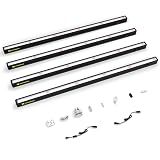 Maygrove T5 2FT Grow Light Strips9.8/10View on Amazon
- 3
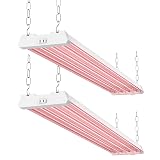 Sunco 2 Pack 4FT Full Spectrum LED Grow Lights 80W9.8/10View on Amazon
- 4
 GooingTop Grow LightView on Amazon
- 5
 LED Plant Grow LightView on Amazon
- 6
 2 Head LED Plant Grow LightView on Amazon
- 7
 LORDEM Black Full Spectrum LED Grow LightView on Amazon
- 8
 LORDEM Full Spectrum LED Grow Light for Indoor PlantsView on Amazon
- 9
 LORDEM Bamboo Grow Light for Indoor PlantsView on Amazon
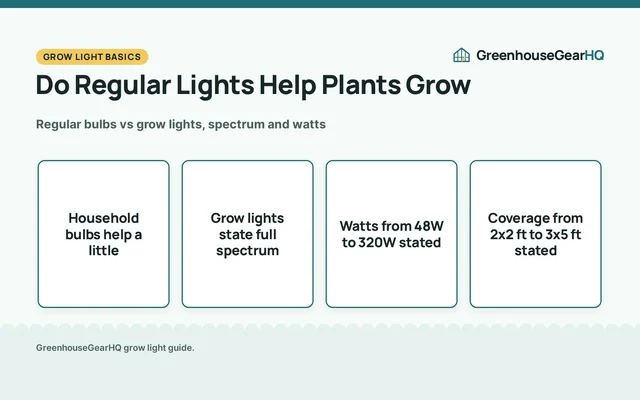
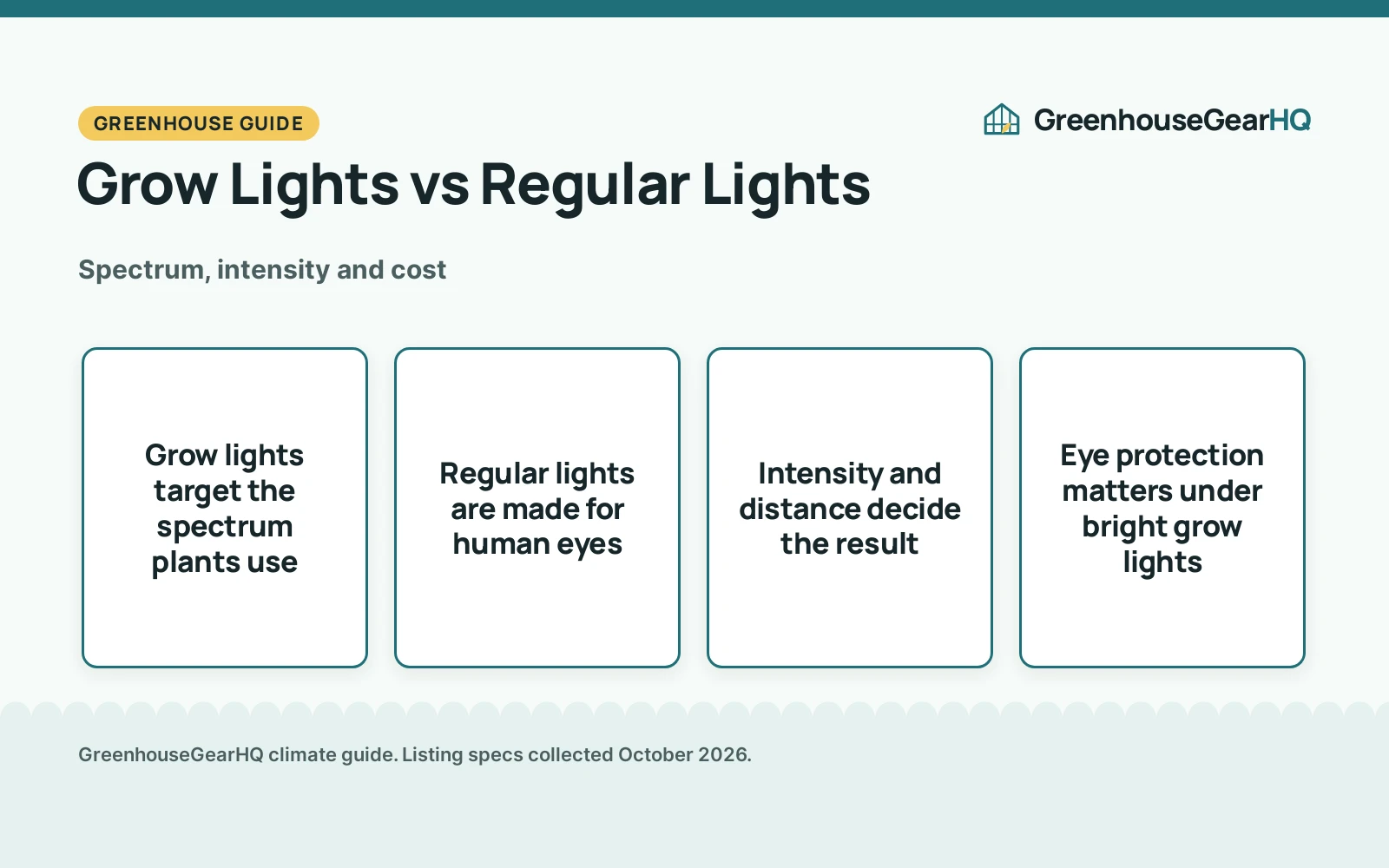
The seedlings are leggy and the window gets four hours of sun, so grow lights vs regular lights is the question that decides whether they straighten up. The short version: grow lights deliver the spectrum and intensity plants use for photosynthesis, while regular lights are made for human eyes. A desk lamp will not replace a grow light, but some regular bulbs can start seedlings in a pinch. This guide explains the differences step by step.
Other options worth a look
 GooingTop Grow LightCheck price on Amazon
 LED Plant Grow LightCheck price on Amazon
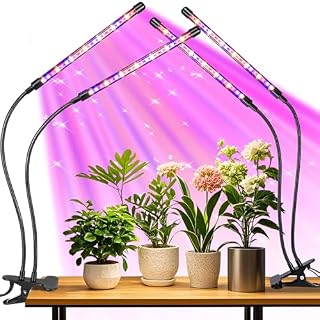 2 Head LED Plant Grow LightCheck price on Amazon
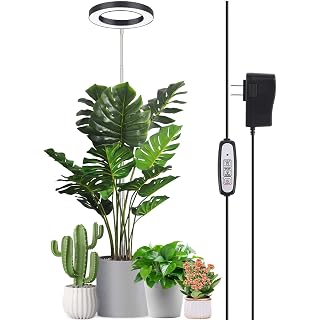 LORDEM Black Full Spectrum LED Grow LightCheck price on Amazon
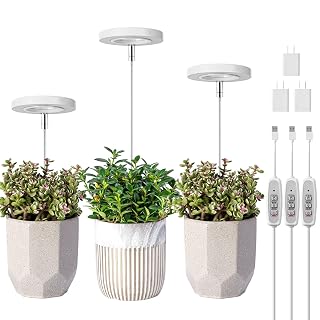 LORDEM Full Spectrum LED Grow Light for Indoor PlantsCheck price on Amazon
 LORDEM Bamboo Grow Light for Indoor PlantsCheck price on Amazon
GreenhouseGearHQ earns a commission when you buy through links on this page, at no extra cost to you. As an Amazon Associate I earn from qualifying purchases. Affiliate disclosure.
Grow lights vs regular lights: the short answer
A grow light is built to give plants the light they use to grow: strong output in the red and blue parts of the spectrum, spread evenly over the canopy. A regular light is built for rooms and reading: pleasant to human eyes, with no regard for what a leaf needs. That is the whole difference in one sentence. If the goal is growing, the grow light wins; if the goal is lighting a room, the regular light wins.
Spectrum: what plants actually use
Plants use light mainly in the blue range for leafy growth and the red range for flowering and fruiting. Grow lights concentrate their output there: full-spectrum LEDs cover the whole photosynthetic range, while older blurple lights push red and blue hard. Regular bulbs, warm white or cool white, spread their energy across the visible spectrum for human comfort, with relatively little in the bands plants use most.
The practical effect shows in the plant. Under a grow light, seedlings grow short and stocky with tight spacing between leaves. Under a regular desk lamp, the same seedlings stretch toward the bulb, tall and pale, because they are starved for usable light. The stretched look is the classic sign of insufficient intensity, not insufficient hours.
Intensity and coverage
Intensity matters as much as spectrum. A grow light hangs close to the canopy and floods a defined area with strong, even light. A regular bulb spreads its output in all directions, so the plant gets a fraction of it. Distance multiplies the effect: doubling the distance quarters the intensity, which is why a grow light hung a foot above the plants outperforms a ceiling fixture ten feet away.
Coverage is the second half. Grow lights are sized to footprints: a panel covers a tray, a bar covers a bench. Regular lights cover rooms. When you read a grow light listing, the coverage area tells you how many seedlings it serves; a regular bulb lists no coverage at all, because plants were never its job.
Heat and placement
Grow lights run close to the plants, so heat matters. LEDs run cooler than the old high-pressure sodium lamps they replaced, which lets them hang nearer the canopy without cooking the leaves. Regular incandescent bulbs run hot and must stay far from foliage; fluorescents run cooler and can sit closer. The rule is the same for both: if the leaf feels warm to your hand, the light is too close.
Placement is a schedule as much as a position. Most growers run lights on a timer, because plants need a dark period as well as a light one. Regular room lighting follows human hours, on when you are awake and off when you sleep; that schedule rarely matches what the plants want.
Cost and running the light
A grow light costs more to buy and more to run than a regular bulb of the same wattage, because it is a specialized tool. LEDs changed the math: they convert more electricity into usable light and less into heat, so a modern LED grow light costs far less to run than the old sodium lamps. The savings compound over a growing season.
Warranties tell you what the maker expects. Grow glasses in our listings carry 2-year warranties from VIVOSUN and Method Seven, and 1-year terms from Vliigts and Bullhead Safety Eyewear: makers of grow-room gear stand behind their products for real terms. Compare that to a disposable bulb with no stated term, and the difference in build intent is plain.
When regular lights are enough
Regular lights have their place. A bright windowsill plus a basic fluorescent or LED shop light will start seedlings for a few weeks, and low-light houseplants live happily under ordinary room lighting for years. The key is honesty about the goal: maintaining a pothos is not the same as fruiting tomatoes.
The line is productivity. If the plant just needs to stay alive, regular light often suffices. If it needs to grow fast, flower or fruit, it needs the spectrum and intensity of a grow light. Seedlings started under regular lights should move under grow lights, or outside, before they stretch.
Protecting your eyes
Grow lights are intense, and the intense ones deserve eye protection. Grow room glasses in our listings carry UV protection lenses: Method Seven lenses are UV protected with flash silver anti-reflective coating, and AC Infinity glasses (on Amazon) offer UV400 protection with 3 color-corrective lenses for full spectrum, red/blue and yellow lights. If you work under bright grow lights daily, glasses are sensible protection for your eyes.
Regular room lighting needs no such gear, which tells you something about the intensity gap. The brightness that grows plants is the brightness worth shielding your eyes from. See our grow lights category for the full set of guides.
In the Greenhouse
- Hang grow lights close to the canopy, per the listings.
- Give plants a dark period each day, per the listings.
- Wear UV protection glasses under intense grow lights, per the listings.
- Match the light to the plant’s stage, per the listings.
FAQ for growers
Can I use regular LED bulbs as grow lights?
For starting seedlings for a few weeks, yes. For serious growing, flowering or fruiting, no: regular bulbs lack the spectrum and intensity plants need.
How close should a grow light hang?
Close enough for strong light, far enough that the leaves do not feel warm. LEDs can hang nearer than old sodium lamps because they run cooler.
Do I need special glasses under grow lights?
For intense grow lights, yes. Grow room glasses with UV protection lenses, like the Method Seven and AC Infinity pairs in our listings, shield eyes from the brightness.
Keep reading
See every grow light guide and all greenhouse climate guides.
More guides: grow lights for tomato seedlings and grow lights for succulents.