On this page
Top picks at a glance
As an Amazon Associate I earn from qualifying purchases.
- 1
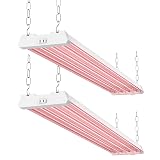 Sunco 2 Pack 4FT Full Spectrum LED Grow Lights 80W9.8/10View on Amazon
- 2
 Spider Farmer G5000 480W Bar-Style LED Grow Light9.7/10View on Amazon
- 3
 MARS HYDRO TSW2000 300W LED Grow Light9.6/10View on Amazon
- 4
 1000 Watt HPS Grow Light Ballast Dimmable Electronic withView on Amazon
- 5
 Eye Hortilux HX66710 Super HPSView on Amazon
When winter shortens the days and the greenhouse benches still hold a full crop, the choice of light technology decides both the harvest and the power bill. The double ended hps vs led grow lights question comes down to this: double-ended HPS is a high-intensity discharge bulb prized for raw flowering output at 1000 watts, while LED grow lights are diode arrays prized for efficiency, low heat and full-spectrum control. We compared double-ended HPS listings to explain what each type does and which grows each suits. Every number below comes from a product listing; where a listing gives no figure, we say so.
Other options worth a look
 1000 Watt HPS Grow Light Ballast Dimmable Electronic withCheck price on Amazon
 Eye Hortilux HX66710 Super HPSCheck price on Amazon
GreenhouseGearHQ earns a commission when you buy through links on this page, at no extra cost to you. As an Amazon Associate I earn from qualifying purchases. Affiliate disclosure.
Double ended hps vs led grow lights: the short answer
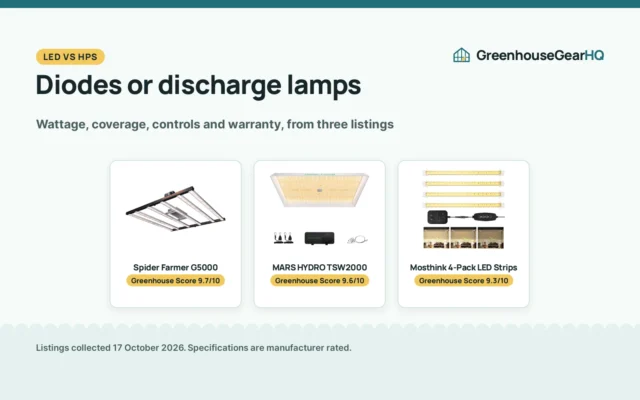
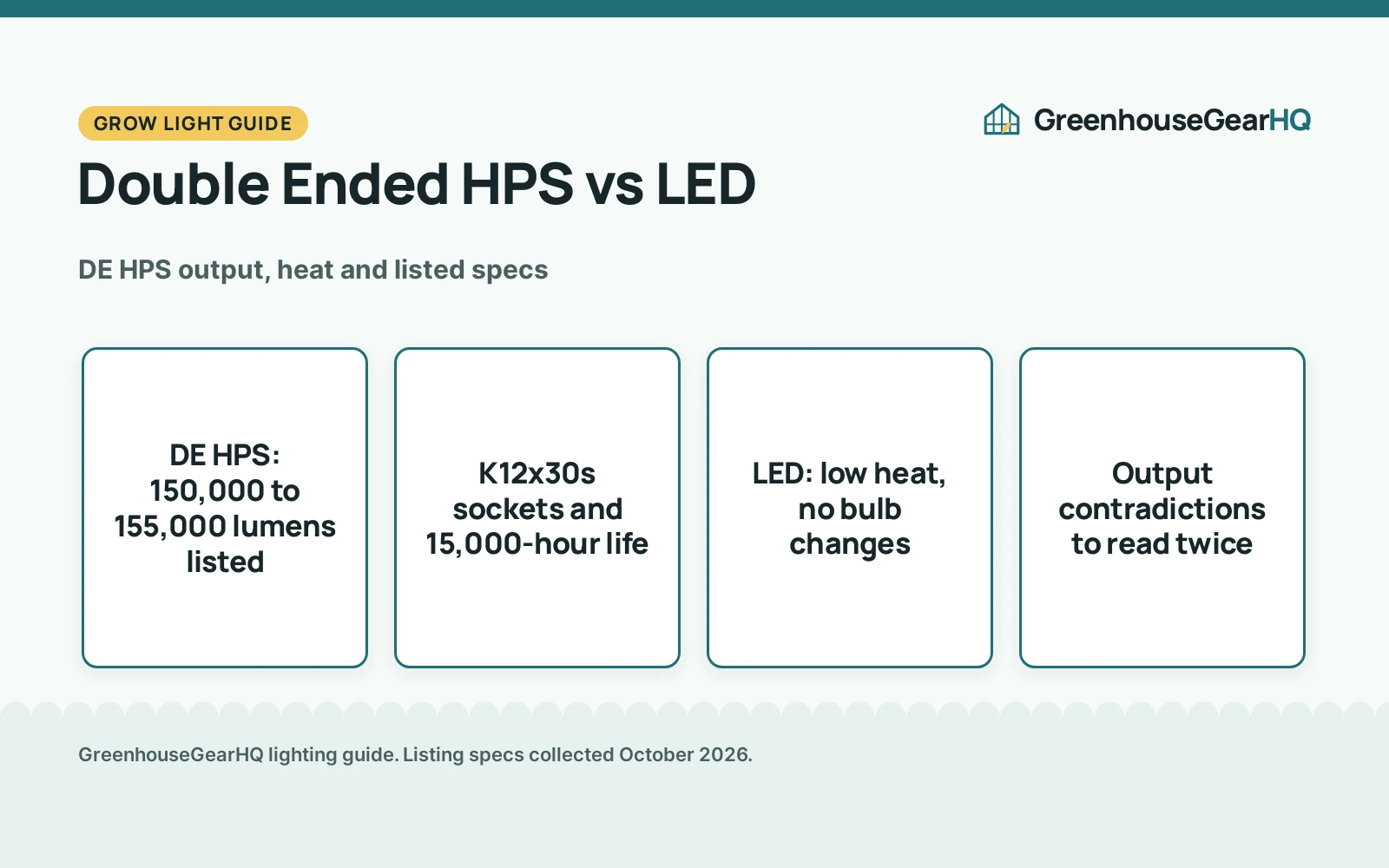
Choose double-ended HPS when you want proven flowering intensity at scale: 1000W DE bulbs list 150,000 to 155,000 lumens, with 35% more available energy than single-ended HPS per the Vegelumax listings. Choose LED when you want lower heat, no bulb changes and dimming without a special ballast. If you would rather compare the two light types in depth, our LED vs HPS grow lights guide covers that choice.
What double-ended HPS is
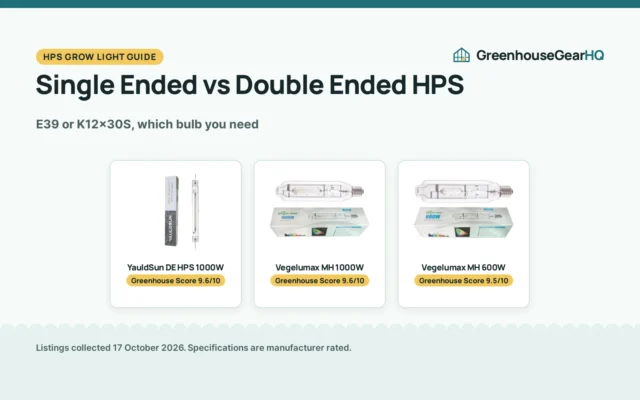
Double-ended HPS is a high-pressure sodium bulb held at both ends in a K12x30s socket, which spreads the arc evenly and runs the tube harder than single-ended designs. The listings show the numbers: the iGrowtek 1000W DE HPS lists 155,000 lumens at 2000K with 155 lm/W efficiency and 90% lumen maintenance at 10,000 hours. The Vegelumax 1000W DE HPS lists 150,000 lumens at 2000K, a 15,000-hour rated life and dimming from 50% to super on an electronic ballast. YauldSun’s 1000W DE HPS lists 151,000 lumens at 2100K with 90% lumen maintenance after 6,000 hours. The red-orange 2000K spectrum is sold for flowering.
What LED grow lights offer
LED grow lights replace the discharge tube with diode arrays: no bulb to change, no warm-up time, and far less radiant heat over the canopy. None of these listings is an LED fixture, so we give no LED figures here: the tradeoffs are qualitative. LEDs suit tents and greenhouses where heat is the limiting factor, and where you want the spectrum tuned across veg and bloom without swapping bulbs. HPS suits growers who already own DE fixtures and ballasts and want the listed flowering intensity per fixture. The hidden cost of HPS is heat: each 1000W bulb puts its wattage into the room as heat, which the greenhouse must vent or cool.
DE HPS vs LED at a glance
| Type | How it works | Suits | Watch for |
|---|---|---|---|
| Double-ended HPS | 1000W discharge bulb in a K12x30s socket | Flowering rooms, existing DE fixtures | 150,000 to 155,000 lumens listed; heat to manage |
| LED | Diode arrays, no bulb changes | Heat-limited spaces, spectrum tuning | No LED figures in these listings |
Which should you buy?
Match the light to the room. A flowering room with DE fixtures and ventilation points to double-ended HPS: the Vegelumax 1000W DE HPS lists 150,000 lumens and a 15,000-hour life with a 1-year warranty. A tent or greenhouse where heat is the ceiling points to LED. If you are still deciding on fixture size, read our best grow lights for a greenhouse guide before you buy.
Read the listing twice
DE bulb listings contradict themselves on output and bases:
- iGrowtek 1000W DE HPS: the bullets say 2000 μmol/s while the spec table lists PPF of 1400 μmol/s.
- Vegelumax MH1000 DE: the title says 1400 μmol/s, the bullets say 1350 μmol/s and the spec table says 1500 μmol/s.
- Ushio 1000W DE: the title says double ended but the spec table lists a GU10 base, which is not a double-ended socket.
Trust the title and bullets over the spec table, and confirm the base type: it must match your fixture.
What this guide does not cover
This guide covers light types only. It does not cover ballast wiring, hanging height or light schedules, which depend on the fixture and the crop. The ballast maker’s manual gives those figures, and your local extension office can advise on timing for your area.
FAQ for growers
How many lumens does a 1000W double-ended HPS list?
The listings here give 150,000 to 155,000 lumens for 1000W DE HPS bulbs at 2000K to 2100K.
Do double-ended HPS bulbs last longer than single-ended?
The listings claim so: YauldSun says DE lasts almost twice as long as single-ended, and Vegelumax lists 35% more available energy than single-ended HPS with a 15,000-hour rated life.
Can I dim a double-ended HPS?
The Vegelumax listings say their DE HPS dims from 50% to super on an electronic ballast. Check your ballast’s stated range before dimming.
Should I switch from HPS to LED?
The listings give no LED figures, so compare on your room: HPS lists the higher per-fixture intensity here, while LED avoids bulb changes and much of the heat. Our LED vs HPS guide covers the tradeoffs.
Keep reading
See every grow light guide and all light and heat guides.
More picks: LED vs HPS grow lights, full spectrum vs blurple grow lights and UV vs IR grow lights.