On this page
Top picks at a glance
As an Amazon Associate I earn from qualifying purchases.
- 1
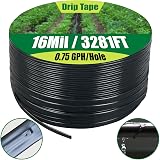 Nalwort 5/8 Inch Drip Tape9.6/10View on Amazon
- 2
 MIXC 100FT 1/2 Inch Drip Irrigation Tubing9.8/10View on Amazon
- 3
 Irritec P1 5/8" Drip Tape 15 mil 6" Spacing 0.46 GPH 500'View on Amazon
- 4
 Toro Aqua-TraxxView on Amazon
- 5
 Irritec P1 5/8" drip tapeView on Amazon
- 6
 Drip Depot Drip TapeView on Amazon
- 7
 100 ft 5/8" Drip Tape Emitter Spacing 6" Automatic IrrigationView on Amazon
- 8Irritec P1 5/8" drip Tape 8 mil 6" Spacing 0.33 GPH 1000'View on Amazon
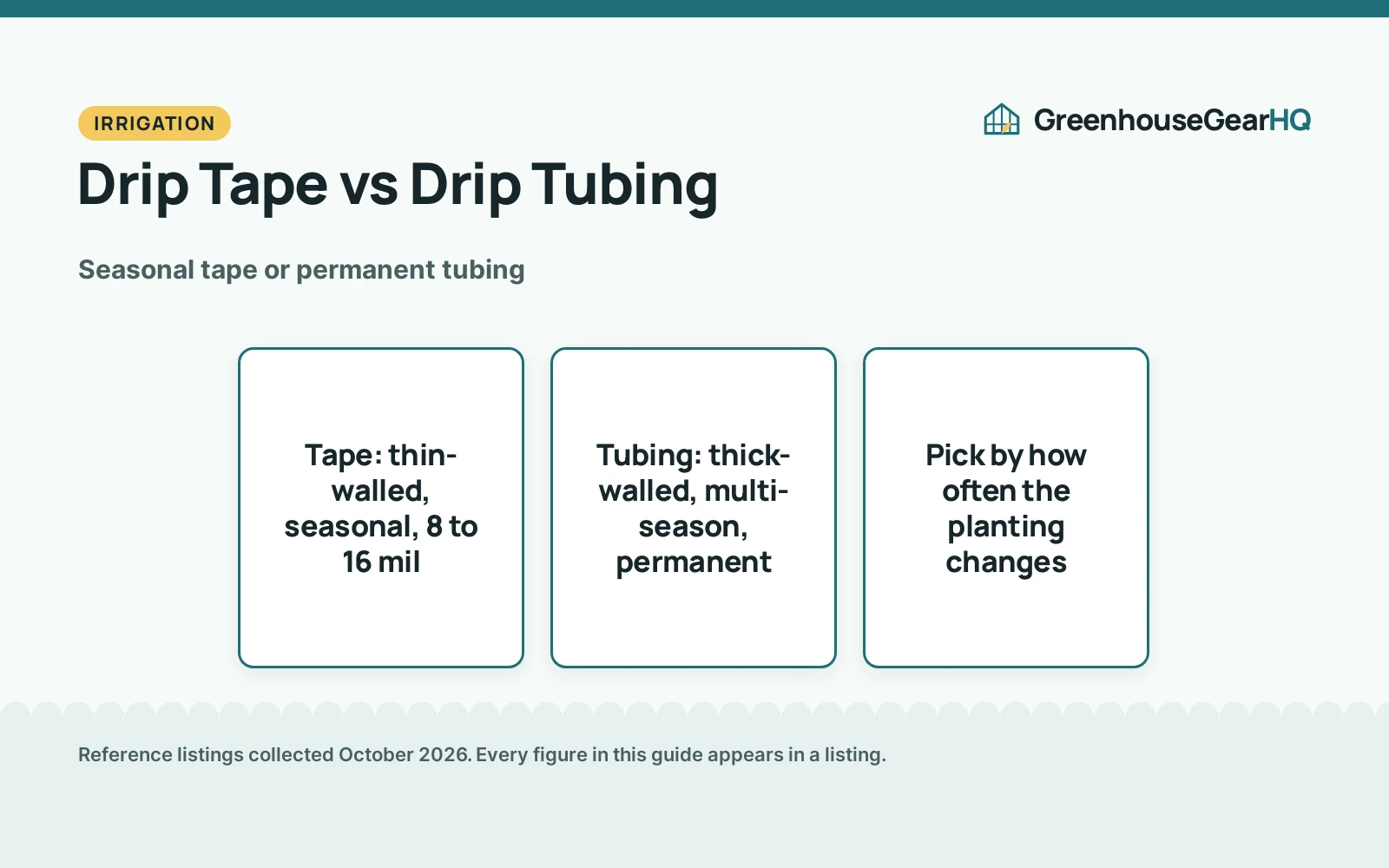
Drip tape vs drip tubing comes down to lifespan and layout. Drip tape is thin-walled flat tape with built-in emitters, laid along crop rows and replaced every season or two; drip tubing is thick-walled round tubing with individual emitters that stays in place for years. Choose tape for seasonal row crops and tubing for permanent beds, fruit trees and perennials.
Other options worth a look
 Irritec P1 5/8" Drip Tape 15 mil 6" Spacing 0.46 GPH 500'Check price on Amazon
 Toro Aqua-TraxxCheck price on Amazon
 Irritec P1 5/8" drip tapeCheck price on Amazon
 Drip Depot Drip TapeCheck price on Amazon
 100 ft 5/8" Drip Tape Emitter Spacing 6" Automatic IrrigationCheck price on Amazon
- Irritec P1 5/8" drip Tape 8 mil 6" Spacing 0.33 GPH 1000'Check price on Amazon
GreenhouseGearHQ earns a commission when you buy through links on this page, at no extra cost to you. As an Amazon Associate I earn from qualifying purchases. Affiliate disclosure.
What drip tape is
Drip tape is a flat ribbon of polyethylene that lies along the soil surface with emitters molded in at fixed spacing. The Irritec P1 listing describes 5/8″ tape at 15 mil thickness with 6″ emitter spacing and 0.46 GPH per emitter on a 500′ roll. The DarkTank listing describes 5/8″ tape at 16 mil with 6″ spacing and 0.8 GPH per emitter on a 500FT roll, with a maximum pressure of 30 PSI. Tape is the row-crop workhorse: lay it down the row at planting, water through the season, then pull it up and replace it. Rolls in these listings run from a 100′ Drip Depot roll to a 3281FT Nalwort roll, so both backyard beds and field-scale rows are covered.
What drip tubing is
Drip tubing is round, thick-walled polyethylene tubing with individual emitters punched in where you want them, or emitter tubing with factory spacing. It is built to stay in the ground or on the surface for multiple seasons: thicker walls resist punctures, UV and foot traffic, and the round profile handles higher pressure than tape. No tubing listings appear in the reference data, so this guide gives no figures for it; the practical difference is durability. You buy tubing once for a permanent layout and tape by the roll for seasonal rows.
Wall thickness and lifespan
Tape thickness in these listings runs 8 to 16 mil. The Toro Aqua-Traxx listing states 8 mil on a 2000′ roll, the Irritec and Drip Depot listings state 15 mil, and the DarkTank, Nalwort and Tondiamo listings state 16 mil. Thicker tape resists punctures and tears better, per the Irritec and DarkTank listings, but even 16 mil tape is a consumable: expect one to a few seasons. Tubing walls are far thicker and survive years of sun, soil and handling, which is why it suits permanent plantings where re-laying tape every spring would be a chore.
Emitter spacing and flow
Every tape listing here uses 6″ emitter spacing except the Toro at 8″, and flow rates run from .25 GPH on the second Irritec listing to 0.8 GPH on the DarkTank. The Toro listing states 0.34 GPM per 100′ with a coefficient of variation below 3%, which is the uniformity figure that matters on long runs: lower is more even. Tape spacing is fixed at manufacture, so match it to your crop: 6″ spacing suits closely spaced vegetables and row plantings, per the Irritec listing. Tubing lets you place emitters at whatever spacing the plants need, which is its layout advantage for mixed beds and trees.
Pressure and filtration
Tape runs at low pressure: 15 PSI maximum on the Nalwort and Toro listings, 30 PSI on the DarkTank, Tondiamo and Bandelt listings. The Tondiamo listing recommends a pressure regulator for high home water pressure. Keep tape under its rated pressure or it splits, and run it through a filter because tape emitters clog: the Nalwort and Toro listings both state clog resistance, but no tape tolerates dirty water without filtration. Tubing handles higher pressure and its larger emitters clog less, which is why it pairs well with well water and longer runs.
Drip tape vs drip tubing: which one should you buy
Buy drip tape for seasonal vegetables in straight rows: pick 15 or 16 mil for durability, 6″ spacing for close plantings, and a flow rate that matches your water supply and run length. The Irritec, DarkTank and Nalwort listings give you the concrete options at .25 to 0.8 GPH. Buy drip tubing for anything permanent: raised beds that never move, orchards, vineyards, hedges and greenhouses with fixed bench layouts, where the higher upfront cost pays back in years of not re-laying tape. For a greenhouse that changes crops every season, tape wins on flexibility; for one that stays planted, tubing wins on permanence. See our best drip irrigation kit for greenhouse picks and our drip irrigation vs soaker hose guide.
FAQ for growers
How long does drip tape last?
Tape is a consumable: 8 mil tape like the Toro Aqua-Traxx lasts about a season, while 15 to 16 mil tape like the Irritec and DarkTank listings resists punctures better and can last a few seasons. Tubing lasts many years.
Can drip tape run at house water pressure?
No. These listings rate tape at 15 to 30 PSI maximum, and the Tondiamo listing recommends a pressure regulator for high home water pressure. Always regulate before the tape.
Which is better for a greenhouse?
Tape for seasonal bench crops you replant each cycle; tubing for permanent greenhouse layouts. Match the choice to how often the planting changes.
Keep reading
See every drip irrigation kits guide and all air and water guides. Also see our best drip irrigation kit for greenhouse and our drip irrigation vs soaker hose.