On this page
Top picks at a glance
As an Amazon Associate I earn from qualifying purchases.
- 1
 VIVOSUN FlexFeed DWC Hydroponic System Kit9.6/10View on Amazon
- 2
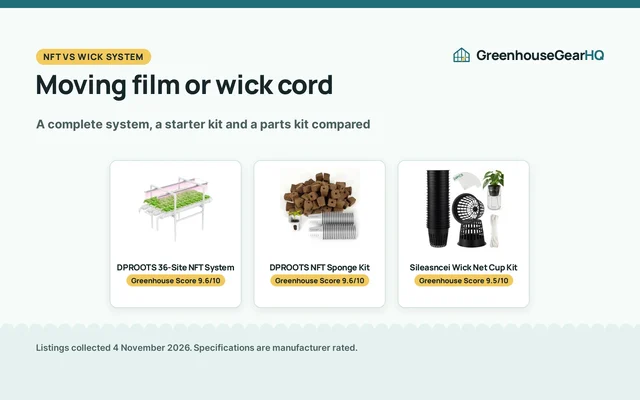
 DPROOTS 36 Sites NFT Hydroponic Growing System with Grow9.6/10View on Amazon
- 3
 DWC Cloner Rooting Recirculating System 24 Site Cutting CloneView on Amazon
- 4
 The Atwater HydroPodView on Amazon
The tent is up and the nutrients are mixed, and now the question is how the water reaches the roots, because dwc vs wick system is the hydroponic choice between an active reservoir and a passive rope. This guide compares the two by how each one works, what the wick cord listings state about sizes, and which suits your grow. Every number below comes from an Amazon listing we read for this guide.
Other options worth a look
 DWC Cloner Rooting Recirculating System 24 Site Cutting CloneCheck price on Amazon
 The Atwater HydroPodCheck price on Amazon
GreenhouseGearHQ earns a commission when you buy through links on this page, at no extra cost to you. As an Amazon Associate I earn from qualifying purchases. Affiliate disclosure.
Dwc vs wick system: the short answer
Use DWC for fast-growing plants that drink heavily, and a wick system for small plants, seedlings and low-maintenance setups. DWC, deep water culture, suspends the roots in an oxygenated nutrient reservoir with an air pump running. A wick system has no pump: a cord draws water from a reservoir to the growing medium by capillary action. Pick DWC for growth speed; pick wicks for simplicity.
If you would rather go straight to the products, our best hydroponic kit for lettuce roundup scores complete systems on these points.
How a wick system works
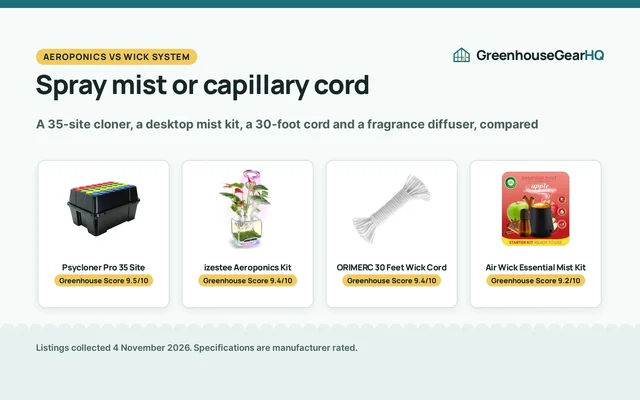
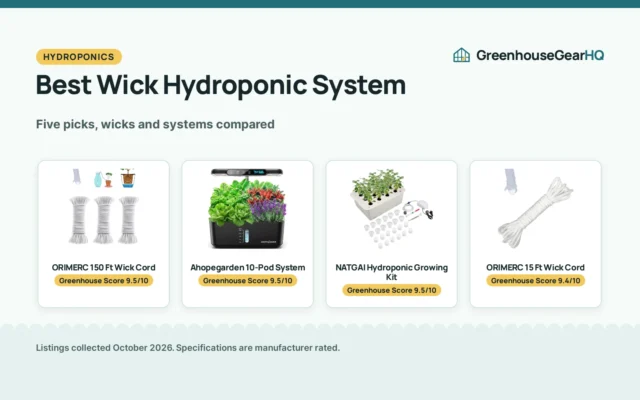
A wick system is the simplest hydroponic method. One end of a cord sits in a water source and the other end sits in the growing medium, and capillary action moves the water along. The ORIMERC listings describe putting one end to a water source and the wick transporting water to the other end automatically, with dripping starting within 15 minutes on the 50 ft, 150 ft and 30 ft 1/5 in cords. No pump, no electricity, no timer. The MAQIHAN listing adds that you can cut the cord to any length and wash it for reuse.
What the wick cord listings state
The listings give wick cords in several lengths and two diameters:
| Listing | Stated length | Stated diameter | Material |
|---|---|---|---|
| ORIMERC wick cord | 15 feet | 1/6 inch | 100% polyester |
| ORIMERC wick cord | 30 feet | 1/6 inch | 100% polyester |
| ORIMERC wick cord | 120 feet | 1/6 inch | 100% polyester |
| ORIMERC wick cord | 50 feet | 1/4 inch | Polyester fiber |
| ORIMERC wick cord | 150 feet | 1/4 inch | Polyester fiber |
| ORIMERC wick cord | 100 feet | 1/4 inch | Polyester fiber |
| ORIMERC wick cord | 30 feet | 1/5 inch | Polyester-mixed fiber |
| MAQIHAN wicking rope | 39 feet | 1/6 inch | Cotton |
Polyester cords will not rot and can be washed for repeated use, per the ORIMERC listings; the MAQIHAN cotton cord is washable too. Two listings in this guide’s data were for candle wick holders and tiki torch wicks, which are not plant wicks, so ignore those when shopping.
How DWC works
No DWC listing was in this guide’s data, so no DWC figures are stated here. In deep water culture, the plant sits in a net pot above a reservoir, the roots hang into the nutrient solution, and an air pump with an air stone keeps the water oxygenated. The pump runs around the clock, which means electricity, noise and one more part that can fail. Our best pump for small hydroponic systems guide covers the pump side.
Oxygen and moving parts
The core difference is oxygen delivery. DWC forces air into the reservoir with a pump, so roots get oxygen even though they sit in water. A wick system has no aeration, so it suits plants in a loose medium where air reaches the roots naturally. DWC has moving parts and needs power; a wick system has none and keeps working through a power cut. For the DWC side of the family, see our DWC vs NFT and ebb and flow vs DWC comparisons.
Which suits your grow
Choose a wick system for seedlings, herbs and houseplants, where the slow steady feed of a cord is enough and you want to leave the plants alone. The ORIMERC listings name vacation plant care as the use case. Choose DWC for hungry, fast-growing plants like lettuce and tomatoes where growth speed matters, and where you are willing to tend the reservoir. A wick system cannot keep up with a plant that drinks faster than the cord can wick.
What this guide does not cover
This is an equipment guide. It does not give nutrient recipes, pH targets, feeding schedules or light cycles. Take those from the nutrient maker’s current guidance and a trusted growing reference.
FAQ for growers
Do wick systems need a pump?
No. The wick moves water by capillary action with no electricity. The ORIMERC listings describe dripping starting within 15 minutes of setup.
What size wick cord do I need?
The listings state cords from 15 feet to 150 feet in 1/6, 1/5 and 1/4 in diameters. Cut the cord to the length you need; the MAQIHAN listing confirms the cord can be cut to any length.
Is polyester or cotton better for wicks?
The ORIMERC polyester cords state they will not rot and can be washed for repeated use. The MAQIHAN cotton cord is washable too, but the listings do not claim rot resistance for cotton.
Keep reading
See every hydroponic systems guide and all indoor growing guides.
More picks: hydroponic kits for herbs, hydroponic systems for small setups, DWC vs NFT and ebb and flow vs DWC.