On this page
Top picks at a glance
As an Amazon Associate I earn from qualifying purchases.
- 1
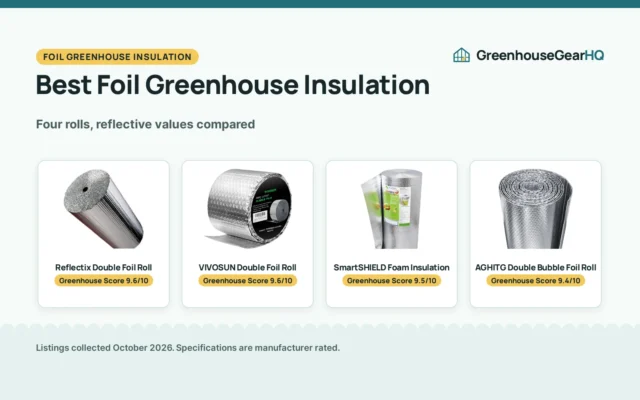
 VIVOSUN Double Bubble Foil Insulation Roll9.6/10View on Amazon
- 2
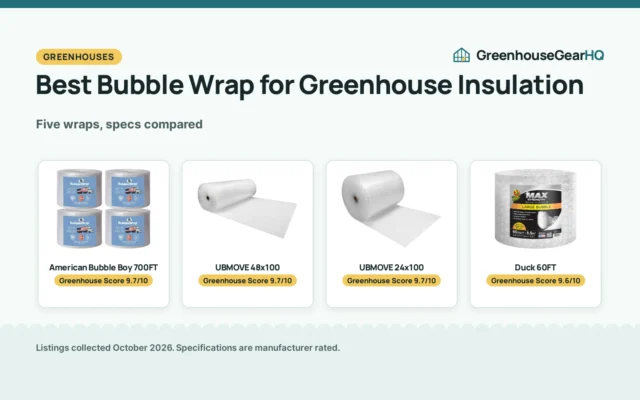
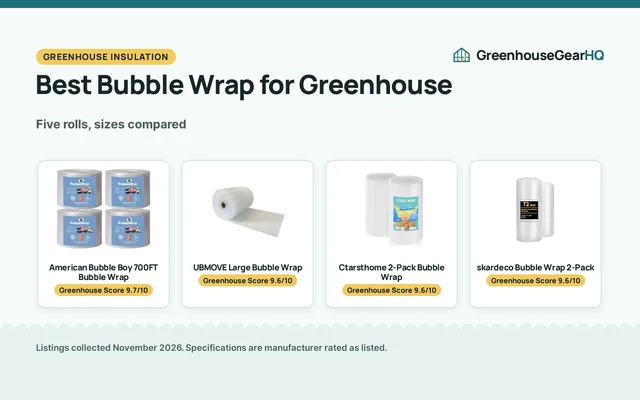
 American Bubble Boy 700FT Bubble Wrap9.7/10View on Amazon
- 3
 UBMOVE Bubble Wrap 48x1009.7/10View on Amazon
- 4
 VEVOR Reflective Insulation RollView on Amazon
- 5
 Single Bubble Insulation Roll 48" x 125'View on Amazon
- 6
 Double Bubble Insulation Roll 48" x 75'View on Amazon
- 7
 Reflective Insulation Roll 47inch x 10Ft Double BubbleView on Amazon
A cold snap that turns the greenhouse into an icebox overnight, followed by a hot afternoon that cooks the same space, is the seasonal problem behind foil vs bubble wrap greenhouse insulation. Foil wins where reflected heat matters most, since its reflective surface bounces radiant heat back into the space, while bubble wrap wins where a light, air-trapping layer over glazing matters most. For most home greenhouses, the practical answer is foil on solid walls and bubble wrap over glazing, using each material where it does the most good. The sections below compare how each material works, then look at foil rolls on the market.
Other options worth a look
 VEVOR Reflective Insulation RollCheck price on Amazon
 Single Bubble Insulation Roll 48" x 125'Check price on Amazon
 Double Bubble Insulation Roll 48" x 75'Check price on Amazon
 Reflective Insulation Roll 47inch x 10Ft Double BubbleCheck price on Amazon
GreenhouseGearHQ earns a commission when you buy through links on this page, at no extra cost to you. As an Amazon Associate I earn from qualifying purchases. Affiliate disclosure.
Foil vs bubble wrap greenhouse insulation: the short answer
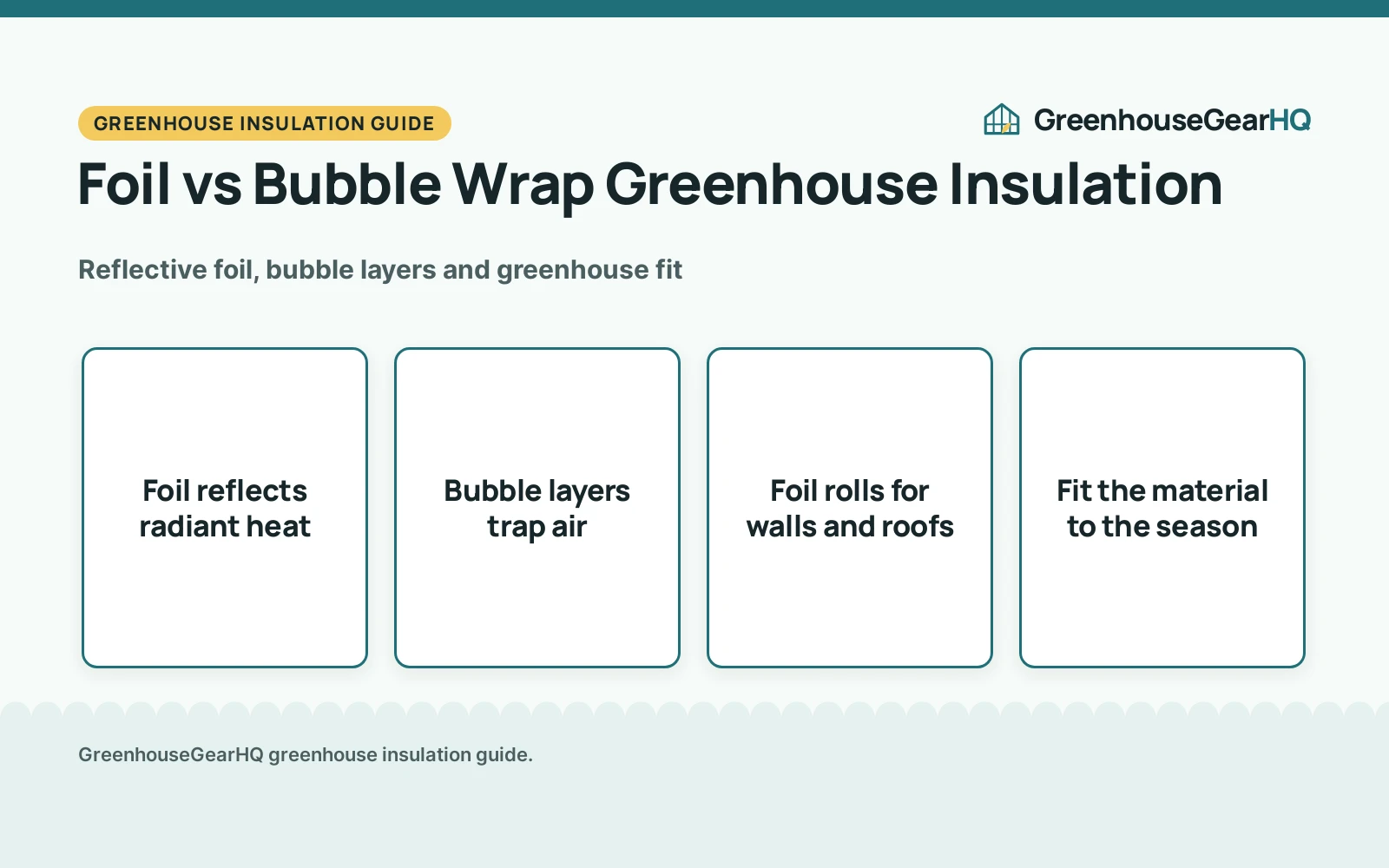
The two materials insulate in different ways, so the right pick depends on the surface being covered. Foil reflects radiant heat, which suits solid walls, roofs and attic-style spaces where heat escapes as radiation. Bubble wrap traps air in small pockets, which suits glazing, where the layer must insulate without blocking daylight. Neither material is wrong for a greenhouse; the mistake is covering glazing with solid foil, which blocks light, or expecting a thin bubble layer to do the work of a reflective barrier on a solid wall.
- Foil: reflective aluminum surface, suits solid walls, roofs, sheds and attic-style spaces.
- Bubble wrap: air-trapping layer, suits glazing and windows, where light must still pass through.
- Combined: a foil roll with a bubble layer, like the fowong roll below, pairs reflection with trapped air in a single sheet.
Foil insulation: how it works
Foil insulation works by reflection. A metalized aluminum surface bounces radiant heat back toward its source, so heat stays inside on cold nights and stays outside on hot days. The solid white foil rolls below are non-perforated, which means the reflective surface is unbroken, and one maker describes its foil as a vapor barrier as well. Foil suits surfaces that do not need to pass light: solid walls, roofs, sheds and attic floors. The AES roll below states ASTM C1313 certification for its radiant barrier, and the maker claims it reflects 99% of radiant heat and reduces attic temperatures by up to 40 degrees.
Foil is also easy to fit: rolls cut to size with scissors, and the fowong roll below ships with hook and loop tape. Wide rolls cover large areas with fewer seams: the rolls below run 4 feet wide and cover 500 square feet or 1000 square feet.
Bubble wrap insulation: how it works
Bubble wrap insulation works by trapped air. Each bubble holds a small pocket of still air, and still air slows heat movement through the layer. Over glazing, that matters twice over: the layer adds insulation while still letting daylight reach the plants, which solid foil cannot do. Bubble wrap is light, easy to cut and easy to fit to window shapes, and it suits seasonal use, going up for cold nights and coming down when summer heat makes extra insulation a burden.
The trade-off is that bubble wrap alone reflects little heat, so on solid walls it cannot match foil. That is why the combined roll below is interesting: a foil face for reflection plus a bubble layer for trapped air, in one sheet. For more on the bubble side, see our best bubble wrap for greenhouse insulation guide and bubble wrap vs polycarbonate greenhouse comparison.
The gear: foil insulation rolls
All four rolls below are foil products, ranked by greenhouse fit. The fowong roll takes the top spot because it pairs foil with a bubble layer and lists greenhouses among its stated uses.
Top pick: fowong reflective window insulation roll. The listing describes a double side reflective foil with a bubble layer, measuring 48″ x 10 Ft with a 3mm profile, weighing 1.3 pounds, and shipping with hook and loop tape. The maker states it is easy to cut with scissors, attaches with hook and loop tape, and suits windows, attics, walls, floors, garages, sheds, greenhouses, cabins and cars. The maker also notes the roll ships folded, so creases may show at first but rebound over time. For greenhouse use, the combination is the point: foil reflection plus a bubble layer, in a roll sized for windows and small walls.
Runner-up: AES solid white foil, 500 square feet. The listing describes a solid white, non-perforated radiant barrier measuring 4ft x 125ft and covering 500 square feet, with a double-sided metalized aluminum film. The maker states ASTM C1313 certification, claims the film reflects 99% of radiant heat, and claims it reduces attic temperatures by up to 40 degrees. Note a listing wrinkle: the brand is AES while the spec table names the manufacturer as AWS, so check the listing if the maker name matters. The wide roll suits large solid surfaces, though the listing positions it for attics, garages, sheds and house wrap rather than greenhouses.
Third: AES solid white foil, 1000 square feet. The listing describes a commercial grade solid white foil, non-perforated, no-tear scrim radiant barrier, 4 feet wide and covering 1000 square feet, with a thickness of 8 mils. The stated uses are insulation for attics, sheds, warehouses and house wrapping. The larger coverage suits big roofs and walls, but the listing states no certification claim like the smaller AES roll, so it ranks below its sibling for buyers who want a stated standard.
Fourth: Preboun foil duct insulation cotton wrap. The listing describes 2 rolls of cotton and foil wrap measuring 12″ x 25′ x 0.4″, covering 25 linear feet, with a moisture resistant foil layer. The maker states it is reusable, easy to install by wrapping and taping, and suits ducts, pipes, air conditioning units, walls and attics. It ranks last for greenhouse use because it is a duct and pipe wrap first, with a cotton core rather than a radiant-barrier foil face, so it suits wrapping pipes inside the greenhouse more than covering walls or glazing.
Choosing between foil and bubble wrap
- Solid walls and roofs: foil, for reflected heat and wide rolls with few seams.
- Glazing and windows: bubble wrap, or the fowong foil-plus-bubble roll, so daylight still reaches the plants.
- Large roofs and walls: the wide AES rolls, at 4 feet wide and 500 square feet or 1000 square feet of coverage.
- Small windows and odd shapes: the fowong roll, cut with scissors and attached with hook and loop tape.
- Ducts and pipes: the Preboun wrap, made for wrapping round surfaces rather than flat walls.
Match the material to the surface before buying: foil where light does not need to pass, bubble wrap where it does, and a combined roll where a window needs both.
FAQ for growers
Can foil insulation be used in a greenhouse?
Yes, on solid surfaces: the fowong roll lists greenhouses among its stated uses, and foil suits solid walls and roofs where light does not need to pass. Over glazing, use bubble wrap or a combined foil-plus-bubble roll instead.
Does bubble wrap block light in a greenhouse?
Bubble wrap still lets daylight through, which is why it suits glazing while solid foil does not. The layer adds insulation without turning the greenhouse dark.
Which is better for winter nights?
Foil reflects heat back into the space, while a bubble layer traps air against the cold. A combined roll like the fowong roll, with a double side reflective foil and a bubble layer, covers both mechanisms in one sheet.
Can I cut foil insulation to fit?
Yes. The fowong roll is stated to cut easily with scissors, and the Preboun wrap is stated to cut and tear to size, so both fit odd shapes and small windows.
Is the AES radiant barrier certified?
The AES 500 square feet listing states ASTM C1313 certification for its radiant barrier. The AES 1000 square feet listing states no certification claim in its listing data.
Keep reading
Related: the best foil greenhouse insulation, best bubble wrap for greenhouse insulation and greenhouse insulation for winter guides.
More picks: greenhouse insulation panels, grow tent insulation, bubble wrap for greenhouse windows and insulation for greenhouse roof.