On this page
Top picks at a glance
As an Amazon Associate I earn from qualifying purchases.
- 1
 American Bubble Boy 24 Inch Bubble Wrap 350 Square Feet9.6/10View on Amazon
- 2
 VEVOR 24-Pack 2 x 4 ft Polycarbonate Greenhouse Panels9.6/10View on Amazon
- 3
 Yens Bubble Cushioning Wrap 12in x 15ft9.5/10View on Amazon
- 4
 Offitecture Nylon Bubble Cushioning Wrap RollView on Amazon
- 5
 Amazon Basics Perforated Bubble Cushioning WrapView on Amazon
- 6
 America's Best Bubble Wrap CushionView on Amazon
- 7
 Official Sealed Air Bubble WrapView on Amazon
- 8
 packbabol Bubble Cushioning Wrap Rolls 2-PackView on Amazon
- 9
 Bubble Cushioning Wrap 2 Pack 12 Inch x 72 ft Total BubbleView on Amazon
A cold snap is forecast and the greenhouse needs help holding heat: bubble wrap vs polycarbonate greenhouse is the choice between a cheap seasonal insulation fix and a permanent glazing upgrade. The direct answer is to use bubble wrap when you need insulation this winter on a greenhouse you already own, and to choose polycarbonate glazing when you are building new or replacing old panels. Bubble wrap goes up in an afternoon and comes down in spring; polycarbonate stays for years.
Other options worth a look
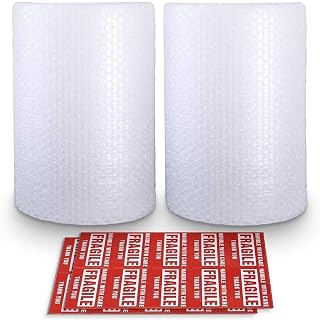 Offitecture Nylon Bubble Cushioning Wrap RollCheck price on Amazon
 Amazon Basics Perforated Bubble Cushioning WrapCheck price on Amazon
 America's Best Bubble Wrap CushionCheck price on Amazon
 Official Sealed Air Bubble WrapCheck price on Amazon
 packbabol Bubble Cushioning Wrap Rolls 2-PackCheck price on Amazon
 Bubble Cushioning Wrap 2 Pack 12 Inch x 72 ft Total BubbleCheck price on Amazon
GreenhouseGearHQ earns a commission when you buy through links on this page, at no extra cost to you. As an Amazon Associate I earn from qualifying purchases. Affiliate disclosure.
What bubble wrap does in a greenhouse: bubble wrap vs polycarbonate greenhouse
Bubble wrap is air-filled plastic sheeting, and growers fix it to the inside of greenhouse glazing for winter. The air trapped in the bubbles adds an insulating layer between the cold glass and the warm air inside. It is a seasonal job: put it up in late fall, take it down in spring when light matters more than warmth. The rolls below are sold as packing wrap, which is the same material growers cut to fit their panes.
What polycarbonate does
Polycarbonate is the rigid glazing on many backyard greenhouses: stiff panels that take the place of glass. It is a building material, not a seasonal add-on, and choosing it happens when you buy or reglaze the structure. Where bubble wrap is the insulation you add for winter, polycarbonate is the wall itself. Our aluminum vs polycarbonate greenhouse guide compares structures.
The gear: four bubble wrap rolls compared
The Amazon Basics roll lists 24 inches by 100 feet with 5/16 inch bubbles, perforated every 12 inches for easy tearing. It is made of polyethylene, weighs 5.8 pounds, and is the only roll here with a stated warranty: a 1-year limited warranty. The 24-inch width covers more glazing per pass than the 12-inch rolls, which suits large panes.
The American Bubble Boy roll lists 350 feet of 12-inch wrap with 3/16 inch small bubbles, perforated every 12 inches. It is made of nylon, weighs 2 pounds, and the listing states no warranty. At 350 feet it is the longest roll here, which suits insulating a whole greenhouse in one buy.
The Offitecture pack lists two rolls of 12 inch by 36 foot wrap with 3/16 inch bubbles, perforated every 12 inches. The material is nylon, the pack weighs 8.8 ounces, and 20 fragile stickers are included. Two rolls suit a grower insulating in stages or splitting the buy with a neighbor.
The PackageZoom roll lists 12 inches by 30 feet with perforation every 12 inches. The material is plastic, the roll weighs 100 g, and the listing states a 30-day money-back guarantee. At 30 feet it suits a cold frame or a single section of glazing. See our best bubble wrap for greenhouse insulation picks.
How to choose the right roll
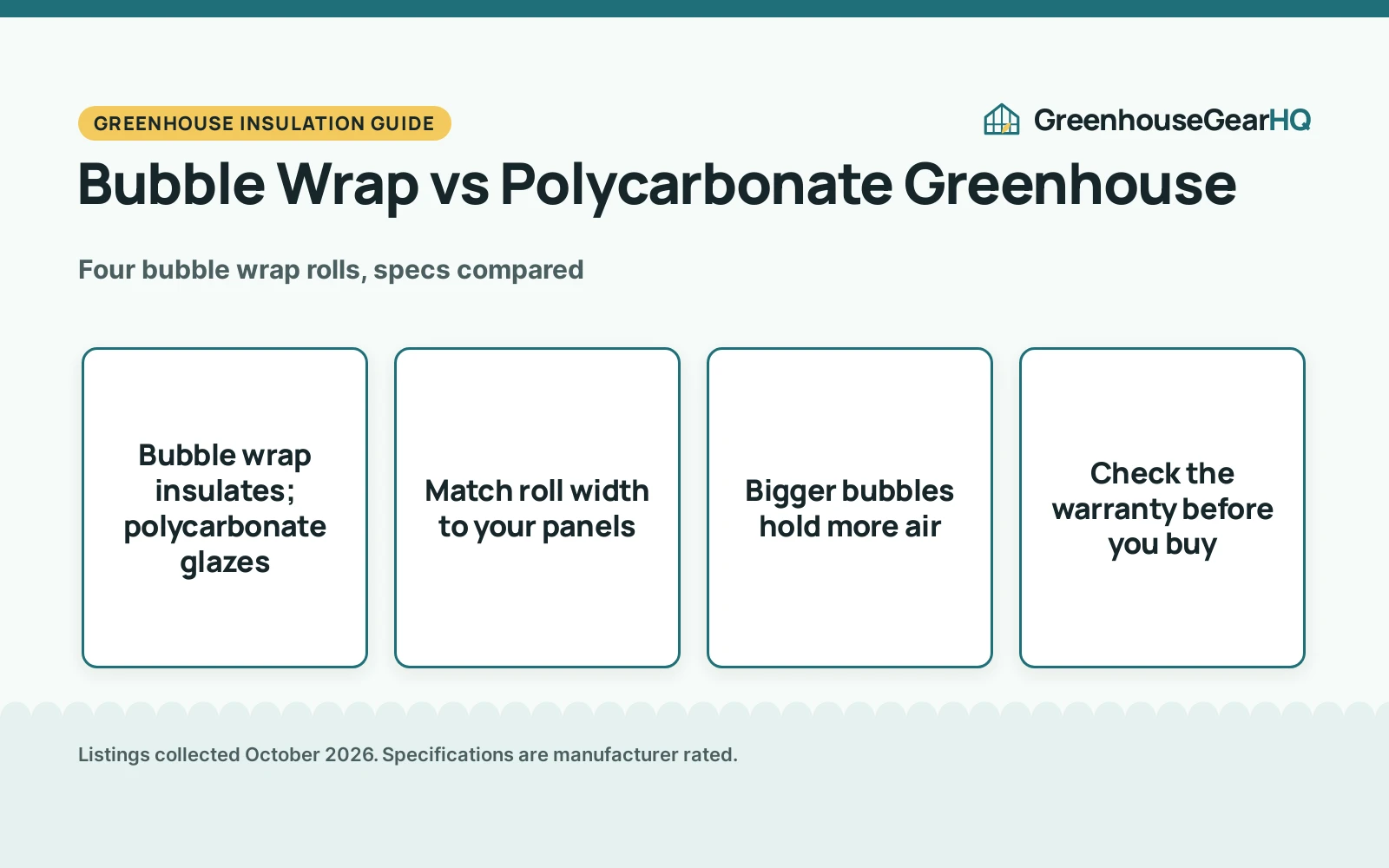
Match the width to your panes
Three rolls here are 12 inches wide and one is 24 inches wide. Measure the glazing panels before you buy: a 24-inch roll covers a wide pane in one pass, while 12-inch strips suit narrow cold-frame lids and small vents. All four rolls are perforated every 12 inches, so tearing straight sections is easy whatever width you pick.
Buy enough length
Lengths run from 30 feet to 350 feet across the four listings. The PackageZoom roll at 30 feet and the Offitecture pack at 72 feet suit small jobs; the Amazon Basics roll at 100 feet and the American Bubble Boy roll at 350 feet suit a full greenhouse. Measure the total glazing area first, then pick the length with the least waste.
Check bubble size and warranty
Three rolls list 3/16 inch bubbles and the Amazon Basics roll lists 5/16 inch bubbles; larger bubbles hold more air per bubble. For warranty, the Amazon Basics roll states a 1-year limited warranty and the PackageZoom roll states a 30-day money-back guarantee, while the other two state no warranty term. Our greenhouse insulation for winter guide covers more options.
What this guide does not cover
We do not give insulation values or temperature ratings, because the listings do not state them. We also do not cover installing polycarbonate panels; follow the panel maker’s instructions and your local building code. For heaters and thermostats, see our best greenhouse insulation for cold climates.
FAQ for growers
Can I leave bubble wrap up all year?
Growers use it as seasonal insulation: put it up in late fall and take it down in spring. Leaving it up shades summer crops and traps heat.
Which roll covers a whole greenhouse?
Measure your glazing first. The American Bubble Boy roll lists 350 feet of 12-inch wrap and the Amazon Basics roll lists 24 inches by 100 feet: the two longest options here.
Does bubble size matter?
The listings state 3/16 inch bubbles on three rolls and 5/16 inch bubbles on the Amazon Basics roll. Larger bubbles hold more air per bubble.
Keep reading
See every Greenhouse Film and Tape guide and all Greenhouses guides.
More picks: bubble wrap for greenhouse insulation, aluminum vs polycarbonate greenhouse, greenhouse insulation for winter and greenhouse insulation for cold climates.