On this page
Top picks at a glance
As an Amazon Associate I earn from qualifying purchases.
- 1
 Abbott Collection 27-Carolyn Bell Shaped Glass Cloche9.6/10View on Amazon
- 2
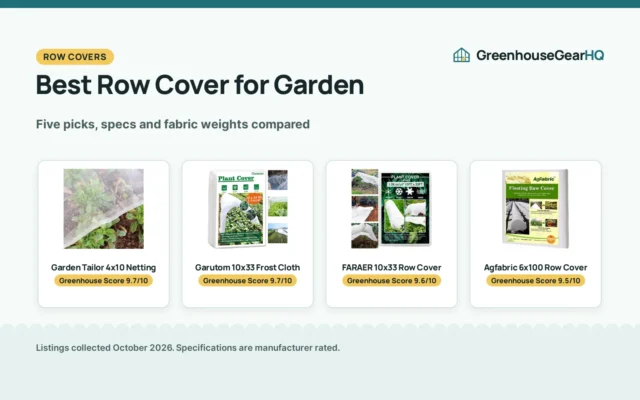
 Garden Tailor 4x10 Foot Fine Mesh Garden Netting Row Cover9.7/10View on Amazon
- 3
 12Pcs garden cloche for plantsView on Amazon
- 4
 Plant Protector Chicken Wire Cloche 8 PscView on Amazon
- 5
 Coloch 5 Pack Garden Chicken Wire ClocheView on Amazon
- 6
 CYS EXCEL Dome Glass ClocheView on Amazon
- 7
 CYS EXCEL Glass Bell Dome ClocheView on Amazon
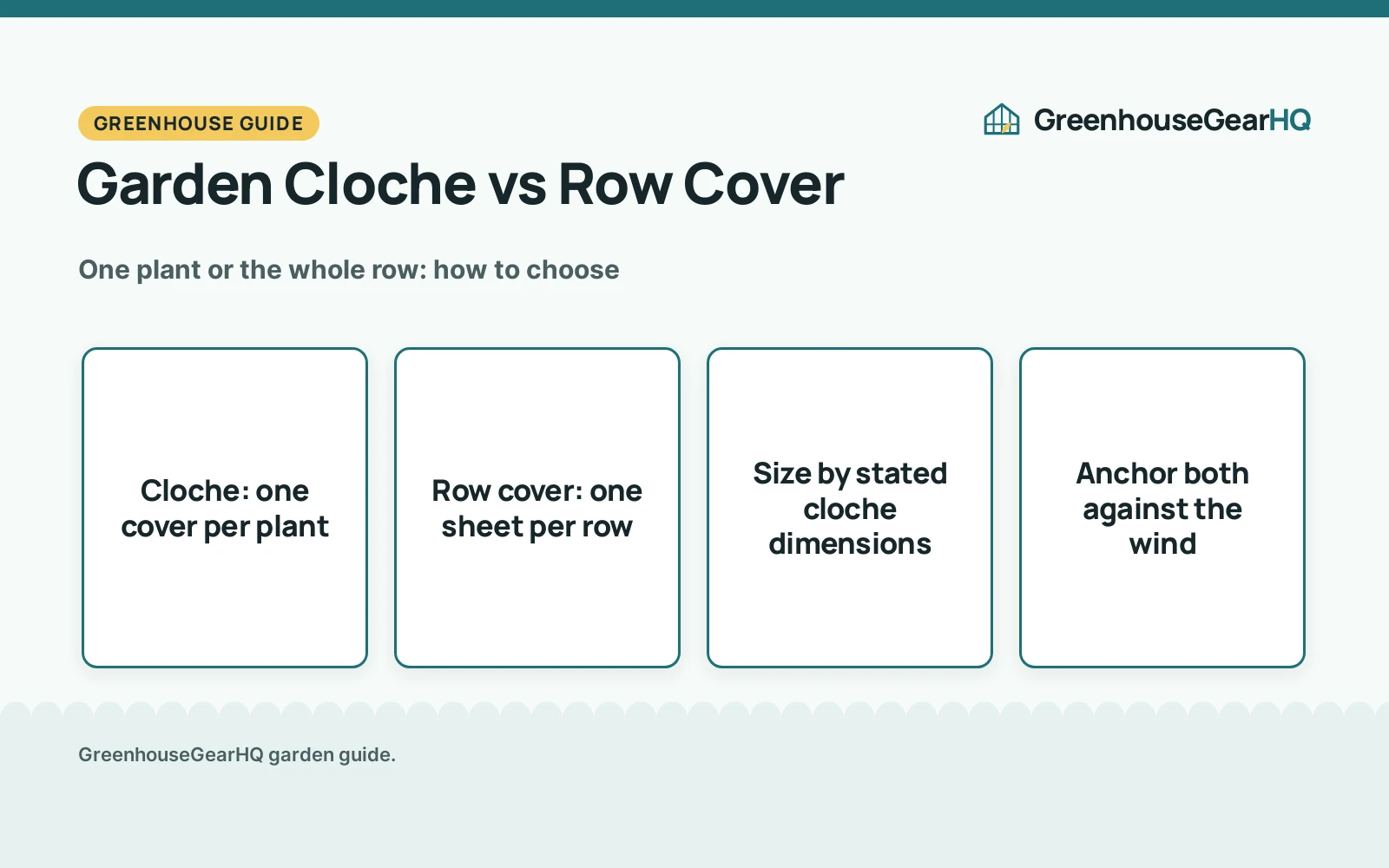
The first frost warning of the fall is when the garden cloche vs row cover question stops being abstract, and the answer is simple: a cloche guards an individual plant, while a row cover shields a whole bed or row at once. They protect against the same enemies, frost and hungry animals, but one is a personal umbrella and the other is a blanket. This guide walks through the difference step by step, with concrete figures from the cloche listings we compared.
Other options worth a look
 12Pcs garden cloche for plantsCheck price on Amazon
 Plant Protector Chicken Wire Cloche 8 PscCheck price on Amazon
 Coloch 5 Pack Garden Chicken Wire ClocheCheck price on Amazon
 CYS EXCEL Dome Glass ClocheCheck price on Amazon
 CYS EXCEL Glass Bell Dome ClocheCheck price on Amazon
GreenhouseGearHQ earns a commission when you buy through links on this page, at no extra cost to you. As an Amazon Associate I earn from qualifying purchases. Affiliate disclosure.
Garden cloche vs row cover: the short answer
Pick a garden cloche when you have a few prized plants to protect: seedlings, new transplants or the tomatoes you cannot bear to lose. Pick a row cover when the whole bed needs shielding, or when frost threatens across the garden. Cloches come sized per plant, like the jixsloft 30-pack at 9.18 inches tall by 7.56 inches in diameter, while row covers are sized by the row, so the choice follows how much of the garden you need to cover. If you already use cold frames, our garden cloche vs cold frame comparison covers the next step up.
What a garden cloche is
A cloche is a small cover that sits over one plant, shaped like a bell or dome. The plastic versions work like a mini greenhouse: the jixsloft cloche lists a transparent PVC dome with a ventilated top to circulate air, and the RooTrimmer 10-pack lists clear domes at 9.8 inches in diameter by 6.7 inches in height that fit 3-gallon, 10-inch diameter nursery pots, with 99.9% light transmission stated. The wire versions are cages that keep animals out: the Sapbontchi set lists 6 wire cloches at 20 inches tall by 12 inches in diameter with 24 anchors, and the DHAMPOOH 12-pack lists 20 by 12 inch wire cages with a flip-top lid and 4-inch folding stakes. Every cloche in the listings is sold as a multi-pack, from 6 to 30 pieces, so you cover plants one by one.
What a row cover is
A row cover is fabric laid over a row of plants, either draped directly on them or held up by hoops. Unlike a cloche, it has no stated size in the listings we compared, and it covers area rather than individual plants: one length protects a whole planting row, not a single seedling. It goes on and comes off faster than placing dozens of cloches, which is why it suits full beds of greens or row crops. See our row cover vs frost cloth guide for how cover fabrics compare among themselves, and our best row cover hoops picks for the support underneath.
| Feature | Garden cloche | Row cover |
|---|---|---|
| Covers | One plant per cloche | A whole row or bed |
| Typical stated sizes | 9.18 x 7.56 in to 20 x 12 in | Not stated in these listings |
| Venting | Ventilated tops or open mesh stated | Breathable fabric |
| Animal protection | Wire cages with stakes or anchors stated | Barrier over the row |
How to choose between them
Step 1: Count what needs protecting
Walk the beds and count. A handful of tomatoes or peppers argues for cloches: the Sapbontchi 6-piece set or the DHAMPOOH 12-pack covers that scale. A full bed of lettuce or carrots argues for a row cover, where one piece of fabric replaces many individual covers.
Step 2: Match the cloche size to the plant
Measure the plant, then pick a cloche taller and wider than it. Seedlings fit the small jixsloft domes at 9.18 by 7.56 inches or the RooTrimmer domes at 9.8 by 6.7 inches; taller transplants need the 20-inch wire cages from Sapbontchi, DHAMPOOH or TAOMENNI. A cloche that crushes the foliage does more harm than the frost.
Step 3: Secure whatever you choose
Both need holding down. The listings state anchors, stakes and legs on the cloche side: 24 anchors with the Sapbontchi set, 4-inch folding stakes on the DHAMPOOH cages, and 2.95 to 3.1 inch legs on the DFJFIFF models. Row covers need hoops or weights at the edges; our best row cover for tomatoes roundup shows how they are held over crops.
FAQ for growers
Can a cloche replace a row cover?
For a few plants, yes. For a full bed, placing dozens of cloches costs more effort than one row cover, so scale decides.
Do cloches need ventilation?
Yes. The jixsloft listing states a ventilated top on the dome, and the wire cloches are open mesh that lets air and rain through.
Will a row cover protect against animals?
It puts a barrier over the row. For dedicated animal protection, the wire cloches state cage-style coverage with stakes or anchors.
How do I stop cloches blowing away?
Use the stated anchoring: the Sapbontchi set includes 24 anchors, the DHAMPOOH cages have 4-inch folding stakes, and the DFJFIFF models list 2.95 to 3.1 inch legs.
Which is easier to water through?
Wire cloches with flip or split tops open for watering without lifting the whole cage, as stated on the DHAMPOOH, TAOMENNI and DFJFIFF listings. Plastic domes come off by hand.
Keep reading
See every cold frame guide and all greenhouse guides.
More picks: row cover vs frost cloth, cloche vs cold frame, row cover hoops and glass vs plastic cloches.