On this page
Top picks at a glance
As an Amazon Associate I earn from qualifying purchases.
- 1
 Frost King RC60 Heating CablesView on Amazon
- 2
 ALECOIL 50View on Amazon
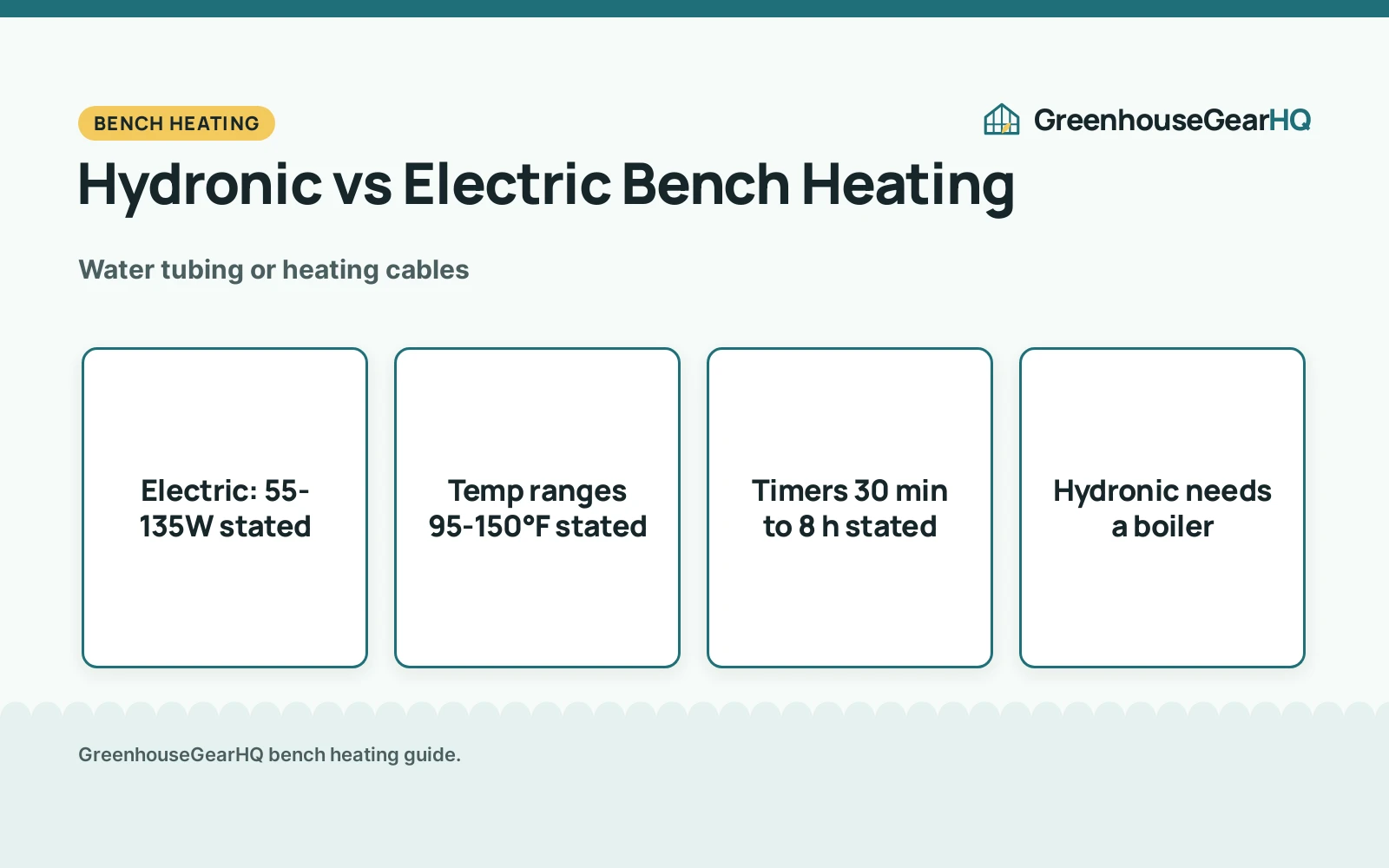
Hydronic vs electric bench heating is a choice between warm water and electric current under the bench. Hydronic bench heating circulates heated water through tubing laid under or in the bench, so the whole bench surface warms evenly from one boiler or water heater. Electric bench heating runs heating cables or mats under the bench, powered directly from an outlet, with thermostats and timers doing the control. Choose hydronic when the bench is large and runs all season; choose electric when the bench is small, the budget is tight and you want simple plug-in control. The reference listings below are electric heating products, so their figures describe electric heating specs; no hydronic figures were available.
Other options worth a look
 Frost King RC60 Heating CablesCheck price on Amazon
 ALECOIL 50Check price on Amazon
GreenhouseGearHQ earns a commission when you buy through links on this page, at no extra cost to you. As an Amazon Associate I earn from qualifying purchases. Affiliate disclosure.
Hydronic vs electric bench heating: the short answer
| System | Heat source | Install | Control | Best for |
|---|---|---|---|---|
| Hydronic | Heated water in tubing | Boiler, pump, tubing runs | Aquastat or mixing valve | Large benches, all-season runs |
| Electric | Heating cables or mats | Lay cable, plug in | Thermostat, timers | Small benches, simple setups |
How hydronic bench heating works
Hydronic bench heating moves heat in water. A boiler or dedicated water heater warms the water, a pump circulates it through tubing looped under the bench top, and the bench surface radiates that warmth upward to the root zone. Because water holds heat well, the bench temperature stays even across its length with no hot spots under individual cables. The trade-off is infrastructure: you need the heater, the pump, the tubing runs and a control such as an aquastat, and the system takes longer to warm up from cold than a cable that heats the moment it is switched on. None of the reference listings describes hydronic equipment, so no figures are stated here; treat the comparison below as the electric side only.
How electric bench heating works
Electric bench heating is heating cable or mat technology: current through resistive cable becomes heat right under the bench. The reference listings are electric heating products, and their figures show what electric control looks like. The VIBOOS listing states a 104 to 140°F range with 6 heat settings and 4 timers at 30, 60 and 120 minutes; the Diweez listing states 104 to 140°F with 9 heat levels, 55 watts and 1, 4 and 8 hour auto-off timers. The NautDuty listing states 135 watts on 120 volts with a max of 149°F and timers from 1 to 6 hours, while the DiHTing listing states 95 to 131°F with 3-level timer settings. The HOPERAN listings state max temperatures of 130°F and 150°F. In short: electric gives you plug-in heat with fine stepped control and automatic shutoff, sized by wattage per bench.
Which should you choose?
Choose hydronic when the bench area is large and heated for months at a time. Even heat across a long bench and one central heater serving several benches are the classic reasons growers plumb water instead of wiring cable. Choose electric when the setup is modest: one or two benches, a standard outlet nearby and no appetite for plumbing. The electric listings show how simple that path is: the Diweez listing states a 55-watt draw with built-in overheat protection and a 1-year manufacturer warranty, and the FIGERM listing states ETL certification with a lifetime warranty. For more heater options, see our greenhouse heaters guides.
What the listings tell you to check
- Wattage: the listings state 55 watts (Diweez), 135 watts (NautDuty) and 3.6 watts (Beurer); size the circuit to the bench.
- Temperature range: stated ranges run 95 to 150°F across the listings; match the range to the crop’s root-zone needs.
- Timers and auto-off: stated from 30 minutes (VIBOOS, DiHTing) to 8 hours (Diweez); the FIGERM listing states auto-off after 2 hours.
- Safety listings: the FIGERM listing states ETL certification; the Diweez listing states overheat protection.
- Warranty: the HOPERAN, Suteck and Diweez listings state a 1-year warranty; the FIGERM listing states a lifetime warranty.
FAQ for growers
What is hydronic bench heating?
Heated water circulates through tubing under the bench, warming the whole surface evenly from one boiler or water heater. No hydronic figures were stated in the reference listings.
What wattage do electric bench heaters use?
The reference listings state 55 watts on the Diweez, 135 watts on the NautDuty and 3.6 watts on the Beurer; check the listing for the product you choose.
Do electric heaters have timers?
The listings state timers from 30 minutes (VIBOOS, DiHTing) to 8 hours (Diweez), and the FIGERM listing states auto-off after 2 hours.
Which is cheaper to run?
No running-cost figures were stated in the listings. Compare the stated wattage of the electric option against the fuel cost of the water heater for the hydronic option.
Keep reading
See every greenhouse heaters guide and all light and heat guides.
More picks: greenhouse heaters, greenhouse thermostats, light and heat.