On this page
Top picks at a glance
As an Amazon Associate I earn from qualifying purchases.
- 1
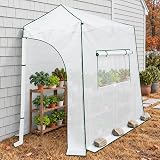 EAGLE PEAK 9x4 Easy Setup Pop Up Greenhouse9.6/10View on Amazon
- 2
 Gentingbro Lean-to Greenhouse with Roll-Up Zippered Door9.4/10View on Amazon
- 3
 Velway Walk-In Greenhouse with 12 Shelves9.6/10View on Amazon
Lean to greenhouse ideas all start with the same move: pick the wall it leans on, then match the structure to the space. A slim 6×2 fits a garage wall, a 6×4 or 8×4 walk-in suits a house wall with room to grow, a pop-up lean-to gets the opening season growing fast, and a big sunroom-style lean-to like the Palram 6×10 or the Domi 10×12 doubles as a room. Every number below comes from the listings.
Other options worth a look
 Lean to Greenhouse for Outdoors: Ohuhu Portable Tomato GreenCheck price on Amazon
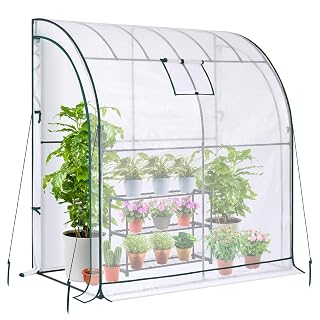 Lean to Greenhouse with 3-Tier Shelves: Ohuhu PortableCheck price on Amazon
 Ohuhu Tomato Greenhouse for Outdoors: Portable Lean to GreenCheck price on Amazon
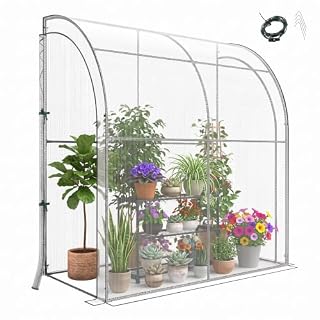 DREAMADE Walk-in GreenhouseCheck price on Amazon
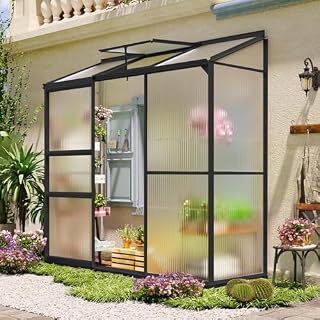 Showellgard Lean-to Polycarbonate Greenhouse 6x2 FTCheck price on Amazon
 6 x 4 Ft Lean-to GreenhouseCheck price on Amazon
GreenhouseGearHQ earns a commission when you buy through links on this page, at no extra cost to you. As an Amazon Associate I earn from qualifying purchases. Affiliate disclosure.
Lean to greenhouse ideas: the short answer
A lean-to uses an existing wall as a side, which saves space and material. For a narrow side yard, the Showellgard 6×2 listings give 71.65 x 27.16 x 75.98 inches with 4mm twin-wall polycarbonate. For a house wall with walking room, the Orixforce 6×4 lists 50 x 75 x 84 inches and the Outsunny 8×4 lists 50 x 99.5 x 94.5 inches. For living space, the Palram 6×10 lists 127.6 x 78.9 x 97.2 inches at 234.1 pounds and the Domi 10×12 lists 120 square feet. For speed, the EAGLE PEAK 9×4 pop-up (on Amazon) lists a 26 pound solo setup.
Idea 1: the wall-backed walk-in
The classic lean-to idea is a walk-in structure pinned to the house wall. The EAGLE PEAK 9×4 lists 106.3 x 47.2 x 98.4 inches, 2 doors, 1 vent and 2 expansion bolts to fasten to outdoor walls, with wind ropes and stakes. The GENTINGBRO lean-to (on Amazon) lists 79 x 31 x 59 inches with 4 wind ropes and 4 ground stakes and a sloped roof that drains rain. Both lean against a wall, fence or shed, so the wall gives shelter on a side and you reach every shelf from the door. The GENTINGBRO listing warns to check the cover orientation front to back before zipping.
Idea 2: the compact 6×2 against the garage
A 6×2 lean-to is the answer when the wall is short. Both Showellgard 6×2 listings give 71.65 x 27.16 x 75.98 inches at 48.9 pounds, with 4mm twin-wall polycarbonate, an aluminum frame, 2 vents, a built-in gutter and a sliding door. A listing states a 56 mph wind rating and 15 psf snow load. The gutter matters: both describe connecting a hose to gather rainwater for plant watering. A slab or leveled bed under it keeps the sliding door running true.
Idea 3: the 6×4 hobby classic
The 6×4 size is the lean-to sweet spot for hobby growing: wide enough to walk in, small enough to heat. The Orixforce 6×4 lists 50 x 75 x 84 inches at 38 pounds with an aluminum alloy frame, galvanized steel foundation, 1 adjustable roof vent and a sliding door. The FLY BY YAN 6×4 lists 66.9 x 44.9 x 77 inches at 50.9 pounds with 4mm polycarbonate panels, an aluminum frame, an adjustable roof vent, a lockable door and a rain gutter. Compare with lean to vs walk in greenhouses to see when the wall saves real space.
Idea 4: the 8×4 with a foundation
Stepping up, the Outsunny 8×4 lists 50 x 99.5 x 94.5 inches at 47 pounds with a multi-angle adjustable roof vent, a sliding door, a built-in gutter and a foundation with stakes. The maker recommends several people for assembly. The gutter system is the highlight for a lean-to: with the wall behind and the slope in front, rainwater collection becomes part of the daily routine rather than an add-on.
Idea 5: the big model that doubles as a room
2 listings stretch the lean-to idea into living space. The Palram 6×10 sun room lists 127.6 x 78.9 x 97.2 inches at 234.1 pounds, with 4mm twin-wall roof panels, 3mm acrylic wall panels, a hinged side door and a roof vent, designed to attach to the house as a DIY kit. The Domi 10×12 sunroom lists 144 x 115 x 97.3 inches with 120 square feet, sliding lockable doors, mesh screens and a drainage system, plus support pillars for heavy snow. These work as year-round rooms, so the budget and the foundation match that.
Idea 6: the fast pop-up start
For a debut season, speed beats permanence. The EAGLE PEAK pop-up lists a pre-assembled frame with solo setup and no tools, at 26 pounds, with a PE cover, roll-up door and mesh windows, plus a 1-year limited after-sale protection on frames and tops. It is the only listing here that states a warranty term. The Velway walk-in (on Amazon) lists 56.3 x 56.3 x 76.77 inches at 20 pounds with 12 shelves at 22 lb each, 4 wind ropes and 4 stakes. A pop-up is a trial: learn the site for a season, then commit to polycarbonate.
Make any lean-to work: anchoring and water
Every lean-to here expects tie-downs, and most include them: the EAGLE PEAK lists 2 expansion bolts plus ropes and stakes, the GENTINGBRO lists 4 ropes and 4 stakes, the Velway lists 4 ropes and 4 stakes. Use the ropes from the start, not after a storm hits, and sink the base posts per the maker. Gutters do double duty on a lean-to: the Showellgard, Outsunny and FLY BY YAN listings all describe gutter systems, and the Showellgard and Outsunny describe collecting rainwater for watering. A hose on the gutter turns the roof into the water supply.
What this guide does not cover
We do not size heaters or give planting calendars, because they depend on your climate and crops. Your local extension office can advise on timing for your area. We also do not cover freestanding greenhouses in depth; see lean to vs freestanding greenhouses for that choice, and our greenhouse fan guides for airflow.
In the Greenhouse
What I would do with these listings: pick the wall ahead, then buy the lean-to that fits it. A south-facing house wall with a 6×4 like the Orixforce is the sweet spot for a debut lean-to, because the wall stores daytime heat and the sliding door makes watering a habit. The gutter hose is the detail I would set up from the start: free water is the difference between a greenhouse that thrives and another that dries out. The Showellgard silver 6×2 earns its place for narrow walls, and the pop-up earns its place as a trial before committing to polycarbonate.
FAQ for growers
What size lean-to greenhouse should I start with?
It depends on the wall. The Showellgard 6×2 listings give 71.65 x 27.16 x 75.98 inches for narrow walls; the Orixforce 6×4 lists 50 x 75 x 84 inches and the Outsunny 8×4 lists 50 x 99.5 x 94.5 inches for hobby growing; the Palram 6×10 lists 127.6 x 78.9 x 97.2 inches for living space.
How do I anchor a lean-to greenhouse?
Use the included hardware from the start. The EAGLE PEAK lists 2 expansion bolts to fasten to walls plus ropes and stakes; the GENTINGBRO and Velway list 4 ropes and 4 stakes each.
Do lean-to greenhouses have gutters?
Several do. The Showellgard, Outsunny and FLY BY YAN listings describe built-in gutter systems, and the Showellgard and Outsunny describe collecting rainwater for watering.
Which of these has a warranty?
Only the EAGLE PEAK states a term: a 1-year limited after-sale protection on frames and tops. The others state no warranty term.
Which has a wind rating?
Only a listing states a term: the Showellgard silver 6×2 lists a 56 mph wind rating and 15 psf snow load.
Keep reading
See every greenhouse guide and all light and heat guides.
More picks: lean to vs walk in greenhouses, lean to vs freestanding, 4mm vs 8mm polycarbonate and shade cloth for the roof.