On this page
When the seed trays on the bench are full of young plants and the beds outside are ready, the next job is moving each seedling without crushing its roots or bending over every row. A manual seedling transplanter is a hand tool that digs the hole, drops the seedling in and covers the roots in one motion, and this guide explains how the main types work, which sizes fit common seedlings and how to plant a row step by step.
GreenhouseGearHQ earns a commission when you buy through links on this page, at no extra cost to you. As an Amazon Associate I earn from qualifying purchases. Affiliate disclosure.
What a manual seedling transplanter does
The name covers a tube planter that works standing up and hand tools that work at the bench. The long-handled type is a steel tube with a handle at the top and jaws at the bottom: push the tube into loose soil, drop a seedling down the tube, squeeze the handle and lift, and the jaws open to leave the seedling in the hole with soil closing around the roots. The hand-tool type works at bench height or kneeling: a narrow trowel opens a hole for one seedling at a time, and transplant tongs lift a seedling out of its tray cell with the root ball intact. The seed sower tool picks cover the tool that fills the trays in the first place, and the dibber tool guide covers the hand tool that marks planting holes.
- Tube planter: a long steel tube with a handle and jaws, made to plant rows of vegetables without bending over. The AIWFL listing states a 35.24 inch length, and the BAUSATZ listing states a 34 inch length with a crossbar for spacing rows.
- Trowel: a narrow hand tool for bulbs, seedlings and transplants in beds, pots and raised beds. The CPAI listing states a 2mm stainless steel blade with inch and centimeter depth markings, and the Garden Weasel listing states a 3.0 x 3.0 x 13.0 inch tool with a depth gauge.
- Tongs: stainless steel tongs that lift a seedling out of its tray cell. The Uyeesi listing states an 8.7 inch length with grooved tips and grips.
How to use a manual seedling transplanter, step by step
Step 1: Loosen the ground first
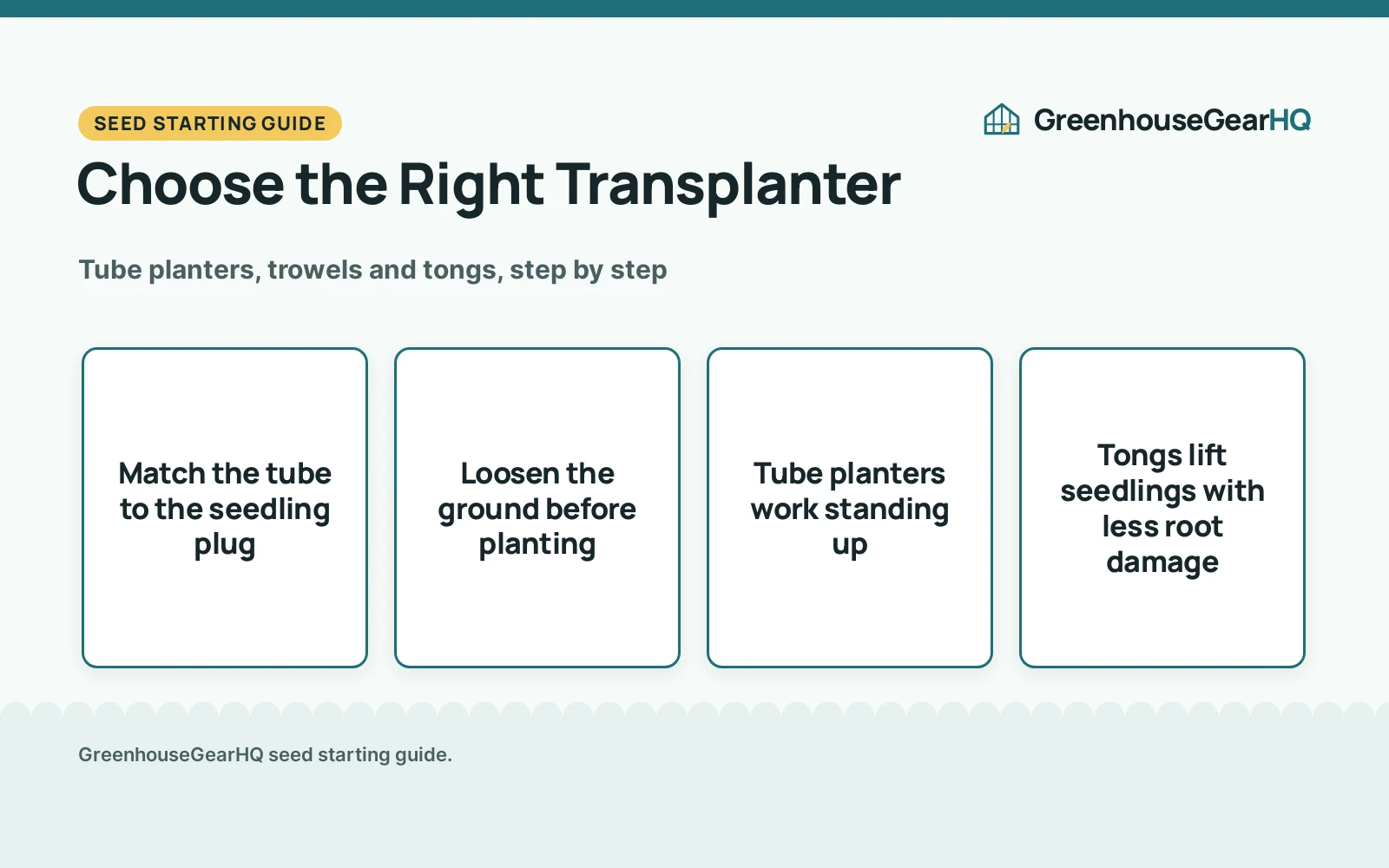
Every tube planter listing in this guide warns against the same mistake: hard, dry or waterlogged ground. Loosen the whole bed before planting, break up clods and pick out stones, because the tube needs soft soil to push in cleanly and the jaws need loose soil to close around the roots. The AIWFL and Ymachray listings both say to avoid digging in dry or overly saturated soil, and the BOZHENYULEI listing says hard soil, clay and large clods are not suitable.
Step 2: Match the tube to the seedling
Check the inner diameter of the tube against the size of the seedling plug. The Ymachray listing states an inner diameter of 7.5cm (3 inches) with an 11.5cm funnel at the top, and the PreAsion and BOZHENYULEI listings state an inner diameter of 2.95 inches. A plug that is wider than the tube will jam, and a plug much narrower than the tube can fall sideways, so match the tool to the tray cell the seedlings grew in. See the how to use seed starter trays guide for lifting seedlings out of cells without tearing roots.
Step 3: Drop the seedling in and squeeze the handle
Push the tube into the loosened soil, drop the seedling down the funnel, then pull the handle like a brake and lift the tube while still squeezing. The jaws open at the bottom, the seedling stays in the hole and the soil closes over the roots as the tube comes up. The Ymachray, PreAsion and BOZHENYULEI listings all describe the same motion, and the PreAsion and Ymachray listings state a spring rated for over 50,000 uses.
Step 4: Check the depth and firm the soil
Plant each seedling at the depth its plug grew at, with the root ball covered and the stem base at soil level. A trowel with depth markings helps where the tube cannot reach: the CPAI listing states inch and centimeter markings on the blade, and the Garden Weasel listing states a depth gauge. Press the soil gently around each seedling with the hands, and water at the base so the soil settles against the roots.
Step 5: Work down the row and keep spacing even
Move down the row in order and keep the gaps between plants even. The BAUSATZ listing includes a crossbar that measures the distance between planted seedlings, and the BOZHENYULEI listing includes a stainless steel measuring ruler 19.68in (50cm) long that rotates to set spacing. Mark the row ends before starting so the last plants in the row do not crowd the bed edge.
| Tube planter listing | Stated height | Stated inner diameter |
|---|---|---|
| AIWFL single handle | 35.24 inches | Not stated |
| Ymachray 2 handle | 90cm (35.5 inches) | 7.5cm (3 inches) |
| PreAsion single handle | 31.1 inches | 2.95 inches |
| BAUSATZ 2 piece | 34 inches (86.5cm) | Not stated |
| BOZHENYULEI double handle | 79cm (31.1 inches) | 7.5cm (2.95 inches) |
Long-handled tube or hand tool?
Choose by the size of the job and the crop. A tube planter suits long rows of vegetables: the AIWFL, Ymachray and PreAsion listings name tomato, onion, watermelon, potato, pumpkin, pepper, cucumber, cabbage, chili, carrot and squash, and the BAUSATZ listing adds that the tool works standing up. A trowel suits single plants, bulbs and tight spots between established flowers: the Jardineer listing states a 17.0 x 9.6 x 4.5 inch long-handled tool with a cushioned grip, and the CPAI listing states a narrow 2mm blade for working between plants. Tongs suit the bench, where seedlings come out of tray cells: the Uyeesi listing states an 8.7 inch tool with grooved tips that lift the seedling with the root ball. One listing adds a power pedal for pressing the tube into hard ground, which suits heavier soil where a single handle needs more force.
What this guide does not cover
This guide does not give planting depths, spacing or watering amounts, because they depend on the crop, the tray cell and the soil. The seed packet and the tool maker give those figures, and the local extension office can advise on timing for the area. This guide also does not cover fertilizer or pest products; follow the product label.
FAQ for growers
What size manual seedling transplanter do I need?
Match the tube to the seedling plug. The Ymachray listing states an inner diameter of 7.5cm (3 inches), and the PreAsion listing states 2.95 inches. Measure the plug before ordering, and pick a tube the plug slides through without jamming.
Can a manual seedling transplanter plant through mulch film?
Yes, some tube planters are made for it. The AIWFL listing states that the tool can break the mulching film while it digs the hole and plants the seedling, and the Ymachray listing states the same for its tube planter. Check the listing for the model being bought, since hand trowels and tongs do not do this.
How long does the spring in a tube transplanter last?
The listings that state a figure agree. The Ymachray listing states a spring rated for more than 50000 times, and the PreAsion listing states a spring mechanism for over 50,000 times of use. Listings that state no figure give no basis for a comparison.
Do I have to bend over to use a manual seedling transplanter?
Not with a long-handled tube planter. The BAUSATZ listing states a 34 inch tool for stand-up planting, the AIWFL listing states a 35.24 inch length, and the Ymachray listing states a 90cm (35.5 inch) height. Hand trowels and tongs work at the bench or kneeling, so they suit small jobs and trays rather than long rows.
Keep reading
See the seed starting how to guide, the best seed sower tool picks and the best soil blocker for seed starting picks. Also see the how to use seed starter trays guide.
More picks: seed starting trays with dome, seed starting mix, seed starting labels and cell seed starting trays.