On this page
Top picks at a glance
As an Amazon Associate I earn from qualifying purchases.
- 1
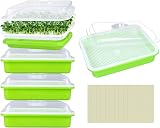 Legigo 5 Pack Seed Sprouter Trays with Lids9.6/10View on Amazon
- 2
 Gardzen 5-Set Seed Starter Tray Kits9.7/10View on Amazon
- 3
 Hemlock Home Brewing 1020 Seed Starting Trays9.7/10View on Amazon
- 4
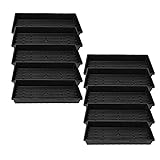 Bootstrap Farmer 10-Pack Black 1020 TraysView on Amazon
- 5
 10 Pack Microgreens TraysView on Amazon
- 6
 RooTrimmer 10 Pack 1020 Trays and 10 Pack 1020 Mesh BootomView on Amazon
- 7
 RooTrimmer 10 Pack 1020 Mesh TraysView on Amazon
- 8
 RooTrimmer 20 Pack 1020 TraysView on Amazon
- 9
 1020 Trays SetView on Amazon
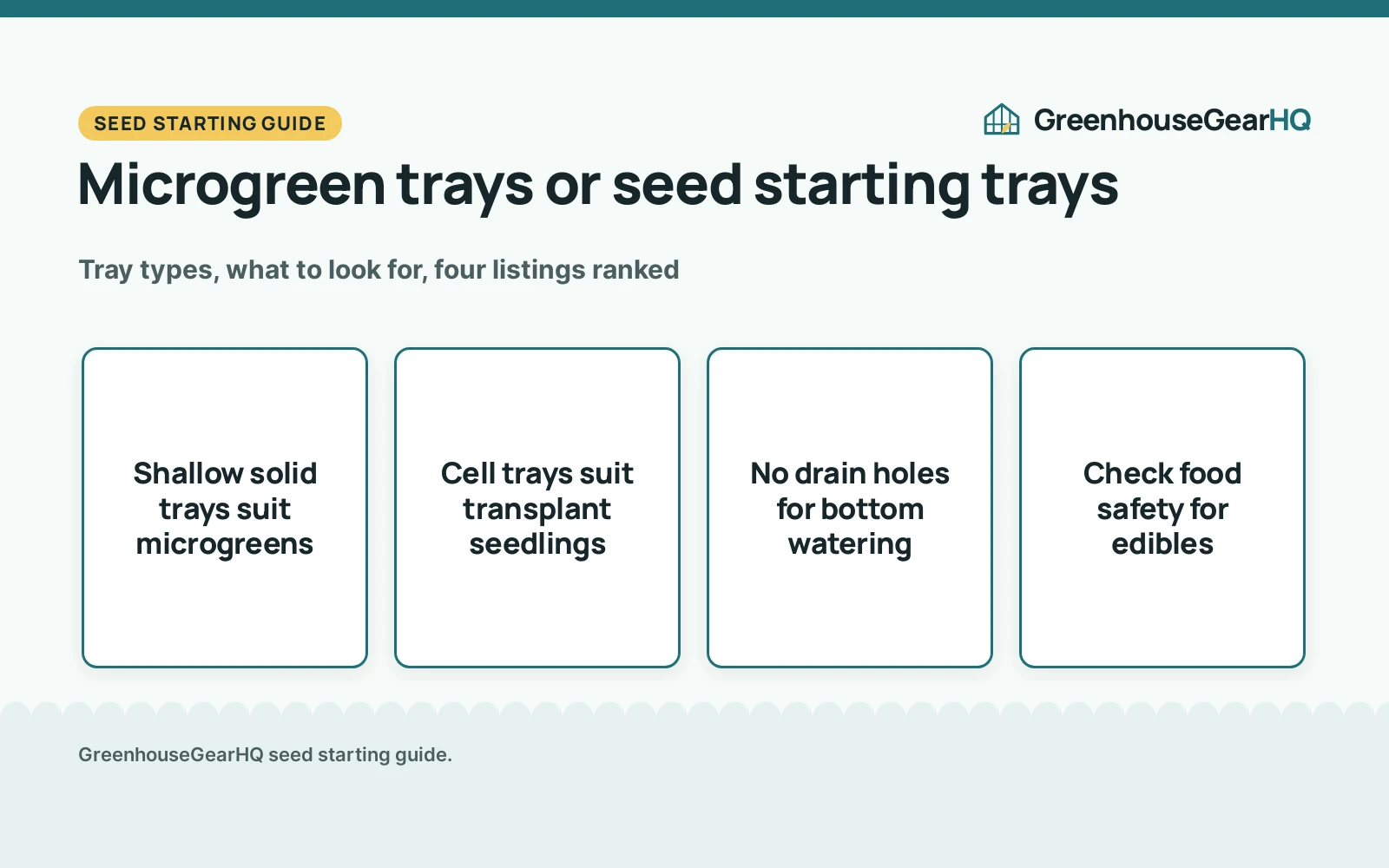
Microgreen trays vs seed starting trays comes down to what you are growing: microgreen trays are shallow, solid trays for growing microgreens densely and cutting them young, while seed starting trays are usually cell trays with domes for starting seedlings to transplant. In practice the lines blur, because solid 1020 trays without drain holes work for both jobs. This guide explains the difference, what to look for, and ranks four tray listings we compared.
Other options worth a look
 Bootstrap Farmer 10-Pack Black 1020 TraysCheck price on Amazon
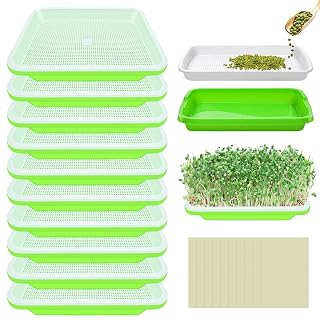 10 Pack Microgreens TraysCheck price on Amazon
 RooTrimmer 10 Pack 1020 Trays and 10 Pack 1020 Mesh BootomCheck price on Amazon
 RooTrimmer 10 Pack 1020 Mesh TraysCheck price on Amazon
 RooTrimmer 20 Pack 1020 TraysCheck price on Amazon
 1020 Trays SetCheck price on Amazon
GreenhouseGearHQ earns a commission when you buy through links on this page, at no extra cost to you. As an Amazon Associate I earn from qualifying purchases. Affiliate disclosure.
Microgreen trays vs seed starting trays: the difference
A microgreen tray is typically a shallow solid tray, often without drain holes, sized around 10 by 20 inches. You spread seed densely, cover to germinate, then uncover under light and harvest in a week or two. A seed starting tray is typically a cell tray: individual cells per seedling, often with a humidity dome, grown until transplant size. The four listings compared here are all solid trays without drain holes, which suits bottom watering and hydroponic mats for either use.
The practical difference is depth and drainage. Microgreen growers often want a solid tray to hold water under a grow pad; seed starters often want cells and domes. If you already own 1020 trays, you can grow microgreens in the solid ones and start seeds in the cell inserts.
What to look for in a tray
Drain holes or solid
All four listings here are solid trays without drain holes, which the listings position for bottom watering, drip trays and hydroponic use. Solid trays hold water; trays with holes drain it. The Bootstrap Farmer listing notes you can order trays with holes separately if you want top drainage. Decide by your watering method, not by the tray name.
Depth and size
Depth runs from 1.46 inches on the compact Legigo to 2.5 inches on the Bootstrap Farmer and 3 inches on the Yield Lab, with the Living Whole Foods at 2 inches. Deeper trays hold more soil and water; shallower ones suit microgreens. Three listings use the standard 10 by 20 inch footprint, while the Legigo measures 13.07 by 9.85 inches for smaller spaces.
Food safety and material
If you grow edibles, check the material claim. The Bootstrap Farmer listing states food safe and BPA free PP 5 plastic, made for edible crops. The other three list plastic without a food-safety claim. For microgreens you eat, the stated claim matters.
The trays we compared
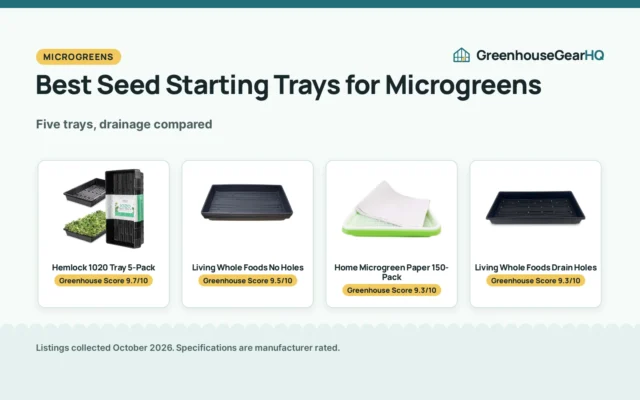
Ranked by their listings, the Bootstrap Farmer 10-pack leads: 2.5 inch deep 1020 trays with no drain holes, BPA free and food safe PP 5, made in the USA, with a two year warranty and a humidity dome in the box. Next, the Living Whole Foods 5-pack: 21 by 11 by 2 inch solid trays, reusable, positioned as drip trays and for hydroponic growing. Third, the Yield Lab 5-pack: 21 by 11 by 3 inch trays at 1.5 pounds, listed for 20 clones or seedlings with hydroponic grow mats. Fourth, the Legigo 10-pack: compact 13.07 by 9.85 by 1.46 inch trays with a transparent cover and planting paper, for smaller setups. For dedicated microgreen setups, see the best microgreen growing trays for beginners roundup.
What this guide does not cover
This guide covers tray types only, not grow lights, heat mats or nutrients. It does not cover cell inserts or humidity domes in depth, and it does not recommend specific seeds or varieties. For full setups, see the best seed starting trays roundup.
FAQ for growers
Can I use a seed starting tray for microgreens?
Yes, if it is a solid tray. The listings here describe solid trays without drain holes for both microgreens and seedlings. Cell trays also work but are harder to harvest densely from.
Do microgreen trays need drain holes?
Not necessarily. All four listings here are solid trays without drain holes, positioned for bottom watering and hydroponic mats. Trays with holes suit top watering instead.
What size is a standard tray?
Three listings use the 10 by 20 inch footprint, the common 1020 size. The Legigo is smaller at 13.07 by 9.85 inches. Match the tray to your shelf or rack.
Are these trays food safe?
Only the Bootstrap Farmer listing states food safe and BPA free PP 5 plastic. The other three list plastic without that claim, so check the listing if you grow edibles.
Keep reading
See every seed starting tray guide and all seed starting guides.
More picks: seed starting trays, microgreen growing trays for beginners, microgreens growing kits and humidity domes.