On this page
Top picks at a glance
As an Amazon Associate I earn from qualifying purchases.
- 1
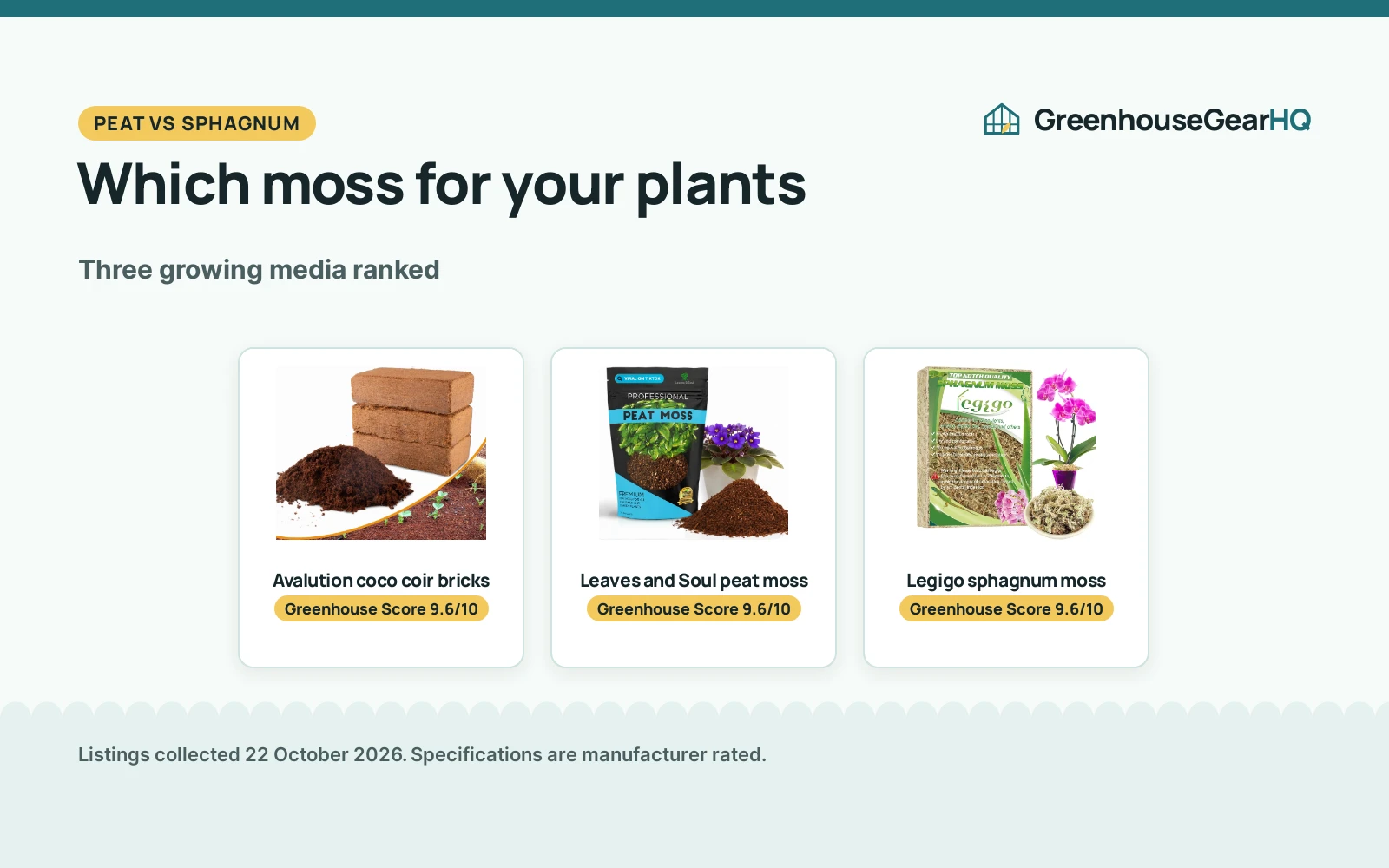
 Avalution coco coir bricks9.6/10View on Amazon
- 2
 Leaves and Soul peat moss9.6/10View on Amazon
- 3
 Legigo sphagnum moss9.6/10View on Amazon
The verdict: pick peat moss when you want a familiar, lightweight potting soil amendment that loosens soil and holds moisture for everyday plants. Pick sphagnum moss when you grow orchids, carnivorous plants or ferns, or need a long-fiber moss for terrariums and hanging baskets. This guide compares peat moss vs sphagnum moss side by side, with three current listings as concrete examples.
GreenhouseGearHQ earns a commission when you buy through links on this page, at no extra cost to you. Read our affiliate disclosure.
Three examples
| # | Product | Greenhouse Score | Buy |
|---|---|---|---|
| 1 | Avalution coco coir bricks | 9.6/10 | Buy on Amazon |
| 2 | Leaves and Soul peat moss | 9.6/10 | Buy on Amazon |
| 3 | Legigo sphagnum moss | 9.6/10 | Buy on Amazon |
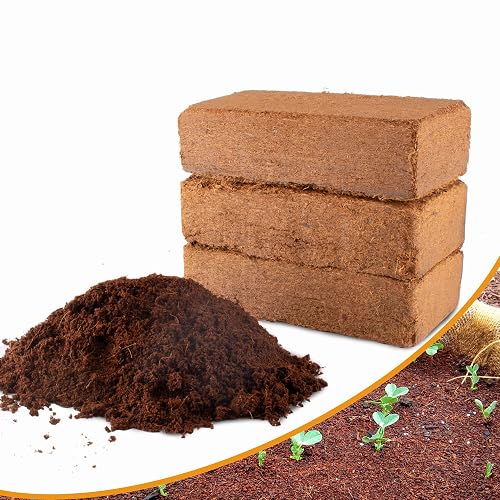
Avalution coco coir bricks
Three compressed coir bricks that expand to 18 QT, absorb 8 to 10 times their weight in water, and carry low EC with balanced pH.
Pros
- 3 bricks expand to 18 QT
- Absorbs 8 to 10 times its weight in water
- Low EC and balanced pH stated
- Seed germination named as a use
Cons
- Coir, not true peat moss
- Needs 4 to 5 qt water per brick to expand
- No warranty stated in the listing

Leaves and Soul peat moss
A 2.2 qt resealable bag of lightweight organic peat moss, made in the USA, for improving drainage and moisture retention in potting soil.
Pros
- True peat moss, lightweight and organic
- 2.2 qt resealable bag
- Made in the USA
- Seedlings named among many uses
Cons
- Smallest amount here at 2.2 qt
- No pH or EC stated
- No water absorption figure stated
- Satisfaction guarantee only, no formal warranty
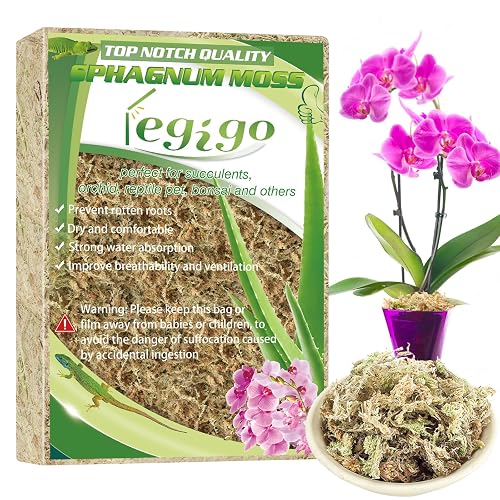
Legigo sphagnum moss
Six quarts of natural long-fiber sphagnum moss for orchids, carnivorous plants, ferns and terrariums, re-potting 1 to 2 medium plants.
Pros
- Long-fiber sphagnum, pure and natural
- 6 QT bag, the most volume here
- Targets orchids, carnivorous plants, ferns
- No twigs, roots or debris claimed
Cons
- Difficult to re-wet once fully dry
- No seed starting use stated
- No warranty stated in the listing
As an Amazon Associate I earn from qualifying purchases.
Other options worth a look
 Perfect Plants Organic Sphagnum Peat MossCheck price on Amazon
 Organic Sphagnum Peat MossCheck price on Amazon
 Espoma Organic Peat Moss; All-Natural Horticultural GradeCheck price on Amazon
 Organic Peat MossCheck price on Amazon
 Peat Moss for PlantsCheck price on Amazon
 Horticulture Inc Peat MossCheck price on Amazon
Peat moss vs sphagnum moss: side by side
| Avalution coco coir | Leaves and Soul peat moss | Legigo sphagnum moss | Amazon | |
|---|---|---|---|---|
| Side | Peat moss side (coir) | Peat moss | Sphagnum moss | |
| Amount | 3 bricks, 18 QT expanded | 2.2 qt bag | 6 QT (4 oz) | |
| Water claim | Absorbs 8-10x its weight | Retains moisture, drains excess | Retains water, drains, ventilates | |
| Best for | Seed germination, potting | Potting soil amendment | Orchids, carnivorous, terrariums |
Specifications are manufacturer stated, as published on each listing and collected 22 October 2026. A figure from one listing describes that listing only.
What they are
Peat moss is the decomposed, soil-like material harvested from peat bogs, sold here as a lightweight potting soil amendment in a 2.2 qt resealable bag. Sphagnum moss is the long-fiber, dried moss sold here in a 6 QT bag for orchids, carnivorous plants, ferns and terrariums. The third listing sits on the peat moss side as a substitute: coco coir bricks, compressed coconut husk fiber that expands in water, marketed as a peat moss mix. All three are natural, organic growing media; they differ in texture, water behavior and best use.
Water retention and drainage
All three listings promise the same balancing act: hold water, drain the excess. The Avalution coir bricks make the strongest claim, absorbing 8 to 10 times their weight in water, with each brick soaked in 4 to 5 qt of water to expand. The Leaves and Soul peat moss claims to hold the right amount of water while letting excess drain, preventing overwatering and root rot. The Legigo sphagnum claims good water retention and drainage with excellent ventilation, plus a warning from its own tips: once sphagnum dries completely it is difficult to re-wet. For seed starting, even moisture matters more than maximum absorption; for orchids and carnivorous plants, the airy long fibers of sphagnum are the point.
Seed starting use
The keyword plan tags this as a seed starting choice. The Avalution listing names seed germination first among its uses, and its fine coir texture suits trays and cells. The Leaves and Soul listing names seedlings among its many uses and blends into potting soil. The Legigo sphagnum listing names no seed starting use; it targets orchids, succulents, carnivorous plants, ferns and reptile bedding. For starting seeds, the peat moss side has the stated use; for the plants that want moss itself, sphagnum is the only choice here.
Listing gaps to check
No listing here states pH except the Avalution, which claims a balanced pH and low EC. No listing states nutrient content beyond general claims. The Legigo spec table states 4 quarts while its bullets say 6 QT, so the listing leaves the amount unclear; go by the 6 QT bullet figure. The Avalution spec table states 2.3 gallons while its bullets say 18 QT expanded; the same caution applies. When a figure conflicts within a listing, treat it as unclear rather than a win for either side.
Which should you choose?
Choose peat moss if you want a lightweight amendment that loosens potting soil, holds moisture and suits seedlings, houseplants and garden beds. The Leaves and Soul 2.2 qt bag is the straightforward pick, and the Avalution coir bricks are the expandable alternative. Compare more options in our sphagnum moss vs coco coir guide.
Choose sphagnum moss if you grow orchids, carnivorous plants or ferns, build terrariums, or line hanging baskets. The Legigo 6 QT bag of long-fiber moss is the only sphagnum here, and its uses do not overlap much with the peat side.
In the Greenhouse
- Soak coir bricks in the stated 4 to 5 qt of water per brick and let them fully expand before filling trays.
- Water sphagnum before it dries completely; the Legigo tips warn it is difficult to re-wet once dry.
- Blend peat moss into potting soil rather than using it straight for most houseplants.
- Do not pull moss entangled with roots; soak and shake in water to wash it off, per the Legigo tips.
Scoring notes
Each medium is scored out of 10 on price value, build, stated features, safety listing and warranty, with the weights published on our How We Pick page. Growing media carry no safety listing, so every pick scores zero there; the ranking comes from the stated features and value.
| Product | Greenhouse Score | Perf. /35 | Build /25 | Value /25 | Safety /10 | Warranty /5 |
|---|---|---|---|---|---|---|
| Avalution coco coir bricks | 9.6 | 30 | 21 | 21 | n/a | 0 |
| Leaves and Soul peat moss | 9.6 | 29 | 21 | 20 | n/a | 0 |
| Legigo sphagnum moss | 9.6 | 29 | 20 | 20 | n/a | 0 |
We rescale the weighted total onto a range that ends at 9.2 and 9.8; nothing in the conversion can reorder two picks. Safety applies only to powered equipment or to listings that name safety features; for other items the scale is 90 points.
FAQ for growers
Is peat moss the same as sphagnum moss?
No. Peat moss is decomposed, soil-like bog material used as a potting amendment; sphagnum moss is the dried long-fiber moss used for orchids, carnivorous plants and terrariums. They come from related sources but are different products.
Can I use coco coir instead of peat moss?
The Avalution listing markets its coir bricks as a peat moss mix and substitute for soil, with low EC and balanced pH. For seed starting and potting, coir is the common renewable alternative to peat.
Which is better for orchids?
Sphagnum moss. The Legigo listing targets orchids specifically with its long fibers, water retention and ventilation. Peat moss is not the orchid medium here.
How much does a coir brick expand?
The Avalution listing states 3 bricks expand to 18 QT after soaking, with each brick taking 4 to 5 qt of water. Let them fully expand before use.
Why is my sphagnum moss not absorbing water?
The Legigo tips warn that once sphagnum dries completely it is difficult to re-absorb water. Water it before it dries out fully, and soak dried moss to revive it.
Keep reading
Related: sphagnum moss vs coco coir, seed starter kit vs seed starting trays, terracotta vs plastic seed starting pots and best seed starting trays for carrots.