On this page
Top picks at a glance
As an Amazon Associate I earn from qualifying purchases.
- 1
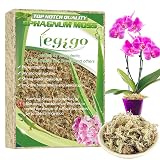 Legigo Sphagnum Moss 6 QT for Plants9.6/10View on Amazon
- 2
 Coco Bliss 10 lb Organic Coco Coir Brick9.6/10View on Amazon
- 3
 SuperMossView on Amazon
- 4
 Zoo Med New Zealand Sphagnum MossView on Amazon
- 5
 Premium New Zealand Sphagnum MossView on Amazon
- 6
 Sphagnum Moss 34QT for Plant PropagationView on Amazon
- 7
 6 oz Sphagnum Moss for Plants IndoorView on Amazon
- 8
 1.1 lb Sphagnum Moss for Plants IndoorView on Amazon
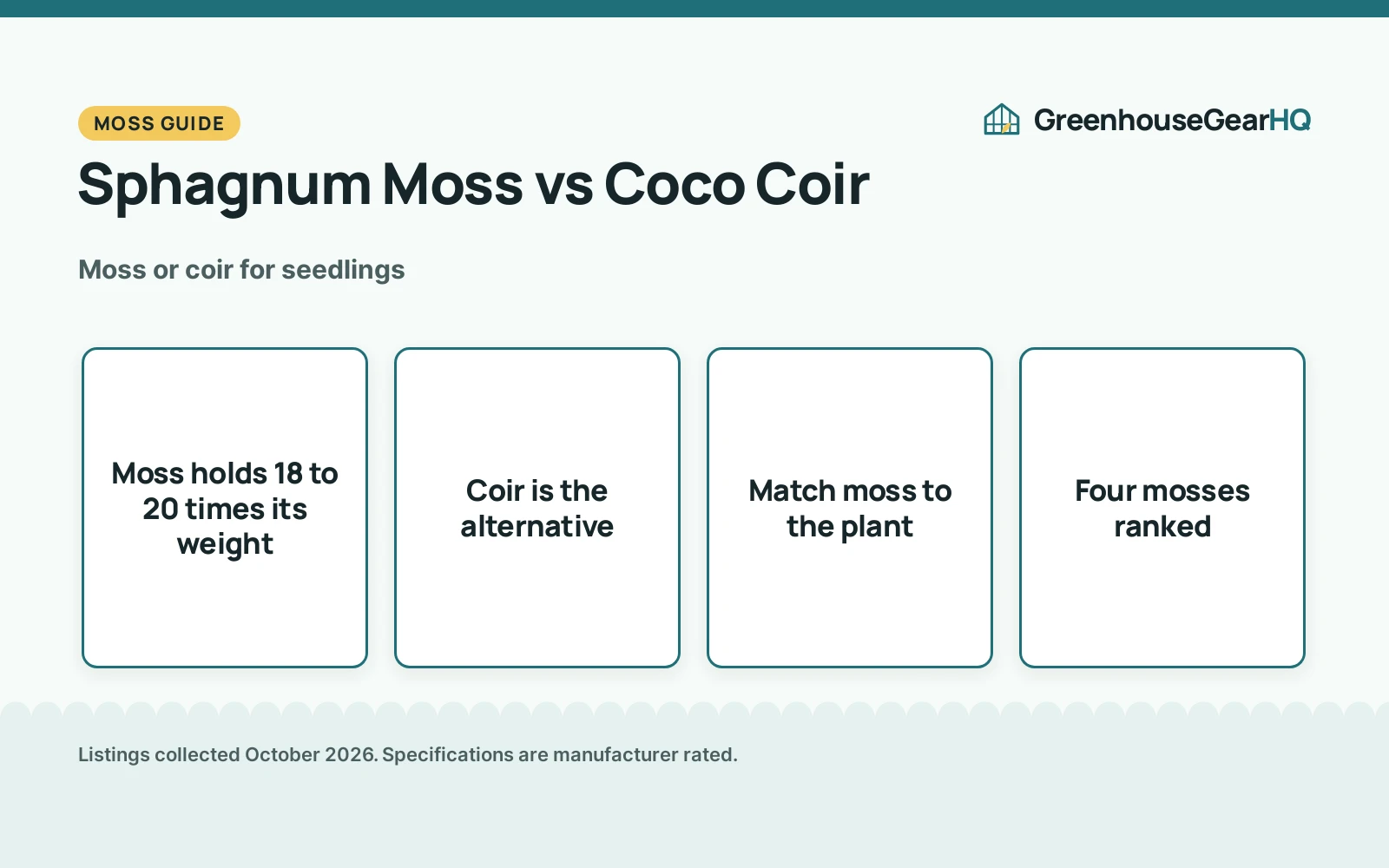
When seedlings need steady moisture, the sphagnum moss vs coco coir question comes down to water: the moss listings here state it holds 18 to 20 times its dry weight. Coco coir is the other standard choice for seed starting mixes. This guide lays out what the moss listings state, so you can judge the tradeoff.
Other options worth a look
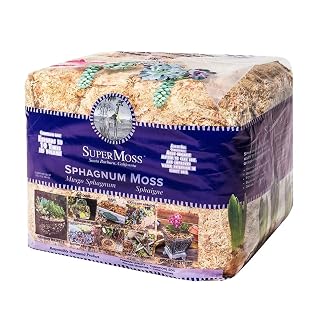 SuperMossCheck price on Amazon
 Zoo Med New Zealand Sphagnum MossCheck price on Amazon
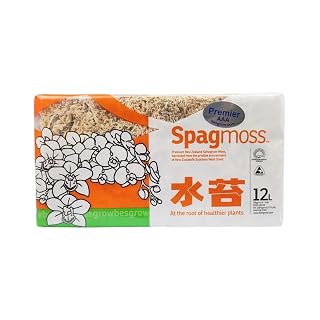 Premium New Zealand Sphagnum MossCheck price on Amazon
 Sphagnum Moss 34QT for Plant PropagationCheck price on Amazon
 6 oz Sphagnum Moss for Plants IndoorCheck price on Amazon
 1.1 lb Sphagnum Moss for Plants IndoorCheck price on Amazon
GreenhouseGearHQ earns a commission when you buy through links on this page, at no extra cost to you. As an Amazon Associate I earn from qualifying purchases. Affiliate disclosure.
What sphagnum moss offers
Long fibers that hold water and let air through. The SuperMoss listing states its moss absorbs up to 18 times its weight in water; the Zoo Med listing states up to 20 times. The Legigo listing states its moss contains varieties of nutrients for carnivorous plants, orchids and succulents. All four listings describe uses beyond seed starting: orchids, terrariums, hanging baskets and reptile bedding.
Pack sizes run from the 3 ounce Legigo pack to the 1.1 pound SuperMoss mini bale. The Legigo listing states its pack can re-pot 1 to 2 medium plants or 3 to 4 small plants, which suits a windowsill collection. The SuperMoss bale suits growers potting up many plants at once, and the Zoo Med listing notes its moss stays usable long after other substrates decompose.
Sphagnum moss vs coco coir for seedlings
Coco coir is the other half of this comparison, the medium many growers reach for when they want something other than moss. This guide’s listings cover moss only, so judge coir on its own listings before you buy. For a direct medium-versus-medium read, see clay pebbles versus coco coir. The choice usually comes down to which medium the grower already trusts for the crop in front of them. Growers who already buy coir for seed starting may see no reason to switch; growers fighting dry air may prefer the moss retention figures above.
The four mosses, ranked
We ranked the four moss listings on stated water retention, size and source. First is the Zoo Med New Zealand sphagnum moss: holds up to 20 times its dry weight, washable and reusable several times, and harvested with sustainable methods. Second is the SuperMoss 1 pound mini bale: absorbs up to 18 times its weight, washed and cleaned, sustainably sourced, at 1.1 pounds. Third is the Legigo 4 oz 6 quart moss: long fibers for orchids, succulents and carnivorous plants, though the title states 4 oz while the spec table states 3 ounces. Fourth is the Sukh 5 oz reptile moss: moisture retention for terrariums, also listed for orchids, ferns and succulents, but aimed at reptile keepers.
Water retention, size and reuse
The two retention figures here are 18 times on the SuperMoss and 20 times on the Zoo Med, both as multiples of dry weight. The SuperMoss mini bale lists 1.1 pounds, the largest size here. The Zoo Med listing states the moss can be washed and reused several times; the Legigo listing advises soaking entangled moss in water rather than pulling it from roots. See seed starting mix for succulents for mix options that pair with moss.
The Sukh listing is the outlier here: a 5 oz green moss aimed at reptile terrariums, though it also lists orchids, ferns and succulents as uses. Its 12.68 x 8.9 x 0.51 inch pack is the flattest of the four. For reptile keepers the moisture retention matters most; for growers, the plant-focused listings give more.
FAQ for growers
Is sphagnum moss better than coco coir for seed starting?
The moss listings state 18 to 20 times water retention by dry weight. Coco coir has no listings in this guide, so compare its own listings before deciding.
Can sphagnum moss be reused?
The Zoo Med listing states its moss can be washed and reused several times. The Legigo listing advises soaking it in water to wash off old moss rather than pulling it from roots.
What is sphagnum moss used for besides seed starting?
The listings name orchids, succulents, carnivorous plants, ferns, terrariums, hanging baskets and reptile bedding.
How much moss do I need?
The Legigo listing states its pack can re-pot 1 to 2 medium plants or 3 to 4 small plants. The SuperMoss lists a 1 pound mini bale for larger jobs.
Which moss suits orchids?
The Legigo and SuperMoss listings both name orchids. The Legigo adds long fibers and stated nutrients; the SuperMoss adds washed fibers and 18 times water retention.
Does sphagnum moss contain nutrients?
The Legigo listing states its moss contains varieties of nutrients. The other listings make no nutrient claims.
Keep reading
See every seed starting guide. Also see our best seed starting mix for succulents. Also see our clay pebbles vs coco coir. Also see our best seed starting mix for herbs.