On this page
Top picks at a glance
As an Amazon Associate I earn from qualifying purchases.
- 1
 Rechargeable Wireless Magnetic Puck Grow Light9.3/10View on Amazon
- 2
 yadoker 2 Pack LED Grow Light9.3/10View on Amazon
- 3
 Kullsinss 16in Grow Light Strips9.7/10View on Amazon
- 4
 Mcbazel Digital Light Meter with HD Color ScreenView on Amazon
- 5
 Stepless Adjustable Color Temperature and Dimmable UplightsView on Amazon
- 6
 Growing Trays with No Drainage HolesView on Amazon
- 7
 Plant Propagation Station with Three Color & Stepless DimmingView on Amazon
- 8
 24 Pack 3inch Multi Color Square Plastic Plant PotsView on Amazon
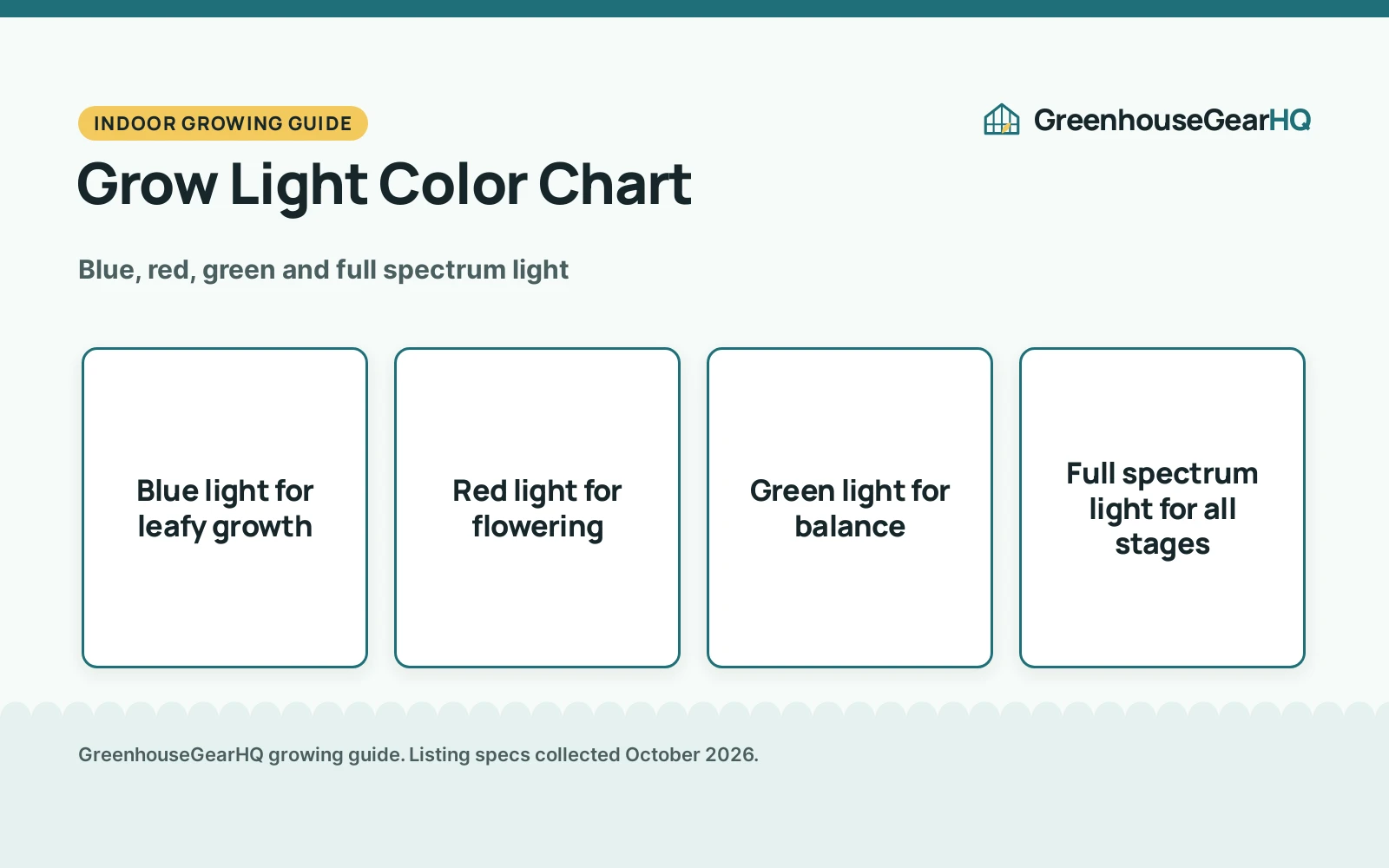
Seed trays sit on a shelf in late winter while cold air hangs outside the glass, and the leaves under the light look pale and stretched. A plant grow light color chart answers that problem by matching each color of light to the growth it supports: blue light for leafy growth, red light for flowering, green light for balance through the canopy, and full spectrum light for plants through seedling, leafy and flowering stages.
Other options worth a look
 Mcbazel Digital Light Meter with HD Color ScreenCheck price on Amazon
 Stepless Adjustable Color Temperature and Dimmable UplightsCheck price on Amazon
 Growing Trays with No Drainage HolesCheck price on Amazon
 Plant Propagation Station with Three Color & Stepless DimmingCheck price on Amazon
 24 Pack 3inch Multi Color Square Plastic Plant PotsCheck price on Amazon
GreenhouseGearHQ earns a commission when you buy through links on this page, at no extra cost to you. As an Amazon Associate I earn from qualifying purchases. Affiliate disclosure.
What a plant grow light color chart shows
A color chart is a map, not a recipe. Each row names a color of light, and each column names a stage of plant growth, so a reader can see which colors matter most at each stage and which colors play a supporting role. Blue and red do most of the work in the chart, green and white fill in the gaps, and far-red and ultraviolet light sit at the edges. Read the chart by growth stage, not by color alone: a seedling, a leafy plant and a flowering plant need different mixes, even under the same lamp.
Full spectrum light is the baseline in most charts. It mimics natural sunlight by mixing colors across the visible range, so plants receive blue, green and red light together. A chart that lists full spectrum light as a row is saying that the mix suits plants through the growth stages, while a chart that splits the colors apart is showing how each color contributes inside that mix. Compare a pink light with a full spectrum light in the guide on pink vs full spectrum grow light for more on that difference.
How to read a plant grow light color chart
Blue light
Blue light supports leafy growth and compact, sturdy stems. On a chart, blue sits with seedlings and leafy plants, where strong leaves and short stems matter more than flowers. A plant that receives plenty of blue light tends to grow leaves that are full and stems that hold their shape, while a plant that receives too little blue light can stretch toward the light and grow tall and thin.
Red light
Red light supports flowering and fruiting. On a chart, red sits with flowering plants, where buds, blooms and fruit matter more than new leaves. A plant that receives plenty of red light can move from leafy growth toward flowering, while a plant that receives too little red light can stay leafy and delay blooms. The guide on red vs blue grow light compares these colors in more detail.
Green light
Green light plays a quieter role in the chart. Leaves absorb less green light than blue or red light, so green light passes deeper into the canopy and reaches lower leaves that blue and red light may not reach. That makes green light a useful part of a full spectrum mix, even though it does less work on its own.
White and full spectrum light
White light and full spectrum light are the general purpose rows on a chart. White light looks natural to the eye, which makes it easier to check plants for color changes, pests and watering needs under the lamp. Full spectrum light mixes blue, green and red light to mimic natural sunlight, and it suits plants through seedling, leafy and flowering stages.
Far-red and ultraviolet light
Far-red and ultraviolet light sit at the edges of the chart and need care in reading. Far-red light can signal a plant to stretch or to move toward flowering, depending on the plant and the mix it is used with. Ultraviolet light can affect leaf color and plant defenses, but it is not a core part of a basic chart, and it is not needed for every plant.
| Light color | Main role | Growth stage |
|---|---|---|
| Blue | Leafy growth and sturdy stems | Seedling and leafy growth |
| Red | Flowering and fruiting | Flowering stage |
| Green | Balance through the canopy | All stages, as part of a mix |
| White and full spectrum | General growth across stages | Seedling, leafy and flowering stages |
| Far-red and ultraviolet | Signals and leaf color | Flowering stage, with care |
Using the chart for each growth stage
For seedlings, look for a chart row that gives blue light a strong place, with full spectrum light as the base. Seedlings need compact growth and strong leaves before they need flowers, so a mix that leans toward blue light suits the tray stage. See the grow lights for seedlings picks for lights that suit seed trays.
For leafy plants, the chart stays with blue light and full spectrum light. Leafy plants need leaves that are full and stems that hold their shape, and a mix with plenty of blue light supports that growth. Green light in the mix helps the lower leaves, which can sit in shade under the top leaves.
For flowering plants, the chart shifts toward red light. Red light supports buds, blooms and fruit, so a mix that leans toward red light suits plants that have moved past leafy growth. Blue light still matters in the mix, since the plant still needs leaves to support the flowers, and full spectrum light keeps the balance between the colors.
When choosing a lamp, the chart helps read the listing. The GLOWRIUM listing states a 48W full-spectrum light with 3 lighting modes, adjustable height from 23 inches to 79 inches, and timer settings of 3, 9, 12 and 16 hours. It also states a 24V low-voltage system and a 2 years warranty. A dimmable light with modes and a timer lets a grower adjust the mix and the schedule without swapping the lamp.
What this guide does not cover
This guide does not give germination temperatures, light hours or hanging heights, because they depend on the crop, the light and the room. The seed packet and the light maker manual give those figures, and the local extension office can advise on timing for the area. This guide also does not cover fertilizer or pest products; follow the product label for those.
FAQ for growers
What color grow light is best for seedlings?
Blue light and full spectrum light suit seedlings. Blue light supports leafy growth and sturdy stems, while full spectrum light gives seedlings blue, green and red light together.
What color grow light is best for flowering plants?
Red light suits flowering plants, with blue light still in the mix. Red light supports buds, blooms and fruit, while blue light supports the leaves that feed the flowers.
Do plants need green light?
Plants need less green light than blue or red light, but green light still helps. Leaves absorb less green light, so it passes deeper into the canopy and reaches lower leaves.
What is a full spectrum grow light?
A full spectrum grow light mimics natural sunlight by mixing colors across the visible range. It suits plants through seedling, leafy and flowering stages. The GLOWRIUM listing states a 48W full-spectrum light tailored to seedling, vegetative and flowering stages.
Keep reading
See every indoor growing guide and all grow lights guides.
More picks: grow lights for seedlings, grow lights for seed starting, best indoor grow light and red vs blue grow light.