On this page
Top picks at a glance
As an Amazon Associate I earn from qualifying purchases.
- 1
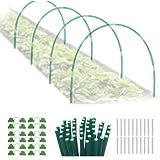 DIELLY Garden Hoops for Raised Beds9.6/10View on Amazon
- 2
 AirWire 6x12 FT Wooden Walk-in Heavy Duty Greenhouse forView on Amazon
- 3
 BlueWish 8x12 FT Greenhouse for OutdoorsView on Amazon
- 4
 Mini Pop Up Greenhouse; 27"x27"x31"; Indoor/Outdoor;View on Amazon
- 5
 Greenhouses for Outdoors with Base MatView on Amazon
- 6
 MUPATER 6'x12' Wooden Polycarbonate GreenhouseView on Amazon
- 7
 Outsunny Wooden Cold Frame Mini Greenhouse 39" x 26" x 16"View on Amazon
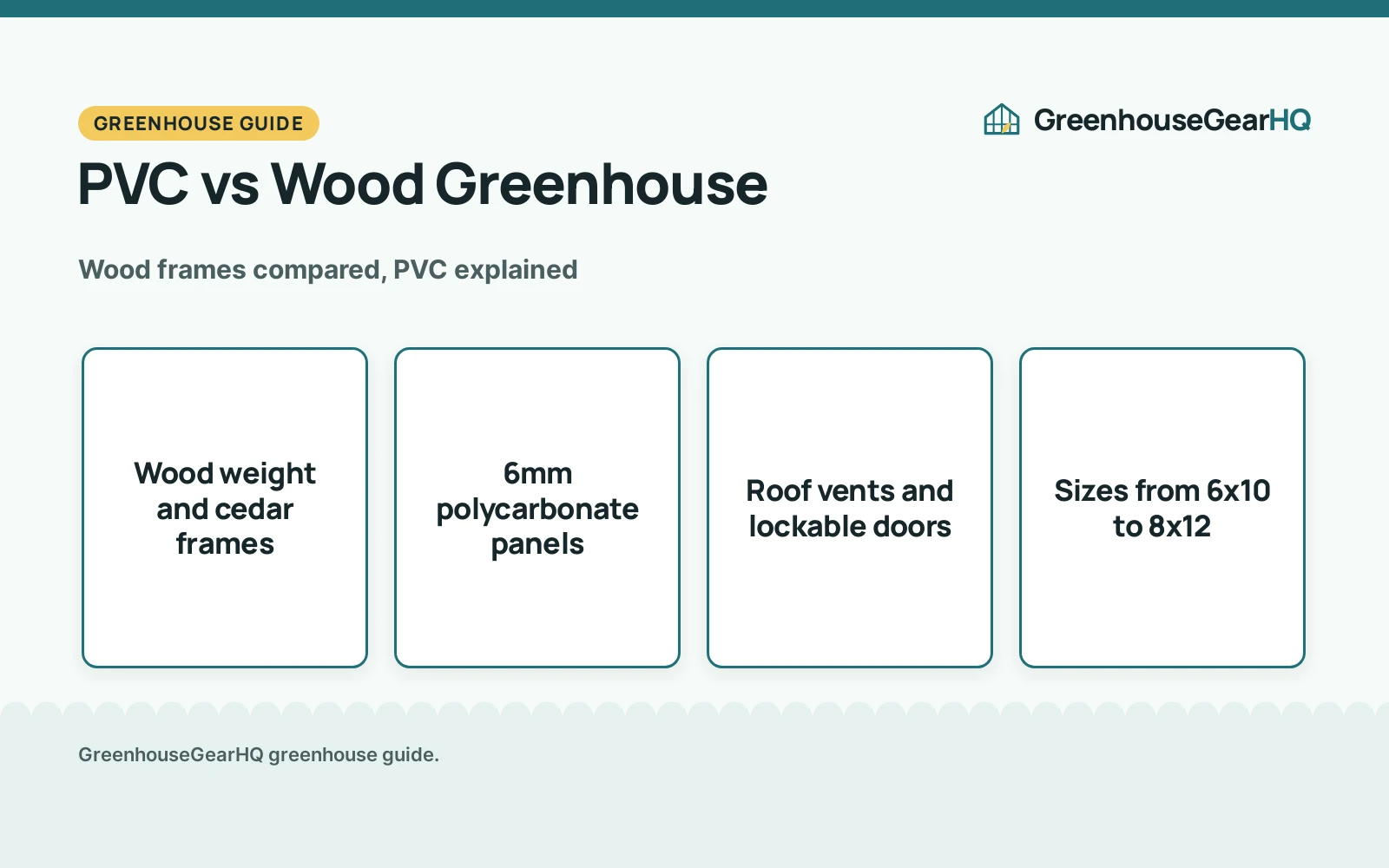
A cold snap in late winter is when the frame question gets real, and this pvc vs wood greenhouse guide starts there. Wood brings weight, cedar and thick polycarbonate panels, while PVC brings a light frame that goes up fast and comes down without a fight. The short answer: pick wood when the greenhouse must stand through wind, rain and snow, and pick PVC when the frame must move or come down at the end of the season. The rest of this guide compares the two materials with the wood greenhouses the listings state.
Other options worth a look
 AirWire 6x12 FT Wooden Walk-in Heavy Duty Greenhouse forCheck price on Amazon
 BlueWish 8x12 FT Greenhouse for OutdoorsCheck price on Amazon
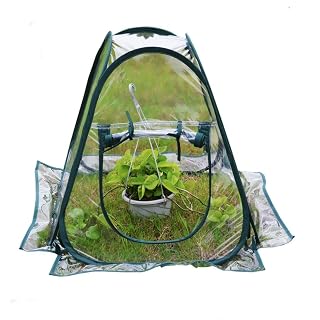 Mini Pop Up Greenhouse; 27"x27"x31"; Indoor/Outdoor;Check price on Amazon
 Greenhouses for Outdoors with Base MatCheck price on Amazon
 MUPATER 6'x12' Wooden Polycarbonate GreenhouseCheck price on Amazon
 Outsunny Wooden Cold Frame Mini Greenhouse 39" x 26" x 16"Check price on Amazon
GreenhouseGearHQ earns a commission when you buy through links on this page, at no extra cost to you. As an Amazon Associate I earn from qualifying purchases. Affiliate disclosure.
PVC vs wood greenhouse: the short answer
PVC vs wood greenhouse comes down to weight against ease. Wood frames in the listings weigh 213.63 lb and 262.35 lb, carry 6mm polycarbonate panels, and stand through strong winds, heavy rain and snowstorms, in the words of the AirWire listing. PVC frames are light, need no paint and no sealing, and suit a greenhouse that moves or comes down between seasons. Wood suits a greenhouse that stays put through winter, while PVC suits a greenhouse that changes place or size with the season.
The listings in this guide are all wood, so the PVC side of the comparison rests on the material itself, not on a PVC listing. Wood greenhouses here run 6×10 ft and 6×12 ft, with one title-only 8×12 ft model, and the full listings state adjustable roof vents and a lockable door. Read the wood figures below first, then weigh them against the PVC traits in the next section.
The wood greenhouses in this guide
The wood greenhouses below appear in ranked order. The COOS BAY listing states a warranty and a snow load figure, so it leads. The MUPATER 8×12 listing states only a title, so it closes the section.
COOS BAY 6×10 ft cedar greenhouse
COOS BAY builds this 6×10 ft greenhouse from genuine cedar lumber, with 6mm polycarbonate panels that give 90% light transmission and a dual-wall design that prevents condensation drips and supports heavy snow load. The interior gives 60 square feet of growing space, the roof vents adjust with a hinged door for airflow, and the door locks with a magnetic catch. It weighs 213.63 lb, and the listing states a 1-year limited protection term and a 2-person setup.
AirWire 6×12 ft wooden greenhouse
AirWire offers a 6×12 ft footprint, with 6mm-thick 720g polycarbonate sheets and a stated 99.99% UV protection figure. The frame pairs solid cedar timber with an aluminium alloy frame, and the listing claims the slide-in panel system installs 20% faster than standard greenhouses and adds 15% stability. It weighs 262.35 lb, has adjustable roof vents and a lockable door, and the title calls the frame pine while the bullets call it cedar timber.
MUPATER 6×10 ft cedar greenhouse
MUPATER builds this 6×10 ft greenhouse from natural cedar wood, with multi-layer polycarbonate panels that allow up to 90% light transmission and block harmful UV rays. Adjustable vent windows and roof vents set the airflow, and the front door locks. The listing gives no weight figure and no warranty term, so the frame and the panels carry the listing.
MUPATER 8×12 wooden greenhouse
MUPATER lists this 8×12 ft wooden greenhouse with a ventilated window and a lockable door, and the listing gives no figures beyond the title. It closes the section because a title alone cannot support a comparison on panels, vents or weight. Treat it as a size option only, and check the listing for panel and frame figures before buying.
What PVC gives you
PVC gives a light frame that one person can carry and set up without help, and it needs no paint, no stain and no sealing against rot. A PVC frame will not rust, and it bends before it breaks when a branch falls on it. The tradeoff is rigidity: a PVC frame flexes in wind and sags under a snow load, so it suits a small greenhouse in a sheltered spot and a short season. It also suits a greenhouse that moves, since the frame comes apart and goes back together.
What wood gives you
Wood gives weight and a frame that stands still. The COOS BAY greenhouse weighs 213.63 lb and the AirWire weighs 262.35 lb, and both list 6mm polycarbonate panels. Cedar brings natural rot protection, in the words of the COOS BAY listing, and both wood listings state adjustable roof vents and a lockable door. Wood needs care over the years, and it costs more to move once it stands, but it holds a large greenhouse steady through wind and snow. Polycarbonate greenhouses show the same panel material on more frame types.
How to choose between PVC and wood
Start with the spot, not the material. A sheltered yard with a small greenhouse suits PVC, while an open garden with wind and snow suits wood. Then check the size: the wood greenhouses here run 6×10 ft and 6×12 ft, with an 8×12 ft model in the listings. Then check the panels: 6mm polycarbonate is the panel figure both full wood listings state, and the COOS BAY listing adds 90% light transmission while the AirWire listing adds 99.99% UV protection. Pick the material that fits the spot, the size and the season, and check the listing for the panel and vent figures before buying. Walk-in greenhouses show how the larger sizes use the same frames.
What this guide does not cover
This guide covers the frame choice between PVC and wood, and it stops there. It does not cover heaters, fans, shelving, shade cloth or watering, and it does not cover permits or foundations. The listings in this guide state no figures for heating, airflow or watering, so this guide gives none. For the gear that goes inside the greenhouse, the site’s other guides cover each piece in its own place.
FAQ for growers
Is a wood greenhouse better than a PVC greenhouse?
It depends on the spot and the season: wood brings weight and cedar frames that stand through wind and snow, while PVC brings a light frame that moves between seasons. The wood listings here state 6mm panels, 90% light transmission and lockable doors.
How heavy is a wood greenhouse?
The listings state 213.63 lb for the COOS BAY 6×10 ft greenhouse and 262.35 lb for the AirWire 6×12 ft greenhouse. The MUPATER 6×10 ft listing gives no weight figure.
What size greenhouse fits a backyard garden?
The wood greenhouses here run 6×10 ft and 6×12 ft, with an 8×12 ft model in the listings. A 6×10 ft greenhouse gives 60 square feet of growing space, in the words of the COOS BAY listing.
Do wood greenhouses need vents?
The full listings here state adjustable roof vents: the COOS BAY, AirWire and MUPATER 6×10 ft greenhouses all list them. Vents set the airflow and keep the temperature balanced, in the words of the MUPATER listing.
Which wood greenhouse has a warranty?
The COOS BAY listing states a 1-year limited protection term. The AirWire and MUPATER listings give no warranty term.
Keep reading
See every Greenhouses guide and all Greenhouse Guides guides.
More picks: walk-in greenhouses, polycarbonate greenhouses, mini greenhouses and greenhouse ventilation and watering.