On this page
Top picks at a glance
As an Amazon Associate I earn from qualifying purchases.
- 1
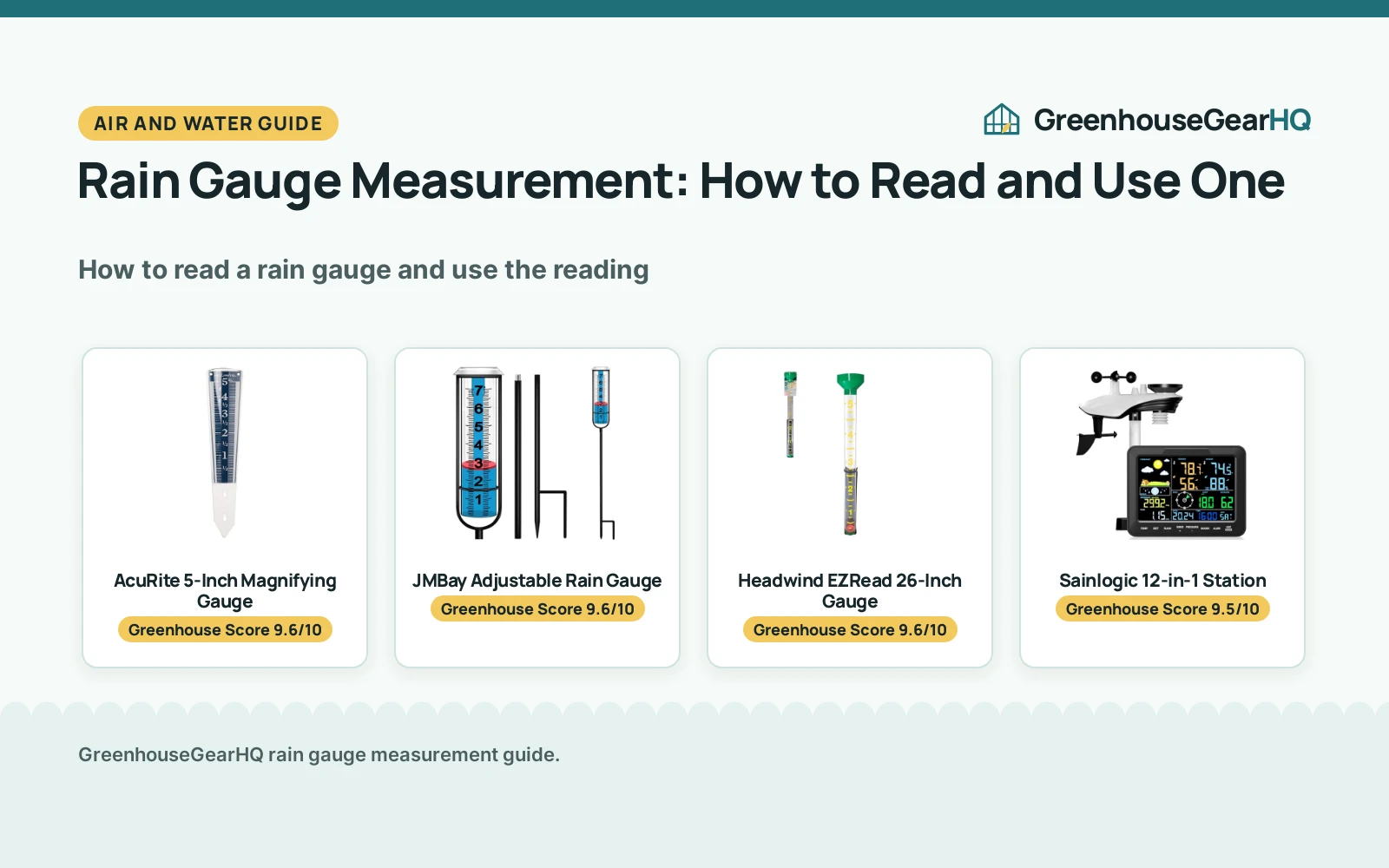
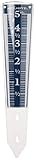 AcuRite 5-Inch Magnifying Gauge9.6/10View on Amazon
- 2
 JMBay Adjustable Rain Gauge9.6/10View on Amazon
- 3
 Headwind EZRead 26-Inch Gauge9.6/10View on Amazon
- 4
 Sainlogic 12-in-1 Station9.5/10View on Amazon
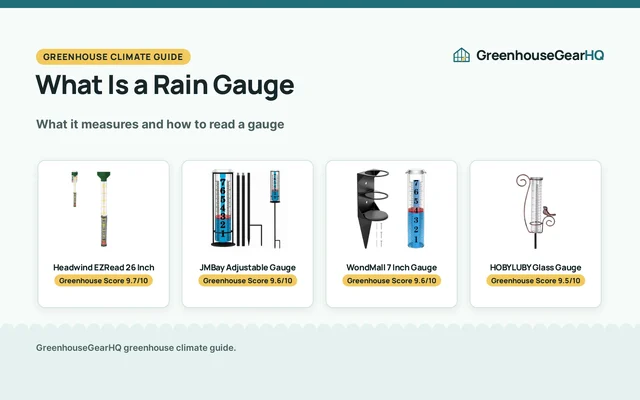
A wet week leaves every gardener with the same question: how much rain actually fell on the beds, and does anything still need watering. Rain gauge measurement answers that question by catching rain in a tube or a station sensor and reading the depth of the water against a scale.
GreenhouseGearHQ earns a commission when you buy through links on this page, at no extra cost to you. As an Amazon Associate I earn from qualifying purchases. Affiliate disclosure.
| # | Product | Greenhouse Score | Buy |
|---|---|---|---|
| 1 | AcuRite 5-Inch Magnifying Gauge | 9.6/10 | Buy on Amazon |
| 2 | JMBay Adjustable Rain Gauge | 9.6/10 | Buy on Amazon |
| 3 | Headwind EZRead 26-Inch Gauge | 9.6/10 | Buy on Amazon |
| 4 | Sainlogic 12-in-1 Station | 9.5/10 | Buy on Amazon |
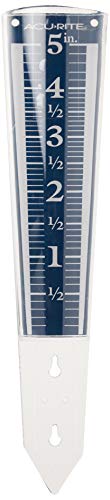
AcuRite 5-Inch Magnifying Gauge
A simple magnifying tube that measures up to 5 inches of rain, suited to gardeners who want a quick read at a glance.
Pros
- Measures up to 5 inches of rainwater
- Numbers magnified by over 35% for a quick read
- Warranty of 1 year limited
Cons
- Capacity of 5 inches means a long wet spell can fill the tube
- No floating buoy to mark the water level
- No debris guard is stated in the listing

JMBay Adjustable Rain Gauge
A tall adjustable gauge with a red floating buoy, suited to gardeners who want to read rainfall without bending down.
Pros
- Adjusts to a 29-inch maximum height or 19 inches with the middle part removed
- Red floating buoy marks the water level clearly
- H-shape double-pronged foot locks in clay, sand and grass
Cons
- No warranty term is stated
- No capacity in inches is stated for the tube
- Listing does not state how many tubes come in the package

Headwind EZRead 26-Inch Gauge
A tall green gauge with a high visibility float, suited to gardeners who want to read rainfall from across the yard.
Pros
- Readable from up to 50 feet away
- Funnel keeps leaves and debris out of the tube
- High visibility float with water level magnification
Cons
- No warranty term is stated
- No capacity in inches is stated for the tube
- No ground stake is stated in the package

Sainlogic 12-in-1 Station
A wireless weather station that tracks rainfall alongside temperature, humidity and wind, suited to gardeners who want indoor readings.
Pros
- Rainfall accuracy of plus or minus 1 mm in light rain
- Tracks temperature, humidity, wind, pressure and dew point in one station
- Solar powered with battery backup
Cons
- Batteries are not included
- No Wi-Fi connection is stated
As an Amazon Associate I earn from qualifying purchases.
What rain gauge measurement means
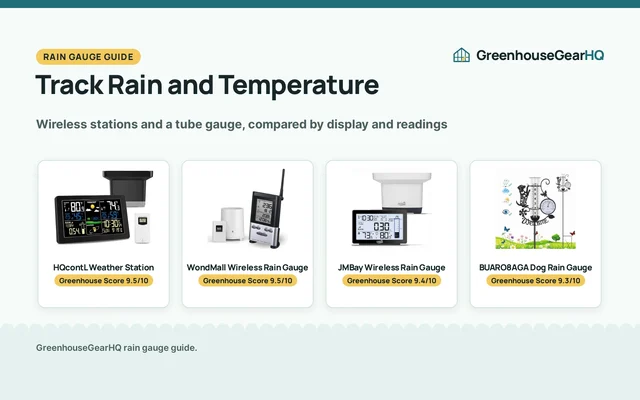
Rain gauge measurement is the depth of rainwater collected in a gauge after a shower or a storm, read from the scale on the tube or the display on a station. A tube gauge shows the depth on its scale, while a wireless station shows the figure on an indoor display.
How to read a rain gauge, step by step
Step 1: Set the gauge where rain falls freely
Place the gauge in open ground where grass and flowers will not block it. The JMBay gauge adjusts to a 29-inch maximum height and its H-shape double-pronged foot locks in clay, sand and grass. The Headwind gauge (on Amazon) hangs from its plastic hanger, and the AcuRite gauge (on Amazon) hangs from its hang hole or stakes into the ground.
Step 2: Read the water level at the scale
After rain, read the water level where it meets the scale on the tube. The JMBay gauge marks the level with a red floating buoy and a colored metal strip that turns rainwater blue, the AcuRite gauge magnifies its numbers by over 35% for a quick read, and the Headwind gauge uses a high visibility float with water level magnification. The Sainlogic station (on Amazon) shows rainfall on its 6.5 inch indoor display instead, and shows cumulative rainfall statistics on the display.
Step 3: Note the reading and clear the gauge
Write the reading down, then clear the gauge so the next shower starts from an empty scale. The JMBay inner tube lifts out for checking and emptying.
Rain gauge measurement gear
The gear below covers the reading step of rain gauge measurement, from the tube that catches the rain to the float that marks the level.
What this guide does not cover
This guide does not cover watering schedules or how much water each crop needs, because the listings compared here state gauge figures, not watering advice. It also does not cover weather forecasting: the Sainlogic station lists temperature, humidity, wind, pressure and dew point readings, and those readings describe current conditions, not a forecast.
FAQ for growers
How do I read a rain gauge?
Read the water level where it meets the scale on the tube, or read the figure on a station display. The JMBay buoy, the AcuRite magnified numbers and the Headwind float each mark the level.
How much rain can a tube gauge hold?
The AcuRite gauge measures up to 5 inches of rainwater, so a long wet spell can fill it. The JMBay and Headwind listings state height, not capacity.
Can I read a rain gauge from far away?
The Headwind EZRead lists reading from up to 50 feet away, and the JMBay gauge stands up to a 29-inch maximum height so grass and flowers do not block the scale.
Do I need a wireless station to measure rainfall?
No. A tube gauge gives the reading at the gauge itself, while the Sainlogic station shows rainfall on a 6.5 inch indoor display alongside temperature, humidity and wind.
Keep reading
See every Air and Water guide. Also see best rain barrel for greenhouse. Also see best rain gutter for greenhouse. Also see Dramm Rain Wand review.