On this page
Top picks at a glance
As an Amazon Associate I earn from qualifying purchases.
- 1
 4 Hydroponic Buckets Kit for PlantsView on Amazon
- 2
 2 Hydroponic Buckets Kit for PlantsView on Amazon
- 3
 SPECILITE 7 Gallon 2 Buckets DWC Hydroponics Grow System withView on Amazon
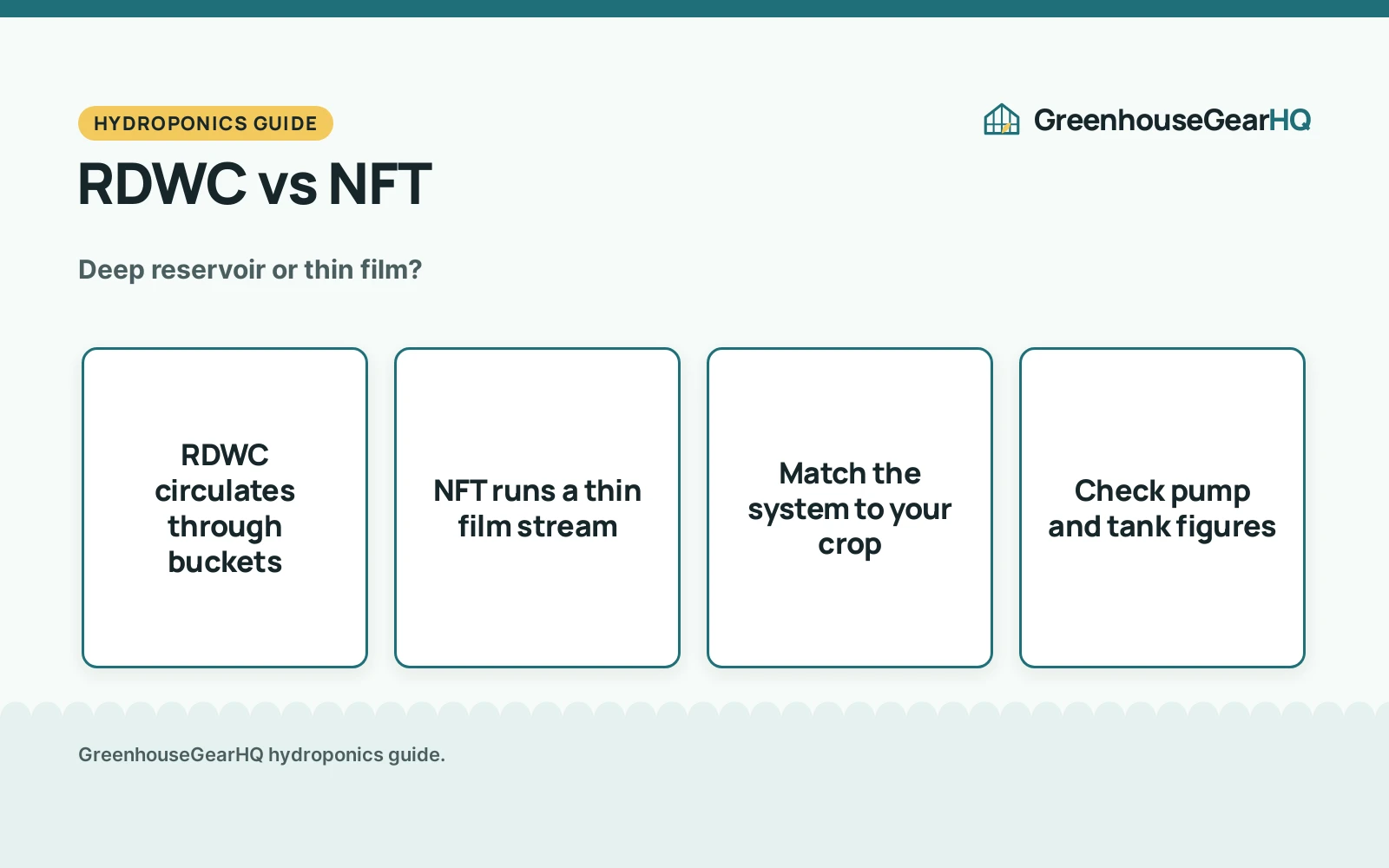
RDWC vs NFT: buy RDWC if you want deep, aerated reservoirs that buffer pH and suit bigger plants, and choose NFT if you want a compact channel system for fast-growing greens with less water. RDWC circulates nutrient solution through buckets like the VEVOR 4-bucket system with 5-gallon buckets and a reservoir; NFT runs a thin film of solution through shallow channels. This guide compares the two step by step, using real listing figures where they exist.
Other options worth a look
 4 Hydroponic Buckets Kit for PlantsCheck price on Amazon
 2 Hydroponic Buckets Kit for PlantsCheck price on Amazon
 SPECILITE 7 Gallon 2 Buckets DWC Hydroponics Grow System withCheck price on Amazon
GreenhouseGearHQ earns a commission when you buy through links on this page, at no extra cost to you. As an Amazon Associate I earn from qualifying purchases. Affiliate disclosure.
What RDWC is
RDWC, recirculating deep water culture, links several buckets to one reservoir and circulates the nutrient solution between them. The VEVOR RDWC kit pairs 4 buckets of 5 gallons each with a reservoir and a top drip, moving solution with negative water pressure to balance pH and EC across the system. The Artisun RDWC uses a 250 gallon/hour circulating pump with 2-inch bulkhead fittings between 4 five-gallon buckets and a connected reservoir. Roots sit submerged in oxygenated water, fed by air pumps like the VIVOSUN 35W unit at 60 L/min or the MARS HYDRO 11W pump.
What NFT is
NFT, nutrient film technique, runs a thin film of nutrient solution down shallow channels past the roots, then recirculates it from a small tank. There is no deep reservoir per plant: the film keeps roots wet while exposed to air. No NFT listing is in our data, so no figures here; the method suits growers who want a slim, low-water system, usually for leafy greens and herbs. See DWC vs NFT hydroponics for the non-recirculating side.
Reservoir size and water use
RDWC holds real water. The VEVOR kit’s buckets hold 5 gallons each with a 20-liter system capacity, the Artisun buckets are 5 gallons, the HydraMax 2-bucket runs 5 to 10 gallons, and the Mr. Stacky DWC reservoir holds 16.5 gallons. The VIVOSUN VGrow DWC tank is 4 gallons (15 liters) and lasts up to a week without refilling. That volume buffers pH and temperature swings. Bigger reservoirs also mean fewer refills: the VGrow 4-gallon tank lasts up to a week, while the 16.5-gallon Mr. Stacky reservoir stretches further between top-ups. NFT uses far less water overall, but the small tank means levels, pH and EC swing faster and need closer watching.
Pumps and power
RDWC needs two kinds of pumping: air for the roots and circulation between buckets. Listings show a 35W air pump at 60 L/min on the VIVOSUN 8-bucket kit, an 11W pump on the MARS HYDRO 4-bucket, an 8W pump on the SPECILITE 7-gallon 2-bucket kit, and a 250 gallon/hour circulating pump on the Artisun RDWC. More buckets and longer pipe runs need more pump. NFT needs one small pump for the film plus aeration in the tank, so power draw is lower, but a pump failure hits faster because there is no deep water to fall back on.
Which crops suit each system
RDWC suits bigger, thirstier plants: the listings target vegetables, fruits, flowers and crops, with 5-gallon buckets per site giving roots room. The VIVOSUN 8-bucket kit notes its independent units can grow different plants side by side. NFT suits fast, shallow-rooted crops like lettuce and herbs, where the thin film feeds quick turnover. Match the system to the crop’s root size and your harvest rhythm. Check pH and EC often in either system; RDWC’s shared reservoir lets you adjust once for all buckets, while NFT’s small tank needs topping up more often.
RDWC vs NFT: which should you buy?
Buy RDWC if you grow bigger plants, want pH and temperature buffered by real water volume, and have room for buckets plus a reservoir: the 4-bucket kits with 5-gallon buckets and a 250 gallon/hour class pump are the standard start. Choose NFT if you grow leafy greens in a tight space and want lower water and power use, with closer daily checks. Many growers run both: RDWC for fruiting crops, NFT for a salad line.
FAQ for growers
Is RDWC better than NFT?
Neither wins outright. RDWC buffers pH and suits bigger plants with its 5-gallon buckets; NFT uses less water and fits greens in tight spaces.
How much water does an RDWC system hold?
The VEVOR 4-bucket kit lists 5-gallon buckets with 20-liter system capacity, and the HydraMax 2-bucket runs 5 to 10 gallons.
What pump do I need for RDWC?
Listings pair air pumps from 8W to 35W with circulation like the Artisun 250 gallon/hour pump; match the pump to bucket count and pipe length.
Can beginners run NFT?
Yes, but the small tank means pH and water level swing fast. RDWC’s deep water is more forgiving of a missed day.
Keep reading
See every indoor growing guide and our DWC vs NFT hydroponics comparison.
More picks: Kratky vs Dutch bucket, ebb and flow vs DWC and indoor growing.