On this page
A mower that has to bump over the shed doorway lip every time it goes in and out will wear the doorway and the mower deck alike, so shed ramp ideas start with the doorway itself. This guide walks through ramp styles for mowers, doorway fit, ground prep and grip, step by step, using plain explanations instead of figures.
GreenhouseGearHQ earns a commission when you buy through links on this page, at no extra cost to you. As an Amazon Associate I earn from qualifying purchases. Affiliate disclosure.
What a shed ramp needs
Every working shed ramp has the same parts: a surface the mower can climb, a fit that matches the doorway, solid ground at the foot of the ramp, grip that holds in rain, and a way to store the ramp or leave it in place. Sort them in that order, because the doorway decides the ramp style.
- Style: a fixed wood ramp, a folding metal ramp, a rubber threshold ramp or a short arched ramp. See our storage shed ideas for sheds the ramp must serve.
- Fit: a ramp that meets the doorway lip without a step and clears the door frame. See every storage sheds guide for doorway styles.
- Ground: a level pad of gravel, pavers or packed earth at the foot of the ramp. See our shed foundation guide for ground prep.
- Grip: cleats, tread strips or a textured surface that holds tires in rain.
- Storage: a ramp that folds away, lifts off its hooks or stays bolted in place. See our garden carts picks for loads the ramp must carry.
Shed ramp ideas, step by step
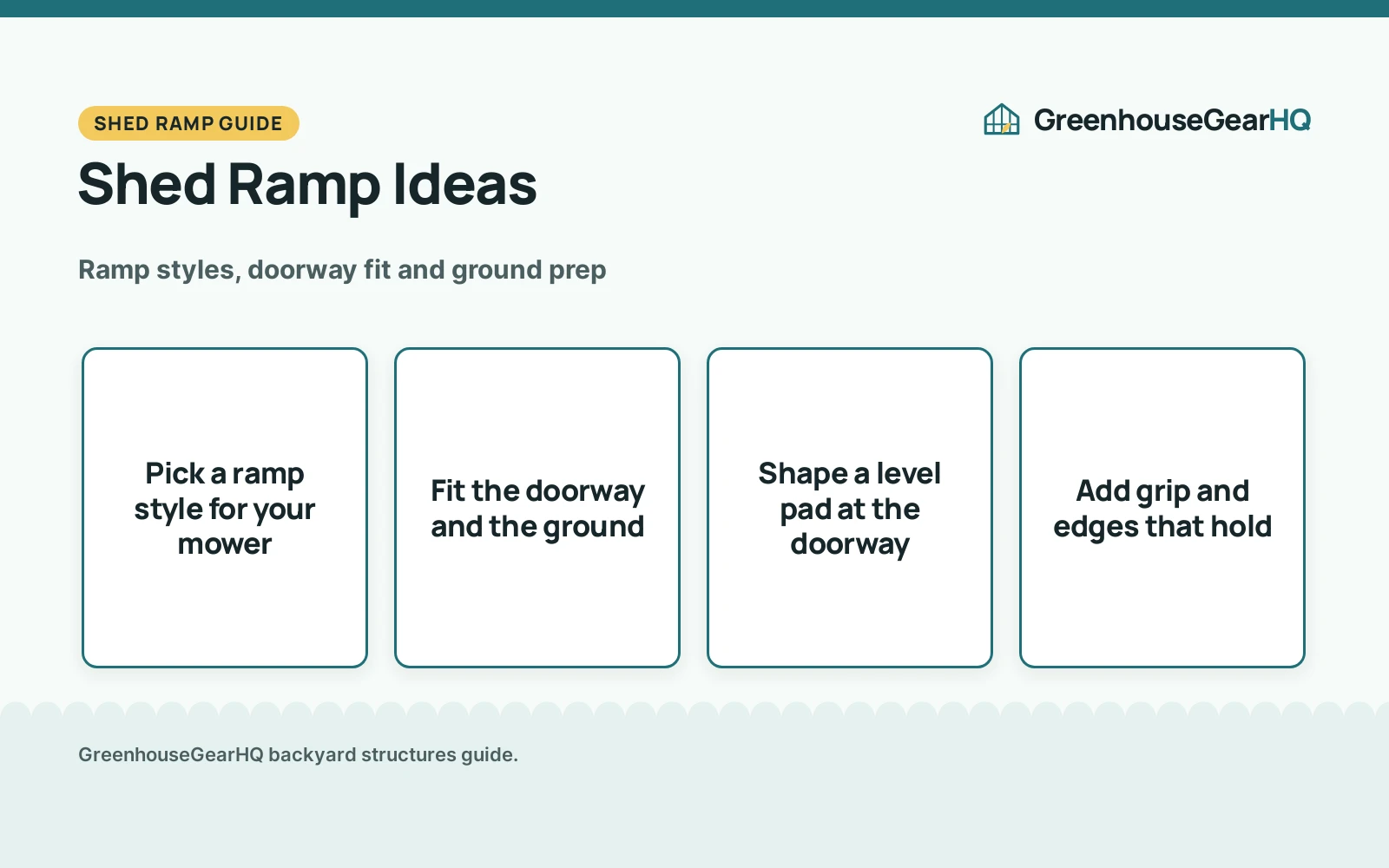
Pick a ramp style
Start with how the mower leaves the shed. A fixed wood ramp suits a shed that stays put and a mower that rolls out daily. A folding metal ramp suits a shed where the ramp must clear the doorway when the doors shut. A rubber threshold ramp suits a low doorway lip where a full ramp would be too long. An arched ramp suits a high lip where a straight board would scrape the mower deck.
Measure the doorway and the ground
Measure the doorway width, the lip height and the ground from the doorway out to flat ground. Note where the doors swing and where the mower deck sits when the mower crosses the lip. Compare those measures with the ramp style you picked, and with the shed size guide: see our storage shed size guide for doorway and capacity notes.
Shape the ground at the doorway
Clear grass and loose soil from the foot of the ramp, then set a level pad of gravel, pavers or packed earth. A pad that sinks or tilts will tilt the ramp with it, so press the pad firm and check it with a level before the ramp goes on. Leave the pad a little wider than the ramp so tires stay on solid ground at the edges.
Add grip and edges
Add cleats or tread strips across the ramp surface, and side rails or edge boards where the ramp has no walls. Grip matters most in rain, when wet tires slip on smooth wood or metal. Keep the edges clear of nails and screws that stick up, and check the grip each spring when the shed comes back into daily use.
Anchor the ramp and roll the mower
Anchor the ramp to the doorway with hinges, hooks or bolts so it cannot kick back when the mower climbs it. Roll the mower up slowly with the deck raised, and watch the deck clearance at the lip. If the deck scrapes, lengthen the ramp or raise the ground at the foot until the mower crosses without touching.
Wood, metal or rubber?
Wood suits a fixed ramp built to the doorway, and it takes cleats and paint well. Metal suits a folding ramp that must carry a heavy mower and fold away, and it resists rot where the ramp meets damp ground. Rubber suits a low threshold where a short ramp must grip without fasteners. Steel and wood shed guides compare the same tradeoffs for the shed itself: see our steel vs wood storage shed comparison.
What this guide does not cover
This guide gives no slope or load figures; measure your own doorway and check your mower manual for the figures that fit your machine and your doorway. Your local extension office can advise on ground prep for your soil. This guide also does not cover ramps for vehicles heavier than a mower; those need a different build.
FAQ for growers
What is the best ramp for a shed?
The best ramp fits your doorway and your mower. A fixed wood ramp suits a shed that stays put, a folding metal ramp suits a doorway that must clear when the doors shut, and a rubber threshold ramp suits a low lip.
Do I need a ramp for a riding mower?
A ramp helps when the doorway has a raised lip or the ground falls away from the doorway. A mower that rolls over a flat doorway with no lip may need no ramp at all.
What should a shed ramp be made of?
Wood suits a fixed ramp, metal suits a folding ramp that must carry a heavy mower, and rubber suits a low threshold. Pick the material that matches the ramp style and the damp at your doorway.
How do I keep a shed ramp from slipping?
Anchor the ramp to the doorway so it cannot kick back, add cleats or tread strips for grip, and set a level pad at the foot so the ramp stays put in rain.
Keep reading
See every storage sheds guide and all backyard structures guides. Also see our storage shed ideas. Also see our prebuilt vs kit storage shed. Also see our lean to shed vs garden shed. Also see our cedar vs metal storage shed. Also see our how to vent a storage shed. Also see our greenhouse shelving for shed.
More picks: wood storage shed for small backyard, resin shed for small backyard, mini greenhouse and gazebos and pergolas.