On this page
Top picks at a glance
As an Amazon Associate I earn from qualifying purchases.
- 1
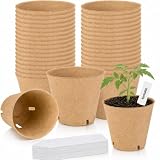 RAINFLOW Peat Pots for Seedlings9.7/10View on Amazon
- 2
 Orceler 4 Inch Terracotta Pots with SaucerView on Amazon
- 3
 Orceler 6 inch Terracotta & Clay Pots for Plants with SaucerView on Amazon
- 4
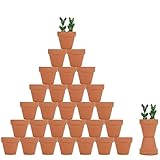 32pcs Small Mini 2" Terracotta Pot Clay Ceramic PotteryView on Amazon
- 5
 INGOFIN Terracotta Pots Set with SaucerView on Amazon
- 6
 D'vine Dev 3-Pack Classic Terracotta Pots & SaucersView on Amazon
- 7
 Vensovo 3 Inch Terracotta & Clay Pot for Plant with DrainageView on Amazon
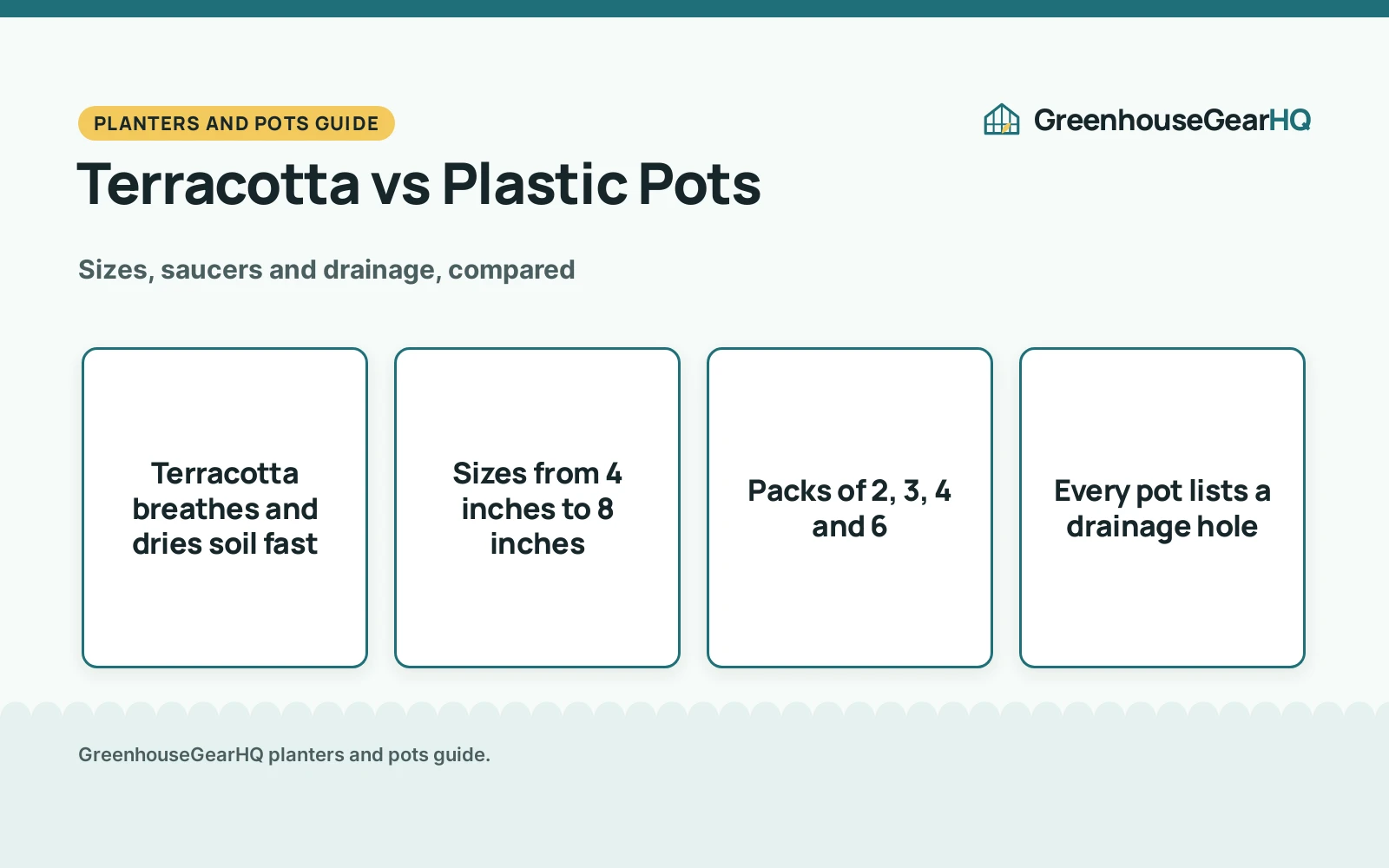
Terracotta vs plastic pots is the choice every grower meets at the potting bench on a cold late-winter morning, with seed trays waiting and the watering can close at hand. This guide compares both materials side by side, then works through the terracotta listings below with their stated sizes, saucers and drainage, so you can match the pot to the plant and the season.
Other options worth a look
 Orceler 4 Inch Terracotta Pots with SaucerCheck price on Amazon
 Orceler 6 inch Terracotta & Clay Pots for Plants with SaucerCheck price on Amazon
 32pcs Small Mini 2" Terracotta Pot Clay Ceramic PotteryCheck price on Amazon
 INGOFIN Terracotta Pots Set with SaucerCheck price on Amazon
 D'vine Dev 3-Pack Classic Terracotta Pots & SaucersCheck price on Amazon
 Vensovo 3 Inch Terracotta & Clay Pot for Plant with DrainageCheck price on Amazon
GreenhouseGearHQ earns a commission when you buy through links on this page, at no extra cost to you. As an Amazon Associate I earn from qualifying purchases. Affiliate disclosure.
How terracotta and plastic pots differ
Terracotta is fired clay, and the listings for the pots below all describe it the same way: porous walls let water and air move through the pot, so the soil dries out more quickly. That fast drying suits cactus, succulents and herbs, and other plants that like dry soil, and it helps when a grower tends to water often. Plastic pots have no pores in their walls, so water leaves only through the drainage hole and from the soil surface, and the mix stays moist for longer between waterings.
Weight and handling differ too. The Orceler 4 inch pots list 1.0 pounds for the set, while the D’vine Dev 3-pack lists 6.6 pounds, so a shelf of filled terracotta pots carries real weight and each pot needs a firm seat. The listings stress crack resistance and careful packing, with Orceler noting a drop check from a height of 3 feet for its packages, so handle the pots with the same care on the way to the bench.
The terracotta listings compared
The listings below are all terracotta, so the table compares them on stated size, pack count, saucer and drainage, and the notes after it cover each set in turn.
| Pot listing | Stated size | Pack | Saucer | Drainage |
|---|---|---|---|---|
| Orceler 4 inch terracotta pots | 4 inches | 6 pack | 0.77 inch high and 3.6 inches in diameter | Drainage hole |
| Orceler 6 inch terracotta pots | 6 inches wide, 5.3 inches high | 4 pack | 0.98 inch high and 4.6 inches in diameter | Drainage hole |
| INGOFIN 8 inch terracotta pots | 8 inches wide, 6.2 inches high | 2 pack | Tray included | Drainage hole |
| D’vine Dev terracotta pots | 4.2, 5.3 and 6.5 inches | 3 pack | Saucers included | Drainage holes |
Orceler 4 inch terracotta pots, 6 pack
The smallest pots here list a height of 4 inches and a width of 4 inches, with a saucer 0.77 inch high and 3.6 inches in diameter. The clay is fired at 1922℉, and the maker lists a drop check from a height of 3 feet for the packaging. The listing states the pots suit succulents, cactus and herbs, and that the set includes 6 pots with trays for indoor and outdoor use.
Orceler 6 inch terracotta pots, 4 pack
This set lists a width of 6 inches and a height of 5.3 inches, with a saucer 0.98 inch high and 4.6 inches in diameter, and the clay is fired at 1922℉. The spec table lists the pot as 6.0 inches by 6.0 inches by 5.5 inches, which gives a different height than the 5.3 inches in the bullets, so this guide follows the bullets and the title. The set includes 4 pots with trays, and the listing states the same breathable clay and fast drying soil as the smaller set.
INGOFIN 8 inch terracotta pots, 2 pack
The largest pots here list 8 inches wide and 6.2 inches high, with a drainage hole in each pot and a tray included, in a set of 2. The spec table lists the pot as 6.29 inches by 6.29 inches by 7.86 inches, which does not match the 8 inch width and 6.2 inch height in the title and bullets, so this guide follows the title and bullets. The listing states the pots are made of ceramic by high temperature firing, with one-piece molding, and the maker offers help within 24 hours if questions arise.
D’vine Dev terracotta pots, 3 pack
This set covers 3 sizes in one set: 4.2 inch, 5.3 inch and 6.5 inch pots, each with a drainage hole and a matching saucer. The set lists 6.6 pounds in total, and the maker offers a hassle-free replacement or refund if any pot arrives damaged. The unglazed, porous clay suits succulents, herbs and indoor decor, and the cylinder shape keeps the sides straight from rim to base.
Terracotta vs plastic pots: which one should you buy?
When terracotta fits
Pick terracotta when the plant likes dry soil between waterings and the pot will sit where a saucer can catch the extra water. Succulents, cactus and herbs are the examples the listings name, and the 4 inch and 6 inch Orceler sets give a grower small pots for those plants. The 8 inch INGOFIN pots suit larger herbs and flowers that need more room for roots, while the D’vine Dev set covers 3 sizes for a mixed shelf. Terracotta also suits a grower who waters often, since the porous walls help the soil dry out more quickly.
When plastic fits
Pick plastic when the plant likes steady moisture and the pot will sit in hot sun or a spot where watering happens less often. Plastic holds water in the mix for longer, so the plant needs fewer trips with the watering can, and a pot that is easier to carry suits a grower who moves plants between rooms. For watering, see our terracotta watering spikes vs drip irrigation guide.
Sizing, saucers and drainage
Measure the plant, then the pot. The listings here run from 4 inches to 8 inches, and each pot comes with a saucer or tray, so check the saucer size against the shelf or windowsill before you order. Every pot in this guide lists a drainage hole, and the saucer catches the extra water, so a pot with no hole would need a different setup. For seed starting, see our seed starting trays vs peat pots comparison.
FAQ for growers
Do terracotta pots dry soil faster than plastic pots?
Yes. The listings state that porous terracotta clay lets water and air move through the pot walls, so the soil dries out more quickly. Plastic walls have no pores, so the mix stays moist for longer.
What size terracotta pot should I start with?
Match the pot to the plant. The listings here run from 4 inches to 8 inches, with the D’vine Dev set covering 4.2 inch, 5.3 inch and 6.5 inch pots in one set, so a grower can start small and move up as the plant grows.
Do terracotta pots need a saucer?
Each listing here includes a saucer or tray, and the saucer catches extra water and keeps the area around it clean. The Orceler 4 inch saucer lists 3.6 inches in diameter, and the 6 inch saucer lists 4.6 inches in diameter, so check the fit before you buy.
Can terracotta pots stay outside through the seasons?
The Orceler listings state the pots suit indoor and outdoor use, and note the clay suits areas with lower temperatures. A saucer under each pot catches the extra water in wet weather.
Keep reading
See every planters and pots guide and all garden beds and planters guides. Also see our all metal vs plastic watering wand comparison. Also see our best row cover for brassicas picks. Also see our best seed starting trays for leeks guide. Also see our best planter for strawberries. Also see our best planter for christmas cactus. Also see our best planter for spider plant. Also see our best soil mix for grow bags. Also see our best self watering planter for tomatoes.
More related guides (107)
- 10 gallon vs 20 gallon grow bags
- planter vertical
- largest outdoor planters
- planter herb garden
- plant stand hanger
- window planter box
- hanging planter pothos
- grow bags nursery
- strawberry grow bags
- paper pot planter
- planter jar
- hanging herb planter
- rattan hanging planter
- high end outdoor planters
- plant stand desk
- seed planter handheld
- hanging planter modern
- hanging planter extender
- upside down planter pot
- planter / flower pot
- best planter for pothos
- best planter for string of pearls
- best planter for strawberry plants
- best garden hose for power washer
- grow bags for garlic
- hanging basket with liner
- large planter pots for trees
- bracket for hanging planter
- best planter for sunflower seeds
- window box vs hanging planter
- plant stand curved
- plant stand acrylic
- fall hanging planter
- plastic square planter pots
- planter saucers 20 inch
- hanging planter pulley
- resin large outdoor planters
- multi planter pot
- plant stand horizontal
- tree grow bags
- self watering wall planters indoor
- plant stand countertop
- black and white planter pots
- large hanging planter
- grow bags lettuce
- two shelf plant stand
- pottery hanging planter
- hanging planter insert
- grow bags white
- tall outdoor planters set of 2
- hanging planters nearby
- stand up planter box
- half round hanging planter
- planter reservoir
- outdoor planter covers for winter
- cedar planter box with post
- outdoor plant pot with deep drainage saucer
- clear planter pots with drainage
- potato grow bags with window
- planters pot for christmas tree
- large outdoor planters for pool
- planter urns with pedestal
- best self watering pot for herbs
- hanging planter with chains
- best seed planter for garden
- planter pot for ivy
- hanging planter box for fence
- best hanging planters for outdoors
- hanging planter with drip tray
- plant shelf for desk
- window box planters for deck railing
- plant shelf for wall
- grow bags with peat
- grow bags with saucers
- best grow bags for carrots
- unique planters for outdoor plants
- plant shelf for table
- terracotta vs plastic planters
- ceramic vs plastic planter pots
- best grow bags for vegetables
- best self watering planters for indoor plants
- best grow bags for peppers
- best grow bags for organic gardening
- extra large outdoor thermometer with mounting bracket
- tall plant pot for olive tree
- strawberry planter with rolling base
- planters for flowers and plants
- 5 gal grow bags with handles
- hanging planter vintage
- rectangular hanging planter
- hose pot resin
- how to plant in a pot
- planter gardening for beginners
- where can i buy cheap planter pots
- best sealer for concrete planters
- concrete planter for porch
- concrete planter for olive tree
- extra large concrete planter with stand
- best hanging planter for spider plant
- best planter pot for fiddle leaf fig
- clay vs plastic plant pots
- terracotta vs ceramic planter
- terracotta vs plastic self watering pots
- orchid pots nearby
- best big ceramic pots for indoor plants
- big pots for planting succulents
- bonsai pots for desert rose training
More picks: terracotta watering spikes, seed starting trays vs peat pots and glass vs wood cold frame.