On this page
Top picks at a glance
As an Amazon Associate I earn from qualifying purchases.
- 1
 OWLHAUS H Channel 4mm Polycarbonate Panel Connectors9.6/10View on Amazon
- 2
 Deylixay 24x36 Clear 6mm Polycarbonate Sheet9.6/10View on Amazon
- 3
 OWLHAUS Polycarbonate Greenhouse Panel ConnectorsView on Amazon
- 4
 AMERLIFE 12x13.5x9 FT Hybrid Polycarbonate GreenhouseView on Amazon
- 5
 AMERLIFE 14x9.5x9 FT Hybrid Polycarbonate GreenhouseView on Amazon
The 4mm vs 6mm polycarbonate question decides how much insulation and stiffness your greenhouse skin gets: 6mm is thicker, stiffer and better insulated, while 4mm is lighter, cheaper and easier to bend. Pick 6mm for a permanent greenhouse in a cold or windy climate; pick 4mm for a small, sheltered structure or a tight budget. The reference listings here include 6mm sheets, so every figure below comes from those listings and the 4mm side is explained without figures.
Other options worth a look
 OWLHAUS Polycarbonate Greenhouse Panel ConnectorsCheck price on Amazon
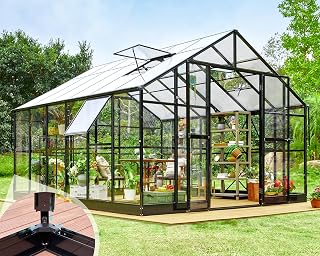 AMERLIFE 12x13.5x9 FT Hybrid Polycarbonate GreenhouseCheck price on Amazon
 AMERLIFE 14x9.5x9 FT Hybrid Polycarbonate GreenhouseCheck price on Amazon
GreenhouseGearHQ earns a commission when you buy through links on this page, at no extra cost to you. As an Amazon Associate I earn from qualifying purchases. Affiliate disclosure.
4mm vs 6mm polycarbonate: the short answer
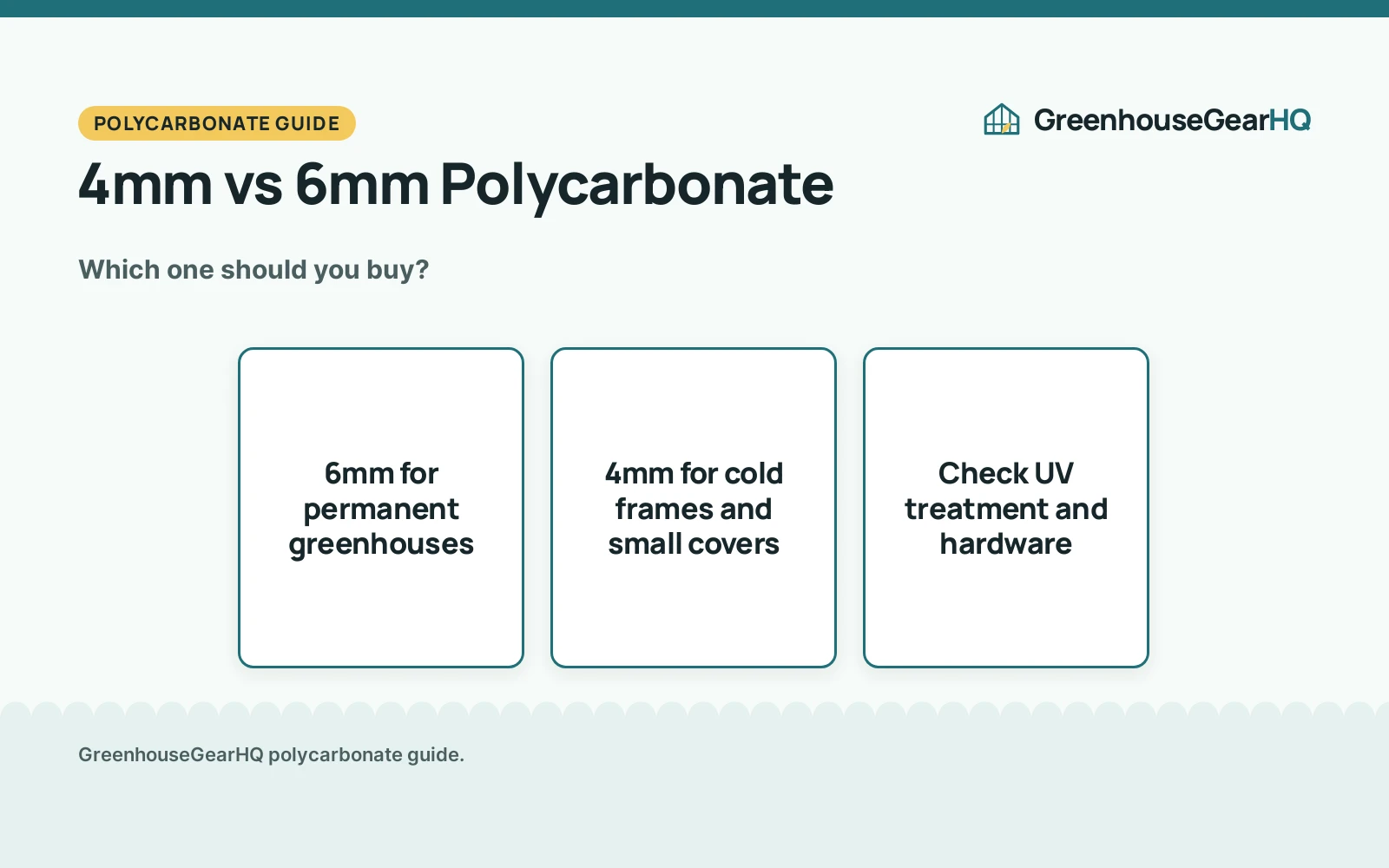
Choose 6mm polycarbonate for a greenhouse you want to last: it resists hail and wind loads better and insulates more than 4mm. Choose 4mm for cold frames, small hoop houses and projects where weight and cost matter more than insulation. If you are still choosing the structure itself, see our fiberglass vs polycarbonate greenhouse guide.
What 6mm listings look like
The 6mm listings here show the thicker option in real products. One listing shows a polycarbonate Lexan sheet, clear 1/4 in (6 mm), 24 in by 48 in, at 8 pounds. Another lists a polycarbonate sheet 12 in by 12 in by 1/4 in (6 mm), UV stabilized for general-purpose applications. The OWLHAUS listing shows U channel connectors in 6mm, 20 pack, fitting 6mm panels: a sign that 6mm is a standard panel thickness with matching hardware.
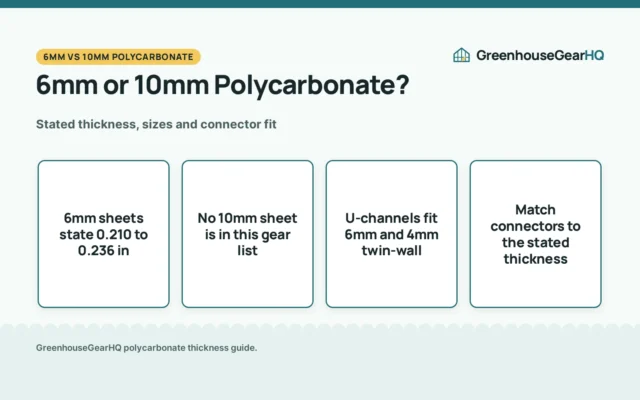
For comparison, the 1/8 in (3 mm) sheets in the set come in 4 in by 6 in, 12 in by 12 in and 24 in by 48 in, also UV stabilized. The jump from 3mm to 6mm doubles the material, which is why the 6mm sheet at 24 in by 48 in weighs a stated 8 pounds. No 4mm listing appears in this reference set.
When 4mm is the right call
Four millimeter panels suit structures where insulation matters less and weight matters more: cold frames, small lean-tos and temporary covers. The thinner sheet bends easier around curves and costs less per sheet, so a small project stays affordable. It also suits mild climates where frost protection is light.
The tradeoff is stiffness and insulation. A 4mm panel flexes more in wind and insulates less than 6mm, so a large permanent greenhouse in a cold climate deserves the thicker sheet. No 4mm listing appears in this reference set, so read any 4mm listing for its stated thickness, UV rating and sheet size before ordering, the same way the 6mm listings above publish theirs.
| Point | 4mm polycarbonate | 6mm polycarbonate |
|---|---|---|
| Listed sizes | Not listed here | 12×12 to 24×48 in |
| Stated weight | Not listed here | 8 pounds for 24×48 in |
| UV treatment stated | Not listed here | UV stabilized on the 6mm sheets |
| Hardware | Not listed here | 6mm U channels, 20 pack |
| Best for | Cold frames, small covers | Permanent greenhouses |
The 6mm figures come from the reference listings above; the 4mm column is qualitative because no 4mm listing appears in this set.
How to choose
Match the panel to the structure
A walk-in greenhouse with a real frame deserves 6mm: the stiffness spans rafters better and the extra insulation pays back every winter. A cold frame or a small curved cover suits 4mm, where light weight and easy bending matter more. For the frame choice, see our wood vs polycarbonate cold frame guide.
Check UV treatment
The 6mm sheets in the listings state UV stabilization, which matters: untreated plastic yellows and cracks in sun. Whatever thickness you buy, confirm the listing states a UV treatment before ordering.
Buy matching hardware
The OWLHAUS listing shows 6mm U channels in a 20 pack, which is a reminder that panel thickness must match the connectors. Order the channels for the thickness you chose, not the thickness you wish you had.
FAQ for growers
Is 6mm polycarbonate better than 4mm?
For a permanent greenhouse, yes: stiffer, better insulated and better supported by matching hardware like 6mm U channels. For small covers, 4mm is fine.
What sizes do the 6mm listings come in?
12 in by 12 in and 24 in by 48 in in this set, the larger at a stated 8 pounds.
Are the 6mm sheets UV treated?
The 6mm listings here state UV stabilization. Confirm any 4mm listing states the same before ordering.
What hardware fits 6mm panels?
The OWLHAUS listing shows 6mm U channel connectors in a 20 pack for 6mm panels.
Can 4mm bend around curves?
Thinner sheets bend easier, which is why 4mm suits curved cold frames and small covers. No 4mm listing appears in this set, so check the listing’s stated specs.
Keep reading
See every polycarbonate greenhouse guide and all greenhouse guides. Also see our fiberglass vs polycarbonate greenhouse. Also see our polytunnel vs polycarbonate greenhouse.
More picks: browse polycarbonate roof panels for greenhouse, polycarbonate greenhouses with sliding door and glass vs twin wall polycarbonate.