On this page
Top picks at a glance
As an Amazon Associate I earn from qualifying purchases.
- 1
 Garvee 6x10FT Polycarbonate Greenhouse9.7/10View on Amazon
- 2
 Garvee 6x10 FT GreenhouseView on Amazon
- 3
 Outsunny 6 x 4 FT Walk-in Polycarbonate Greenhouse forView on Amazon
- 4
 Outsunny 6 x 8 FT Walk-in Polycarbonate Greenhouse forView on Amazon
- 5
 Outsunny 6 x 10 FT Walk-in Polycarbonate Greenhouse forView on Amazon
- 6
 Outsunny 6' x 6' Greenhouse for OutdoorsView on Amazon
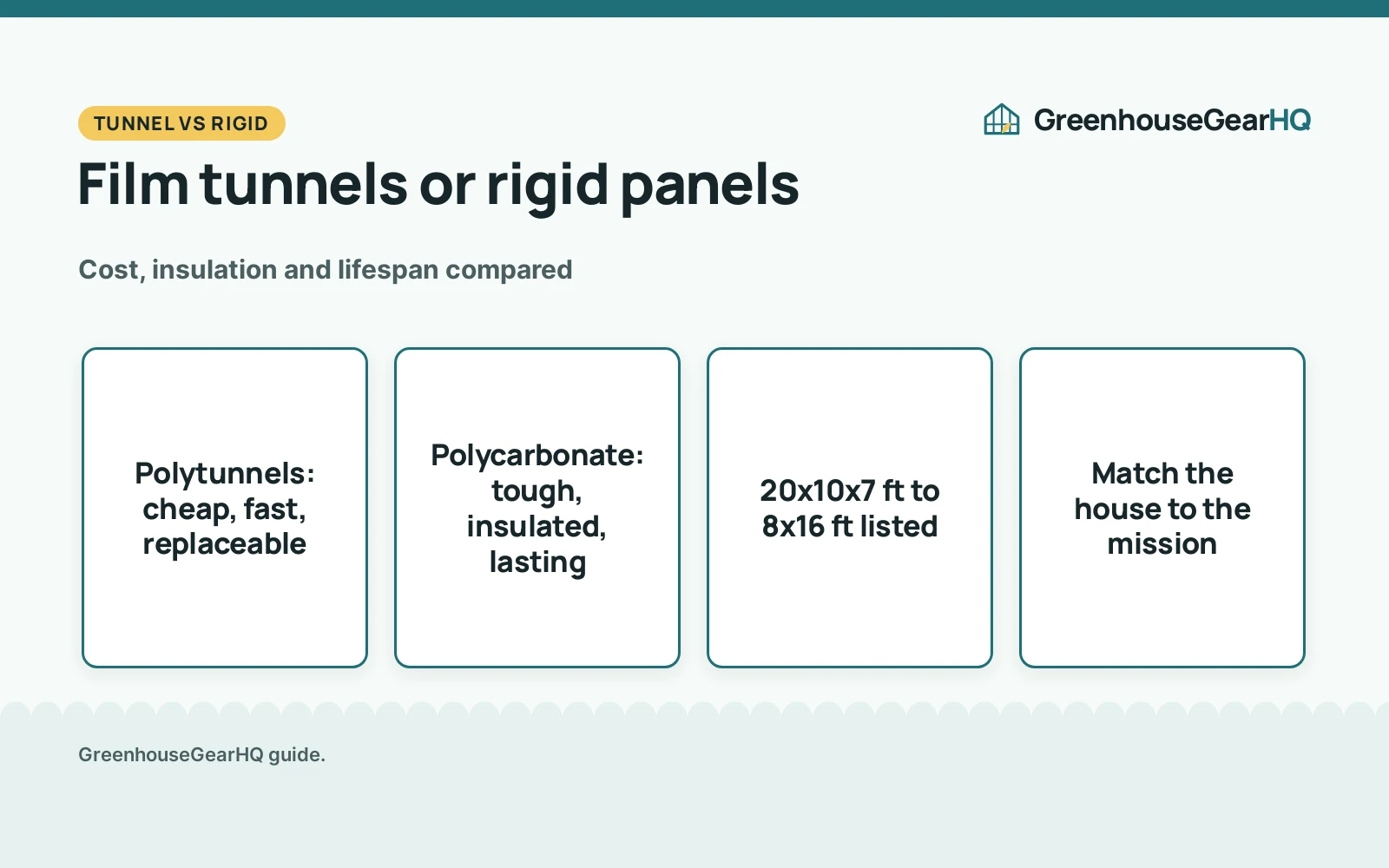
Polytunnel vs polycarbonate greenhouse is the classic cheap-vs-tough decision: a polytunnel is film stretched over hoops, while a polycarbonate greenhouse is rigid twin-wall panels in an aluminum or steel frame. The listings show both sides: tunnel models like the Outsunny 20 x 10 x 7 ft and 13 x 10 x 6.5 ft walk-ins and the Xuwzenkl 7FT hoop packs, against polycarbonate houses like the Garvee 6×10 FT aluminum, the Reljofum 8 x 16 ft aluminum-framed and the Phonjoroo 15 x 7 x 7 ft walk-in with 8 windows. Choose the polytunnel for low cost and easy setup; choose polycarbonate for durability and insulation.
Other options worth a look
 Garvee 6x10 FT GreenhouseCheck price on Amazon
 Garvee 6 x 10 FT GreenhouseCheck price on Amazon
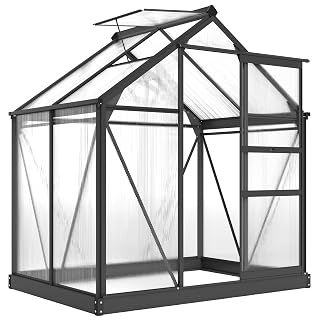 Outsunny 6 x 4 FT Walk-in Polycarbonate Greenhouse forCheck price on Amazon
 Outsunny 6 x 8 FT Walk-in Polycarbonate Greenhouse forCheck price on Amazon
 Outsunny 6 x 10 FT Walk-in Polycarbonate Greenhouse forCheck price on Amazon
 Outsunny 6' x 6' Greenhouse for OutdoorsCheck price on Amazon
GreenhouseGearHQ earns a commission when you buy through links on this page, at no extra cost to you. As an Amazon Associate I earn from qualifying purchases. Affiliate disclosure.
What a polytunnel is
A polytunnel is hoops plus film: the cheapest way to cover growing space. The Xuwzenkl 7FT hoop packs cover rows for little money, while the Outsunny 20 x 10 x 7 ft and 13 x 10 x 6.5 ft walk-in tunnels give full standing height under film. The BPS listing even sells a 20 x 10 x 7 ft replacement cover, which tells you the business model: cheap structure, replaceable skin. Polytunnels go up fast and cost little.
What a polycarbonate greenhouse is
A polycarbonate greenhouse is rigid panels in a real frame: the Garvee 6×10 FT aluminum models, the Reljofum 8 x 16 ft aluminum-framed house and the Phonjoroo 15 x 7 x 7 ft walk-in with 8 windows. Twin-wall panels insulate far better than single film and shrug off hail that would shred a polytunnel. The trade: higher price, heavier structure and a real assembly job.
Cost and lifespan
Polytunnels win on upfront cost by a wide margin: film and hoops are cheap, and replacement covers like the BPS 20 x 10 x 7 ft keep them running. Polycarbonate houses cost multiples more but last many years with panels that do not tear. Over a decade, the polytunnel’s repeated cover replacements narrow the gap, but the polycarbonate house still wins on durability.
Insulation and growing season
Polycarbonate wins on warmth: twin-wall panels trap air and hold heat far better than single-layer film. A polytunnel extends the season; a polycarbonate greenhouse can hold a real winter garden. If your goal is year-round growing, the rigid house is the answer; if you just want frost protection and earlier springs, the tunnel suffices.
Setup and portability
Polytunnels win on setup: two people can raise an Outsunny 20 x 10 x 7 ft in an afternoon with basic tools, and the whole thing moves if you change your mind. Polycarbonate houses like the Reljofum 8 x 16 ft need a level base, careful panel fitting and a full day or more. Renters and experimenters should start with tunnels; owners building for decades should anchor the rigid house properly.
Wind, snow and maintenance
Wind is the polytunnel’s enemy and the polycarbonate house’s trial: film flaps and tears, panels stay put. Snow slides off both if the pitch is right, but heavy loads flatten cheap hoops faster than aluminum frames like the Reljofum 8 x 16 ft. Maintenance flips too: polytunnels need re-skinning every few years, polycarbonate houses need panel cleaning and seal checks.
Polytunnel vs polycarbonate greenhouse: which should you buy?
Match the house to the mission. Cheap seasonal cover for rows: a polytunnel like the Outsunny walk-ins or Xuwzenkl hoops. A permanent growing space with real winter use: polycarbonate, like the Garvee 6×10 FT or Reljofum 8 x 16 ft. Budget growers start with tunnels and upgrade; serious growers buy the rigid house once.
FAQ for growers
Which is cheaper?
The polytunnel: hoops and film cost far less than aluminum frames and twin-wall panels.
Which insulates better?
Polycarbonate: twin-wall panels trap air and hold heat, extending the growing season further than film.
How long does polytunnel film last?
A few years of UV exposure, then it needs replacing: sellers like BPS stock 20 x 10 x 7 ft replacement covers for exactly this reason.
Ventilation decides summer success for both. Polytunnels vent by rolling up sides or opening ends; rigid houses like the Phonjoroo with 8 windows give you real openings. Either way, plan airflow before planting: a closed house overheats fast, whatever the covering.
Can a polytunnel handle snow?
Light snow, yes; heavy loads flatten cheap hoops. Rigid aluminum frames like the Reljofum 8 x 16 ft handle winter better.
Keep reading
See every greenhouse guide and all light and heat guides.
More picks: hoop house vs high tunnel, tunnel greenhouse vs glass greenhouse and hoop house vs high tunnel.