On this page
Top picks at a glance
As an Amazon Associate I earn from qualifying purchases.
- 1
 TAFALAA 100ft Soil Heating Cable with Thermostat and9.6/10View on Amazon
- 2
 TAFALAA 50ft Soil Heating Cable with Two Thermostats9.6/10View on Amazon
- 3
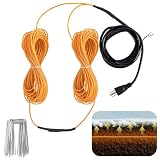 Adnee 118ft Thermostatic Soil Heating Cable with Ground Stakes9.6/10View on Amazon
- 4
 LUXBIRD 6 Pack 30W Seedling Heating Mats 10" x 20.75" withView on Amazon
- 5
 TURBRO Smart Temperature Controller Heating CoolingView on Amazon
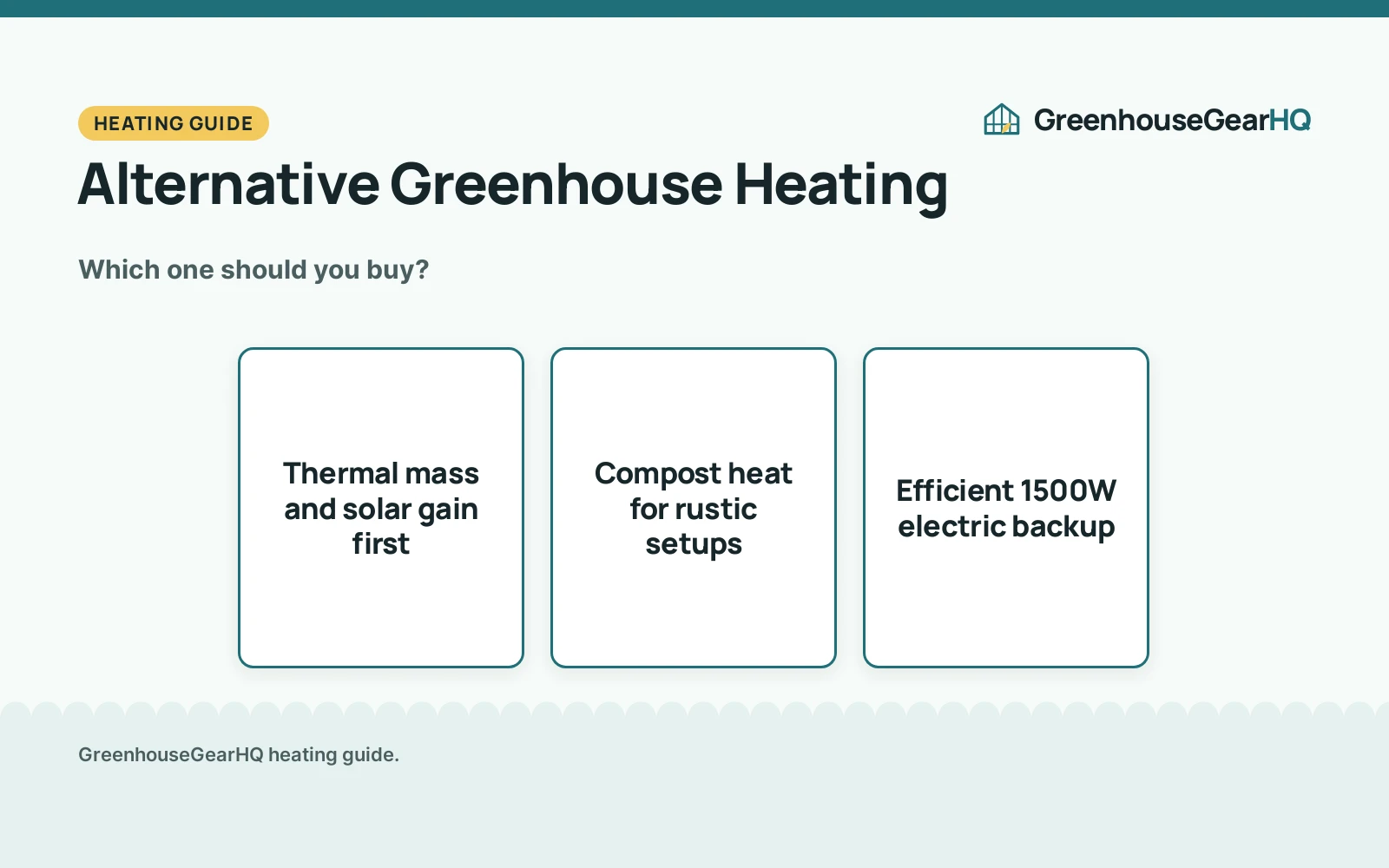
Alternative greenhouse heating means warming your greenhouse without a standard electric space heater: options include thermal mass, solar gain, compost heat and efficient electric heaters used smartly. This guide explains the main alternatives step by step, with figures from the reference listings where they apply. Every number below comes from those listings; where no figure is available, the option is explained without one.
Other options worth a look
 LUXBIRD 6 Pack 30W Seedling Heating Mats 10" x 20.75" withCheck price on Amazon
 TURBRO Smart Temperature Controller Heating CoolingCheck price on Amazon
GreenhouseGearHQ earns a commission when you buy through links on this page, at no extra cost to you. As an Amazon Associate I earn from qualifying purchases. Affiliate disclosure.
Alternative greenhouse heating: the options
The alternatives fall into two groups: passive methods that store the sun’s heat, and efficient active heaters that sip electricity instead of guzzling it. Start with the passive side because it costs nothing to run, then add a small electric heater as backup for the coldest nights. For the conventional comparison, see our greenhouse heater vs space heater guide.
Thermal mass: water and stone
Thermal mass stores daytime heat and releases it at night. Black barrels of water along the north wall are the classic version: water absorbs heat all day and radiates it slowly after dark. Stone, brick or concrete floors work the same way on a smaller scale. No figure is available in the listings for how much heat a barrel stores, so size by rule of thumb: more mass, more buffering.
Thermal mass suits greenhouses in climates with sunny days and cold nights. It does not suit cloudy weeks: with no sun to charge it, the mass just stays cold. Pair it with insulation, since mass without insulation leaks the stored heat straight through the walls.
Efficient electric heaters as backup
The reference listings show 1500W electric PTC heaters with thermostats as the active option. Several list three heat modes: 20W, 750W or 1500W, letting you run low for mild nights and full for hard freezes. Temperature ranges of 41 to 108 degrees F and 40 to 108 degrees F appear on the thermostat models, with digital displays and automatic cycling.
Safety figures are stated clearly: tip-over protection and automatic shutoff on one listing, dual overheat shutoff and IPX5 water resistance on another, and ETL listing with overheat protection on a third. The VEVOR listings show weights of 2.8, 3.1 and 7.1 pounds, so even the larger units move easily. For efficient picks, see our most efficient heater for greenhouse roundup.
| Option | Heat source | Running cost | Best for |
|---|---|---|---|
| Thermal mass | Stored sun | None | Sunny days, cold nights |
| Compost heat | Decomposing matter | None | Attached beds, rustic setups |
| Solar gain design | Sun through glazing | None | South-facing sites |
| PTC electric heater | 1500W max, 750W or 20W low | Electricity | Backup for coldest nights |
| Propane heater | Gas | Fuel | Off-grid greenhouses |
The electric figures come from the reference listings above; the other rows are qualitative because no listings for them appear in this set.
Compost and biological heat
A hot compost pile or a manure hotbed under a raised bed generates real heat as it decomposes. This suits rustic setups and attached beds where the pile can sit against the greenhouse. It does not suit small urban greenhouses: the pile needs space and management, and the heat is hard to control precisely. No figure is available in the listings, so treat it as supplemental, not primary.
Solar gain and insulation first
Before any heater, maximize free heat: face the long glazed wall south, insulate the north wall, and seal drafts. A well-sealed greenhouse with thermal mass may need no heat at all in mild climates. The PTC heaters in the listings then cover only the coldest nights on their 750W or 20W settings, which is the cheapest way to run them.
Propane and gas options
Propane suits off-grid greenhouses with no electricity: it burns hot and works in any weather. It needs ventilation for combustion gases and a fuel supply, which adds cost and complexity. For the gas comparison, see our butane vs propane greenhouse heater guide.
FAQ for growers
What is the cheapest alternative heating?
Thermal mass and solar gain design cost nothing to run. A black water barrel and a south-facing wall are the classic free options.
What power do the listed electric heaters use?
Up to 1500W, with 750W and 20W low modes on several listings, and thermostat ranges of 40 to 108 degrees F.
Which heaters state safety features?
Tip-over protection and automatic shutoff, dual overheat shutoff with IPX5 water resistance, and ETL listing with overheat protection across the listings.
Does compost heat a greenhouse?
A hot compost pile generates real heat, suited to rustic setups with space. No figure is stated in the listings; treat it as supplemental.
How heavy are the listed heaters?
The VEVOR listings state 2.8, 3.1 and 7.1 pounds, so they move easily.
Keep reading
See every greenhouse heater guide and all greenhouse climate guides. Also see our most efficient heater for greenhouse. Also see our greenhouse heater vs space heater.
More picks: browse heaters for cold frame, propane heaters under 150 and infrared vs oil filled greenhouse heater.