On this page
Top picks at a glance
As an Amazon Associate I earn from qualifying purchases.
- 1
 Rakukiri 5ft Oval Galvanized Raised Garden Bed9.7/10View on Amazon
- 2
 Vego garden Elevated Raised Garden Bed9.7/10View on Amazon
- 3
 Vego Garden Raised Garden Bed Kit9.7/10View on Amazon
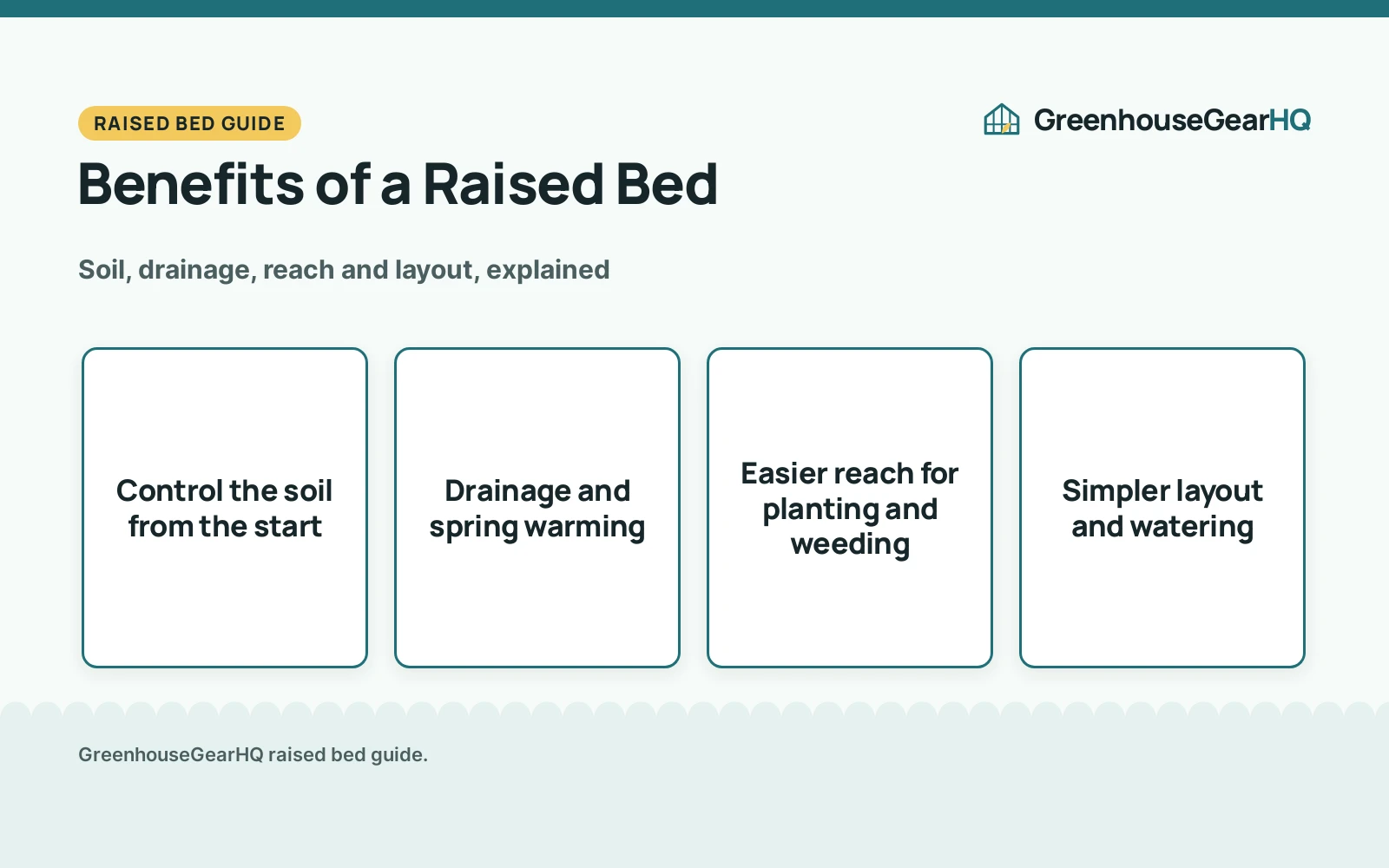
The benefits of a raised bed come down to control: you choose the soil, the drainage, the height and the layout instead of accepting whatever the ground gives you. A raised bed is a framed growing area filled with soil above ground level, and that simple change makes planting, watering and weeding easier to manage through the season.
GreenhouseGearHQ earns a commission when you buy through links on this page, at no extra cost to you. As an Amazon Associate I earn from qualifying purchases. Affiliate disclosure.
What a raised bed is
A raised bed is a contained frame, usually wood, metal or composite boards, filled with soil and compost above the surrounding ground. The frame holds the soil in a defined shape, paths run between beds, and each bed becomes its own small garden with its own soil mix. Because the soil sits above ground level, water drains down through it rather than pooling on the surface, and the bed warms as the season turns.
Raised beds suit vegetables, herbs and flowers, and they work in backyards, on patios and in community plots. The frame can sit on soil, grass or a hard surface, as long as water can drain away below it. For planting layout ideas once the bed is built, see our guide on how to plant a raised garden bed.
The main benefits of a raised bed, step by step
Step 1: You control the soil from the start
In-ground beds inherit whatever soil the yard already has, which may be heavy clay, thin sand or compacted fill. A raised bed starts empty, so you fill it with the soil and compost mix your crops need and keep that mix in place season after season. You can layer materials for drainage and feeding, as our guide on how to layer raised garden bed soil explains, and top the bed up with compost as the level settles.
Step 2: Drainage and warming work in your favor
Soil held above ground level drains more freely than soil at grade, so roots sit in moist soil rather than standing water after heavy rain. The raised soil also warms sooner in spring because air moves around the frame and the bed is not tied to cold ground below. That earlier warming lets you sow and transplant with more confidence at the start of the season, and the free drainage helps through wet spells later on.
Step 3: The bed is easier to reach and tend
Working height is a practical benefit that shows up every week. A raised bed brings planting, thinning, weeding and harvesting up toward you, so there is less bending and kneeling than in a ground-level plot. Defined edges keep paths clear, keep soil off the paths and make it simple to see where crops end and walkways begin. Taller beds raise the work further for gardeners who prefer to stand or sit while they tend plants.
Step 4: Weeds, pests and roots stay easier to manage
A framed bed gives weeds fewer places to creep in from the sides, and the loose, worked soil inside the frame is easier to weed by hand than compacted ground. The frame also helps keep some crawling pests and wandering roots from neighboring plants out of the bed, and a liner or mesh under the soil can be added where burrowing pests are a problem. Nothing makes a garden pest-free, but a contained bed is simpler to inspect and protect than an open plot.
Step 5: Layout, watering and season planning get simpler
Each raised bed is a fixed unit, so planning rotations, spacing and succession planting becomes a matter of assigning beds rather than measuring open ground. Watering is more even because the soil depth is consistent across the bed, and drip lines or soaker hoses lay out neatly inside a frame. Covers, hoops and shade cloth also fit over a rectangular bed more easily than over an irregular plot, which extends the season at both ends.
Raised beds or in-ground beds?
Choose raised beds when your ground soil is poor, drainage is slow, space is tight, or bending to ground level is hard. Choose in-ground beds when you have deep, workable soil, plenty of room, and crops that need a long run of open ground. Many gardens mix the two: raised beds near the house for herbs and salad crops that get picked often, and in-ground rows further out for larger plantings. Our guide on how deep a raised garden bed needs to be helps match bed depth to the crops you plan to grow.
What this guide does not cover
This guide explains the benefits of a raised bed and how to use them; it does not compare specific bed kits, soil brands or watering products, and it does not give fertilizer rates or pest treatment advice. Soil volume depends on your bed size, so measure your bed before ordering soil, and see raised garden bed size guidance for layout dimensions.
FAQ for growers
What are the main benefits of a raised bed?
The main benefits are control over soil quality, freer drainage, earlier spring warming, easier reach for planting and weeding, and a defined layout that keeps paths and crops separate.
Do raised beds drain better than in-ground beds?
Yes. Soil held above ground level in a frame drains down through the bed instead of pooling at the surface, which keeps roots out of standing water after heavy rain.
Are raised beds easier to weed?
Generally yes. The loose soil inside a frame is easier to work by hand, and the edges slow weeds creeping in from paths and surrounding ground.
Can I put a raised bed on a patio?
Yes, as long as water can drain away below the frame and the surface can carry the weight of wet soil. Line the base where drainage onto the patio is a concern.
Keep reading
See every raised garden bed guide and all raised beds and planters guides.
More picks: soil compost mixes for raised beds, irrigation systems for raised planters, and enclosed raised garden beds.