On this page
Top picks at a glance
As an Amazon Associate I earn from qualifying purchases.
- 1
 Quick-Connect 200FT Drip Irrigation System Kit9.7/10View on Amazon
- 2
 MIXC 1/4 Inch 100 Ft Drip Irrigation System with 16 Nozzles9.5/10View on Amazon
- 3
 Thiswing 100 FT Garden Drip Irrigation System with 32 Copper9.5/10View on Amazon
- 4
 Raindrip 052020P 1/2-Inch Drip Irrigation Water Supply TubingView on Amazon
- 5
 50pcs Adjustable Drip Irrigation Emitters: Garden DrippersView on Amazon
- 6
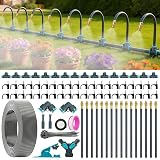 360°Adjustable Drip Irrigation SystemView on Amazon
- 7
 100FT 360° Adjustable Drip Irrigation System with 20pcsView on Amazon
- 8
 5/16" Drip Irrigation System 100 ft for with 20-Pcs 360°View on Amazon
- 9
 Raindrip R560DP Drip Watering SystemView on Amazon
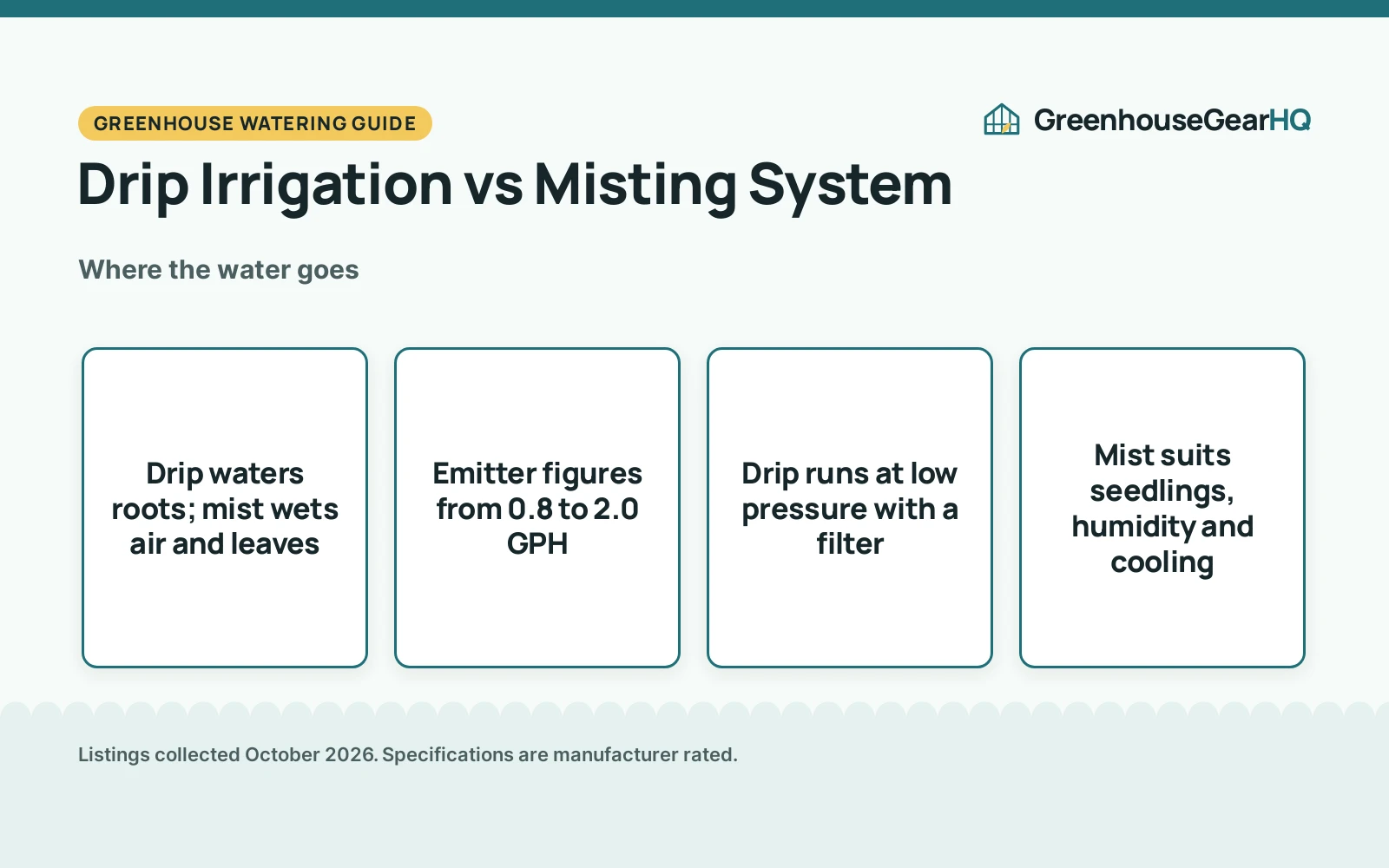
Drip irrigation vs misting system comes down to where the water should go. Drip irrigation puts water at the roots, drop by drop, through tubing and emitters. A misting system puts water in the air and on the leaves, as a fine spray. Both water a greenhouse, but they solve different problems: drip is for feeding established plants efficiently, mist is for humidity, cooling and young cuttings that need gentle moisture.
Other options worth a look
 Raindrip 052020P 1/2-Inch Drip Irrigation Water Supply TubingCheck price on Amazon
 50pcs Adjustable Drip Irrigation Emitters: Garden DrippersCheck price on Amazon
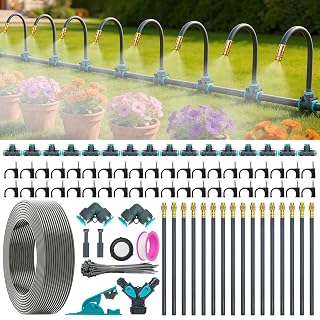 360°Adjustable Drip Irrigation SystemCheck price on Amazon
 100FT 360° Adjustable Drip Irrigation System with 20pcsCheck price on Amazon
 5/16" Drip Irrigation System 100 ft for with 20-Pcs 360°Check price on Amazon
 Raindrip R560DP Drip Watering SystemCheck price on Amazon
GreenhouseGearHQ earns a commission when you buy through links on this page, at no extra cost to you. As an Amazon Associate I earn from qualifying purchases. Affiliate disclosure.
Drip irrigation vs misting system: the short answer
Choose drip irrigation for beds of established plants, where the goal is steady root-zone watering with dry foliage. Choose a misting system for seedling propagation, humidity and summer cooling, where the goal is moisture in the air rather than in the soil. Many greenhouses run both: drip lines in the beds and a mist line over the propagation bench. The listings below give concrete figures for the drip side; no misting listings were provided, so the misting side is described from how the systems work, without figures.
How drip irrigation works
A drip system starts at the faucet with a connection kit: the Rain Bird FCKIT-1PK listing, for example, includes a backflow preventer, a 25 PSI pressure regulator and a 150 mesh filter, and connects 1/2-inch drip tubing to a 3/4-inch faucet thread. From there, supply tubing carries the water: Raindrip lists 1/4-inch poly tubing in a 100 ft coil with an outside diameter of 0.250 in and an inside diameter of 0.170 in, and 1/2-inch tubing in a 200 ft coil. Rain Bird lists 1/4-inch distribution tubing in 250 ft and 100 ft rolls, rated 0 to 70 psi. Emitters do the actual watering: Rain Bird lists 1/4-inch emitter tubing in a 50 ft roll with built-in 0.8 gallon per hour emitters spaced 6 inches apart, rated 8.5 to 60 psi, and a 30-pack of 2.0 gallon per hour pressure-compensating emitters. La Farah lists 50 adjustable drip emitters on 5-inch stakes with a maximum flow of 18 GPH and a maximum pressure of 40 psi. The water never leaves the root zone, which is the whole point.
How a misting system works
A misting system sprays a fine mist from nozzles on a line run overhead or along a bench. The mist wets the leaves and raises the humidity of the surrounding air, and as it evaporates it cools the space. That makes it the tool for jobs drip cannot do: keeping cuttings and seedlings from drying out, holding humidity for tropical plants, and taking the edge off summer heat. The trade is wet foliage: leaves stay damp, which suits propagation but not every crop. Because no misting listings were provided, this guide states no misting figures; for rated kits, see our best misting system for plants picks.
Water use and plant health
Drip is the more targeted method: water goes to the roots and the foliage stays dry, which suits tomatoes, peppers and other plants that dislike wet leaves. The emitter figures show how precise it gets, from 0.8 gallon per hour emitters every 6 inches to adjustable emitters you can tune per plant. Mist is the gentler method for young plants: cuttings with no roots cannot pull water from soil, so they need moisture on and around them. For seedlings specifically, see best misting system for seedling propagation.
Setup and pressure
Drip runs at low pressure: the connection kit listing includes a 25 PSI regulator, and the tubing and emitter listings state ranges from 0 to 70 psi and 8.5 to 60 psi. A filter matters because emitters clog; the kit listing includes a 150 mesh filter for that reason. Layout is modular: main line, feeder lines and emitters punched in where each plant sits, and the listings note compatibility with 1/4-inch barbed fittings across brands. Mist needs higher pressure to make a fine spray and nozzles that stay clean, which is why misting kits are sold as complete systems rather than parts. For the nozzle side, see misting nozzles vs drip emitters.
Which should you choose
Choose drip irrigation when the plants are established and the goal is efficient root watering with dry foliage: vegetable beds, containers and perennials. Choose a misting system when the goal is humidity, cooling or propagation: seedling benches, cuttings and tropical collections. Run both when the greenhouse holds both kinds of plants, with drip in the beds and mist over the bench. And keep the two apart in your head when shopping: an emitter rated in gallons per hour is a drip part, a nozzle rated for spray is a mist part, and the two are not interchangeable.
FAQ for growers
Can I run drip and mist on the same faucet?
Yes, with a connection kit that includes a pressure regulator and filter, like the 25 PSI kit in the listings. Drip and mist want different pressures, so zone them separately.
Which uses less water?
Drip is the more targeted method: the emitter listings show flows from 0.8 to 2.0 gallons per hour per emitter, all delivered at the roots. Mist wets the air and the leaves, which suits propagation but not efficiency.
Do drip emitters clog?
They can, which is why the connection kit listing includes a 150 mesh filter. The emitter listings also describe self-flushing and clog-resistant designs.
Is mist good for seedlings?
Yes. Cuttings and seedlings with small root systems need moisture on and around them, which is the job misting does best. See our seedling propagation picks for rated kits.
What tubing size do I need for drip?
The listings show 1/2-inch tubing as the main line and 1/4-inch tubing as feeder lines to emitters, with 1/4-inch barbed fittings connecting them.
Keep reading
See every drip irrigation kits guide and all air and water guides.
More picks: drip emitters vs micro sprayers, brass vs plastic misting nozzles, evaporative cooler vs misting system and misting system for hanging baskets.