On this page
Top picks at a glance
As an Amazon Associate I earn from qualifying purchases.
- 1
 Rubber Grommets Water Seal Hydroponics Dutch Bucket for useView on Amazon
- 2
 36 Site Aeroponic Cloning Machine. Expect 100% Success Rates!View on Amazon
- 3
 25 Site Aeroponic Cloning Machine Expect 100% Success RatesView on Amazon
- 4
 Aeroponic Cloner Machine 24 Site for Cuttings Rooting Using 2View on Amazon
- 5
 90 PCS Micro Sprayer Fan Jet Hydroponic Aeroponic MistersView on Amazon
- 6
 Clone Machine 96 SiteView on Amazon
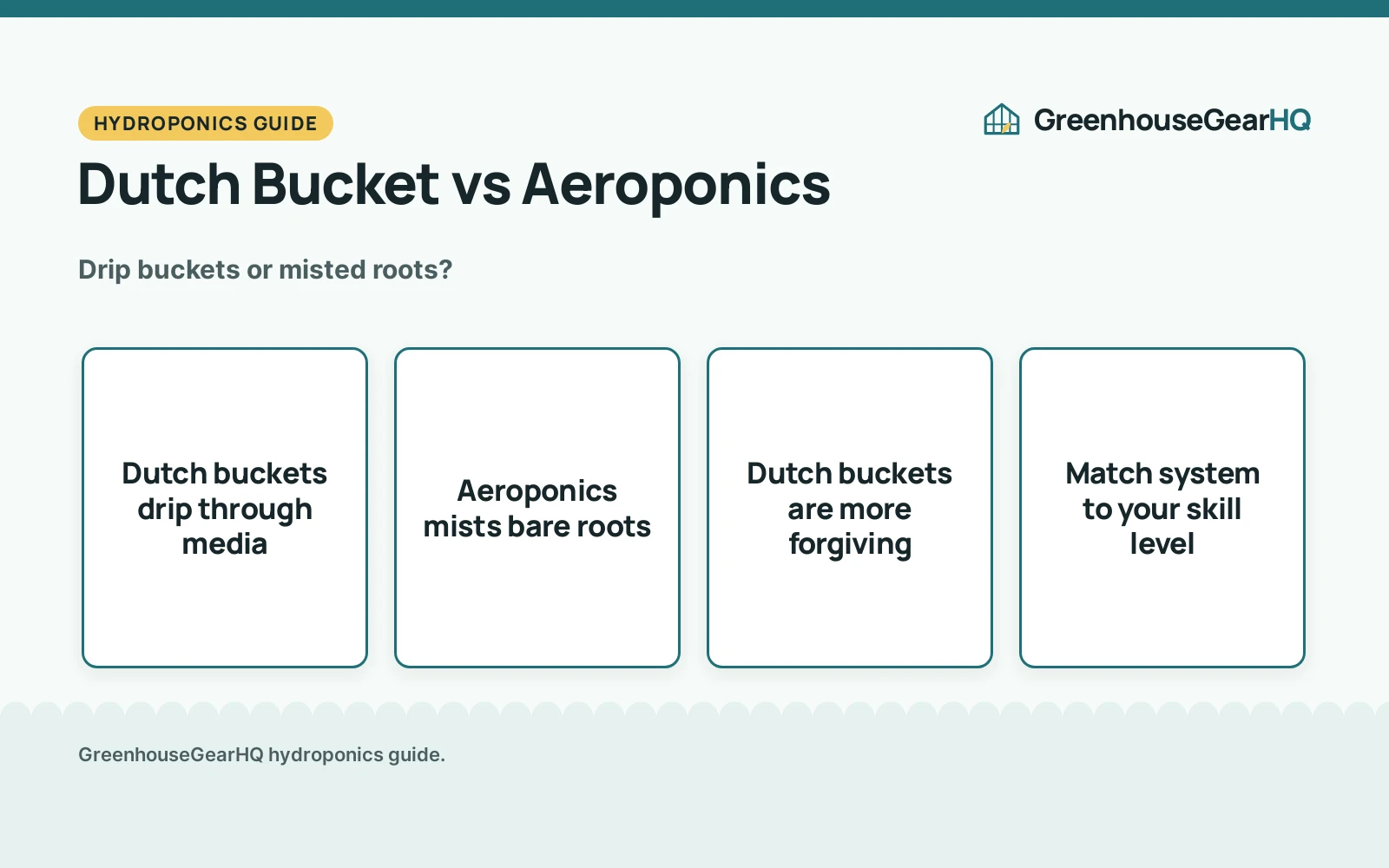
Dutch bucket vs aeroponics: a Dutch bucket (Bato bucket) drips nutrient solution through media in individual buckets, while aeroponics mists bare roots with no media at all. Which one should you buy? It depends on whether you want a forgiving drip system for larger plants or a high-maintenance mist system for maximum oxygen. Every number below comes from a product listing we compared; where a listing gives no figure, we say so. Note: the bucket listings here are general-purpose storage and fermentation buckets, not Dutch bucket hydroponic kits, and no aeroponics listing is in our data.
Other options worth a look
 Rubber Grommets Water Seal Hydroponics Dutch Bucket for useCheck price on Amazon
 36 Site Aeroponic Cloning Machine. Expect 100% Success Rates!Check price on Amazon
 25 Site Aeroponic Cloning Machine Expect 100% Success RatesCheck price on Amazon
 Aeroponic Cloner Machine 24 Site for Cuttings Rooting Using 2Check price on Amazon
 90 PCS Micro Sprayer Fan Jet Hydroponic Aeroponic MistersCheck price on Amazon
 Clone Machine 96 SiteCheck price on Amazon
GreenhouseGearHQ earns a commission when you buy through links on this page, at no extra cost to you. As an Amazon Associate I earn from qualifying purchases. Affiliate disclosure.
Dutch bucket vs aeroponics: the core difference
A Dutch bucket system places each plant in its own bucket filled with media like perlite, with a drip emitter feeding the top and a drain returning to a reservoir. Aeroponics suspends roots in air inside a chamber and mists them on a timer, with no media. The listings here do not include a Dutch bucket kit or an aeroponics unit, so both sides are explained from general knowledge. The ePackageSupply listing shows a 5-gallon bucket at 11.9 inches diameter by 14.56 inches height, which is the right size class for a DIY Dutch bucket, but it is sold as a storage pail, not hydroponic gear.
What Dutch buckets give you
Forgiveness and scale. Each bucket is independent, so you can grow large plants like tomatoes or peppers. The media buffers water and nutrients, so a pump failure does not kill roots immediately. Dutch buckets suit greenhouses where you want rows of big plants. For more, see our hydroponic systems guides.
What aeroponics gives you
Oxygen and speed. Bare roots in mist get maximum air exposure, which can mean faster growth. But there is no buffer: clogged misters or a power cut can damage roots in hours. Aeroponics needs filtered water, fine nozzles, and constant attention. It suits experienced growers chasing maximum yield per plant.
Buckets and sizing
Dutch buckets are typically 2 to 5 gallons per plant. The ePackageSupply 5-gallon and FastRack 6.5-gallon buckets show the size range, though neither is a hydroponic kit. Aeroponics chambers are sized to the root zone, often smaller per plant but needing vertical misting space. The VEVOR DWC lists 5-gallon buckets at 14.3 pounds for the 4-bucket kit, which shows the weight class of bucket systems.
Maintenance
Dutch buckets need emitters checked for clogs and media replaced between crops. Aeroponics needs mister nozzles cleaned far more often, plus water filtration. Dutch buckets are the lower-maintenance of the two by a wide margin.
What the bucket listings can teach a Dutch bucket buyer
None of the listings are Dutch bucket kits, but their figures still anchor smart buying decisions. A Dutch bucket is typically 2 to 5 gallons per plant, and the ePackageSupply listing shows exactly what that looks like: a 5-gallon pail at 11.9 inches diameter and 14.56 inches high, holding 640 oz. Buy food-grade HDPE like the 90 mil ePackageSupply pails, which are BPA-free and FDA compliant, because nutrient solution sits in the bucket for weeks. If you plan to ferment or age anything alongside growing, the FastRack 2-pack of 6.5-gallon buckets with grommeted lids and airlocks shows the next size up, at 3.9 pounds each.
Budget for the parts the listings do not include. A Dutch bucket needs a drain fitting, a drip emitter and a reservoir, and none of the bucket listings provide them. The VEVOR DWC system, which does bundle its parts, shows the accessory list a kit should have: 4 planting buckets with 5-inch baskets, an 8W air pump pushing 4 x 4L/min, 6 m of air hose, 4 water level devices, 4 check valves, 4 air stones and clay pebbles. Use that as your shopping checklist when buying buckets separately. For a multi-plant Dutch bucket row, plan one emitter and one drain per bucket, and size the reservoir to the plant count, since each bucket draws from the same tank.
Which should you buy?
Buy Dutch buckets if you want big plants with a forgiving drip system. Buy aeroponics if you want maximum growth speed and accept the maintenance burden. Most home growers are better served by Dutch buckets or simpler DWC.
FAQ for growers
Are the bucket listings Dutch buckets?
No. They are storage, fermentation, and utility buckets. A Dutch bucket kit would include drip emitters, drains, and a reservoir, which these listings do not.
Is aeroponics good for beginners?
No. The lack of a water buffer makes it unforgiving. Start with DWC or Dutch buckets.
What size bucket suits a Dutch bucket?
Typically 2 to 5 gallons per plant. The 5-gallon listings here show the size, but they are not hydroponic kits.
Do aeroponics systems use media?
No. Roots hang bare in a misted chamber, which is why oxygen levels are so high and why failures are so fast.
Keep reading
See every hydroponic system guide and all indoor growing guides.
More picks: hydroponic kit for lettuce and hydroponic kit for herbs.