On this page
Top picks at a glance
As an Amazon Associate I earn from qualifying purchases.
- 1
 Mr. Heater 99.7/10View on Amazon
- 2
 BioGreen Electric Greenhouse Heater & Fan with DigitalView on Amazon
- 3
 Electric Patio HeaterView on Amazon
- 4
 Dura Heat Electric Forced Air HeaterView on Amazon
- 5
 blessny 1500W Wall Mounted Electric Heater for Outdoor PatioView on Amazon
- 6
 Infrared Patio Heater 1500W Outdoor Heaters RealSmartView on Amazon
- 7
 GarveeTech Greenhouse HeaterView on Amazon
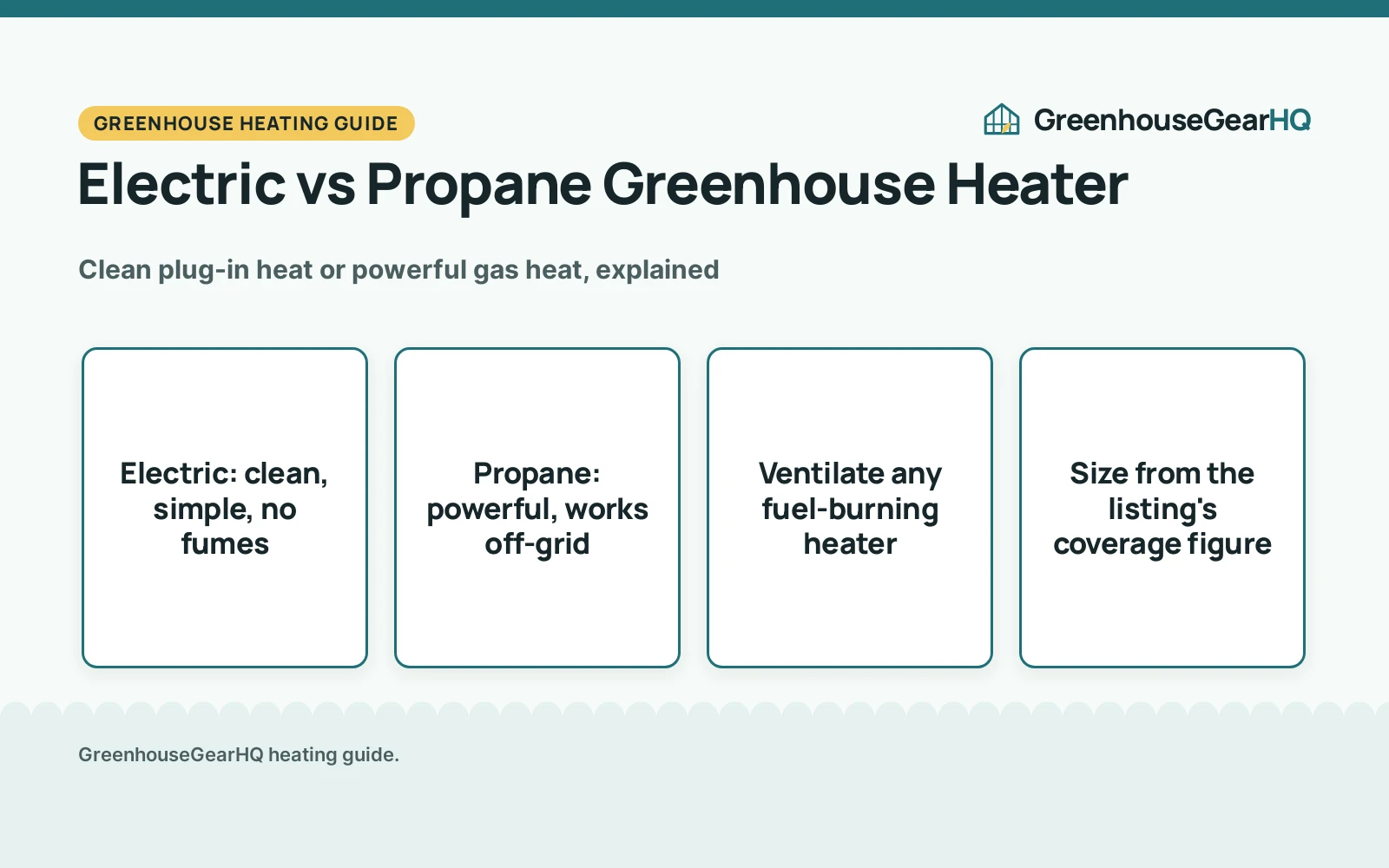
An electric greenhouse heater plugs into an outlet and converts electricity to heat with no flame and no fumes; a propane heater burns propane gas for powerful heat that works even during a power outage, but it needs ventilation and fuel handling. Pick electric for simplicity and clean indoor air; pick propane for big spaces, off-grid houses, or backup heat when the power fails. This guide explains how each type works, what the listings state, and which suits a given greenhouse.
Other options worth a look
 BioGreen Electric Greenhouse Heater & Fan with DigitalCheck price on Amazon
 Electric Patio HeaterCheck price on Amazon
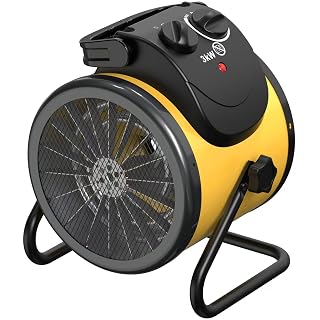 Dura Heat Electric Forced Air HeaterCheck price on Amazon
 blessny 1500W Wall Mounted Electric Heater for Outdoor PatioCheck price on Amazon
 Infrared Patio Heater 1500W Outdoor Heaters RealSmartCheck price on Amazon
 GarveeTech Greenhouse HeaterCheck price on Amazon
GreenhouseGearHQ earns a commission when you buy through links on this site, at no extra cost to you. As an Amazon Associate I earn from qualifying purchases. Affiliate disclosure.
Electric vs propane greenhouse heater: how they work
An electric heater runs current through a heating element, PTC ceramic in several listings here, and a fan or natural convection spreads the warmth. The BioGreen PALMA listing describes an electric greenhouse heater and fan with a digital thermostat at 1500 watts and 5100 BTU/hr. A propane heater burns gas in a burner, producing far more heat per unit, plus combustion gases that must be vented. No propane listing appears in the reference data, so the propane side here is explained from general knowledge without figures; every number below comes from the electric listings.
Heat output and coverage
Electric listings here are uniformly 1500 watts on high. The BioGreen PALMA lists 5100 BTU/hr and covers 120 square feet; several grow-tent heater listings list 5120 BTU and cover around 160 square feet; one patio heater listing covers 160 square feet. The BioGreen also lists 5800 ft³/h of airflow on its fan. Propane heaters generally start where electric models top out and scale far higher, which is why large commercial houses use them, but no propane figure is stated in the reference listings, so size any propane unit from its own manual, not from this guide.
Running costs and convenience
Electric heat is simple: plug in, set the thermostat, and pay the electric bill. Several listings here help trim that bill with stepped power, 20 watts low, 750 watts medium and 1500 watts high on two listings, and a 25-watt fan-only mode on another for air circulation without heat. Propane means managing tanks or a gas line, checking connections, and refilling in winter; the fuel cost swings with the market. For a small hobby house with an outlet nearby, electric wins on convenience. The BioGreen PALMA’s digital thermostat automates the cycling, so the heater holds temperature without attention once set. For a large or remote house, propane’s higher output per dollar of fuel can win on running cost, but only a local price comparison settles it.
Safety and ventilation
Electric heaters produce no combustion gases, so a sealed greenhouse stays safe to enter; the main risks are overloaded circuits and water near electricity. Give the heater its own outlet, keep the element clear of soil and debris, and check the listing for overheat protection. Propane heaters demand real ventilation: burning gas consumes oxygen and produces carbon monoxide and water vapor, so a tightly sealed house around an unvented propane burner is dangerous for both plants and people. Never run a propane heater without the ventilation its manual requires, and keep a carbon monoxide alarm in any house with fuel-burning heat.
Which should you choose?
Choose electric when the greenhouse has a reliable outlet, the space is modest, and clean air matters: the 120 to 160-square-foot coverage figures on these 1500-watt listings show the sweet spot. Choose propane when the house is large, the power is unreliable, or no circuit can spare 1500 watts; propane keeps working through outages and heats far bigger volumes. Many growers run both, electric as the daily driver on a thermostat and propane as the backup that fires when the power fails. Either way, size from the listing’s coverage figure, use the lower wattage steps once the space is warm, and never compromise on ventilation with gas.
FAQ for growers
Is electric or propane cheaper to run?
It depends on local electricity and propane prices. Electric models here draw 1500 watts on high with lower steps at 750 or 20 watts; compare those against the propane price per gallon.
Can I use a propane heater in a sealed greenhouse?
No. Propane combustion needs ventilation for oxygen supply and exhaust; follow the manual and keep a carbon monoxide alarm in the house.
Will 1500 watts heat my greenhouse?
Listings here state 120 to 160 square feet of coverage at 1500 watts. Larger houses need more units or a fuel-burning heater.
Do electric heaters work in a power outage?
No, which is the main argument for propane backup. A propane heater keeps running when the grid goes down.
Keep reading
See every greenhouse heaters guide and all greenhouse climate guides.
More picks: best greenhouse heater and geothermal vs propane greenhouse heater.