On this page
Top picks at a glance
As an Amazon Associate I earn from qualifying purchases.
- 1
 BioGreen Electric Greenhouse Heater and Fan with Digital9.7/10View on Amazon
- 2
 BN-LINK Reptile Thermostat Temperature ControllerView on Amazon
- 3
 Dura Heat Electric Forced Air HeaterView on Amazon
- 4
 DIGITEN Temperature Controller Heat Mat Thermostat OutletView on Amazon
- 5
 QRQ Chicken Coop HeaterView on Amazon
- 6
 1500W Greenhouse Heater with Thermostat WIFI APPView on Amazon
- 7
 EAGLE PEAK 1500W Greenhouse Heater with ThermostatView on Amazon
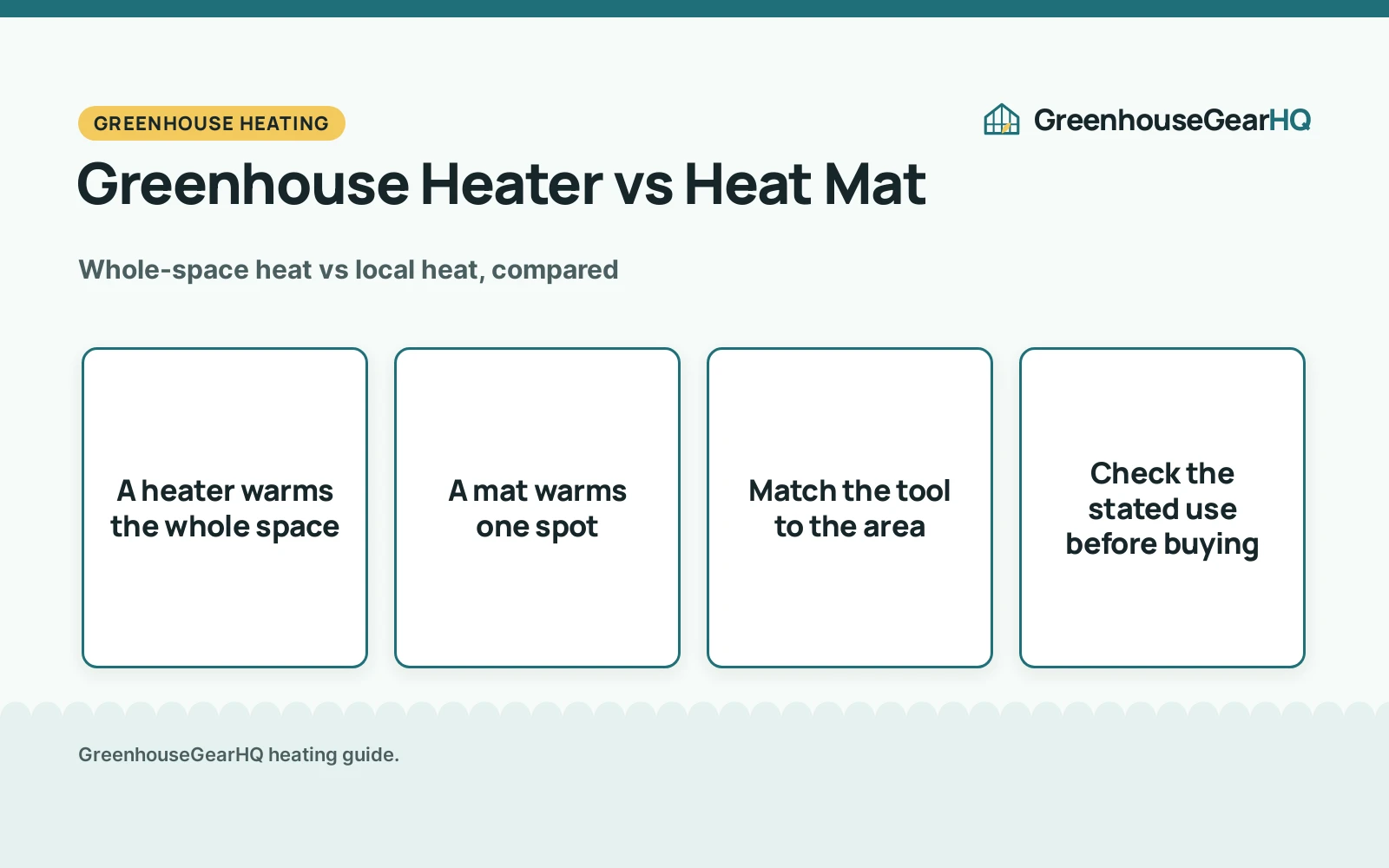
On a frosty night, with tender seedlings under glass and cold air settling over the whole house, the greenhouse heater vs heat mat question comes down to which area needs warmth. A heater warms the space, and a mat warms a spot. That split decides the purchase, because a tool that warms the air and a tool that warms the soil under a tray do different jobs, even when both are sold for warming plants.
Other options worth a look
 BN-LINK Reptile Thermostat Temperature ControllerCheck price on Amazon
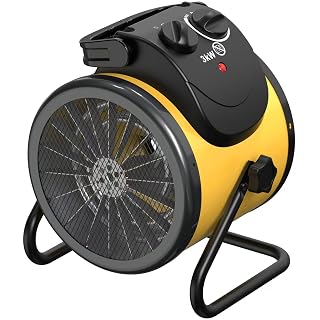 Dura Heat Electric Forced Air HeaterCheck price on Amazon
 DIGITEN Temperature Controller Heat Mat Thermostat OutletCheck price on Amazon
 QRQ Chicken Coop HeaterCheck price on Amazon
 1500W Greenhouse Heater with Thermostat WIFI APPCheck price on Amazon
 EAGLE PEAK 1500W Greenhouse Heater with ThermostatCheck price on Amazon
GreenhouseGearHQ earns a commission when you buy through links on this page, at no extra cost to you. As an Amazon Associate I earn from qualifying purchases. Affiliate disclosure.
What each one does
A greenhouse heater warms the air and the surfaces of the whole house, so every tray in it shares the warmth. It suits a house where the air itself has turned cold, and where plants across benches and beds face the same chill. A heat mat warms the surface it sits under, so the tray on the mat gets the warmth while the rest of the house stays as it is. It suits a tray that needs warmth from below while the house around it is already warm enough.
The difference is area, not strength in the abstract. A heater spreads warmth across a space, and a mat concentrates warmth under a tray. That is why the two tools are not rivals in every situation. They answer different worries: cold air across the whole house, and cold soil under a tray. Knowing which worry is present makes the choice plain, and buying the wrong one for the worry at hand leaves the real problem untouched.
Season shapes the choice too. In late winter, when seed trays are sown and nights turn cold, a mat under a tray gives warmth where seeds sit, while a heater holds the house through a frosty night. The grower who matches the tool to the season and to the area at risk gives plants steadier conditions than the grower who buys warmth without asking where it should go.
Greenhouse heater vs heat mat: whole-space heat or local heat
Choose by the area that needs warming. If frost threatens the whole house, a heater is the tool, because a mat under a tray leaves the rest of the house cold. If only a tray needs warmth while the house itself is fine, a mat under that tray is the tool, because heating the whole house for a tray wastes the effort. If both worries are present, the two tools can work side by side, each doing its own job: the heater holds the air, and the mat warms the soil under the tray.
| Tool | Warms | Suits | Watch for |
|---|---|---|---|
| Greenhouse heater | The air and surfaces of the whole house | A house where every tray faces cold air | Stated coverage and stated use |
| Heat mat | The surface and soil under a tray | A tray that needs warmth from below | Stated size and stated power |
Size follows the same split. A heater must suit the house it warms, and a mat must suit the tray it sits under. Measure the tray before ordering, and compare it against the size the listing states, because a mat that covers only part of a tray leaves part of the tray unwarmed. Measure the house in the same way, and compare it against the coverage the heater listing states, because a heater sized for a small house will not hold a large one through a cold night. Listings state sizes in their own terms, so read the stated size rather than assuming a mat or a heater fits.
Placement follows size. A mat belongs under the tray it warms, flat and stable, with cords kept away from water and walkways. A heater belongs where its warmth can reach the house, with clear space around it as the maker directs.
What to check before buying
First, check whether the device makes heat or only sits under heat. A listing that states a power figure describes a device that makes heat. A listing that states only a maximum temperature, with no power figure, describes a surface that can sit under heat, not a source of warmth. That distinction matters more than any other detail in the listing, because a surface that resists heat will not warm a tray, however high its stated maximum temperature may be.
Second, check the stated use. A listing should state the use it is made for, and the buyer should match that use to the job at hand. A heater listing should state greenhouse use, and a mat listing should state seedling or tray use. When a listing states a different use, treat that use as the honest scope of the device, and do not stretch it to a job it does not claim. Greenhouse use that is unstated is a gap the buyer carries, not a detail to assume away.
Third, check the stated size, the stated power and the stated warranty. Size decides fit, power decides whether the device makes heat and how much warmth it can give, and warranty decides what backing the maker offers. When a listing states no warranty term, that absence is itself a fact to weigh. When a listing states a warranty term, note the term and keep it in mind alongside size and power, because a long warranty on a poor fit is still a poor fit.
Fourth, check the warnings. A listing may warn against certain surfaces, placements or conditions, and those warnings shape where the device can sit and what it can sit under. Read them before ordering, not after the parcel arrives, because a warning that rules out the planned placement rules out the purchase. Warnings are not fine print to skip; they are part of the stated scope of the device.
Finally, think about the season ahead. A heater bought for frost nights should suit the coldest nights the house faces, and a mat bought for seed starting should suit the trays that will sit on it through the sowing season.
FAQ for growers
When is a greenhouse heater the right choice?
When cold air threatens the whole house and every tray faces the same chill. A heater warms the air and surfaces of the house, so it suits a house-wide problem rather than a tray on its own.
When is a heat mat the right choice?
When the house itself is warm enough but a tray needs warmth from below. A mat warms the surface and soil under the tray it sits on, so it suits a local problem rather than a house-wide one.
Can a heater and a mat be used in the same greenhouse?
Yes, because they do different jobs. The heater holds the air of the house, and the mat warms the soil under a tray. Use each where its job lies, and follow the stated use and placement guidance for each device.
How do I pick the right size?
Measure the tray or the house, then compare that measure against the size or coverage the listing states. A mat should suit the tray it sits under, and a heater should suit the house it warms, because a poor fit leaves part of the area unwarmed.
What should I check in a listing before buying?
Check the stated use, the stated size, the stated power and the stated warranty, and read the warnings. A listing that states a power figure makes heat, while a listing that states only a maximum temperature does not claim to warm anything.
Keep reading
See every greenhouse heaters guide and all light and heat guides.
More picks: seedling heat mats, greenhouse heaters and walk-in greenhouses.