On this page
Top picks at a glance
As an Amazon Associate I earn from qualifying purchases.
- 1
 Mr. Heater 99.7/10View on Amazon
- 2
 Garystat Non-Programmable Heat Pump Thermostat for House 2View on Amazon
- 3
 Garvee Mini Split AC with Heat PumpView on Amazon
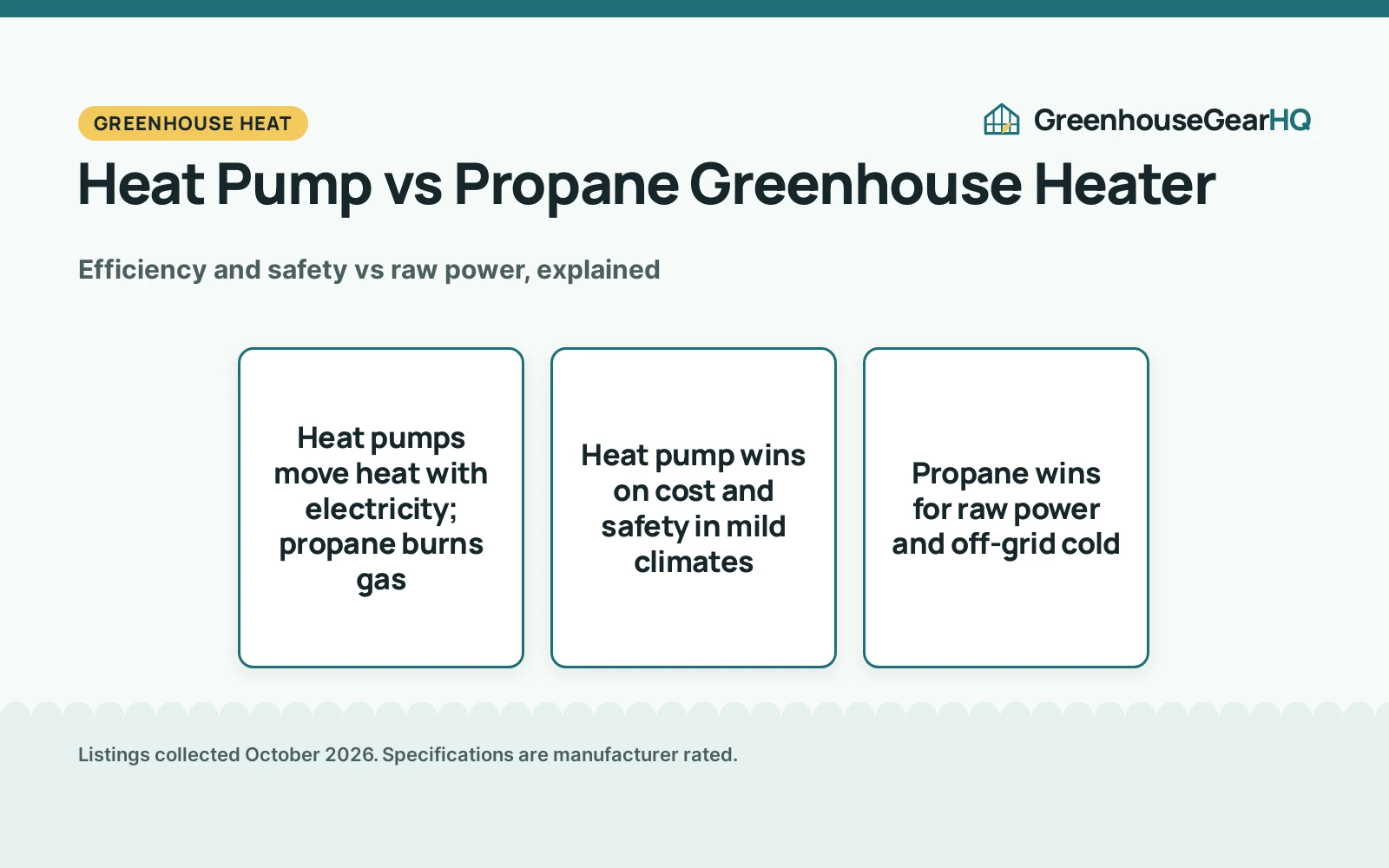
In the heat pump vs propane greenhouse heater debate, a heat pump moves heat from the outside air into the greenhouse using electricity, while a propane heater burns gas to make heat on the spot. For a greenhouse, the heat pump wins on running cost and safety in mild climates, while propane wins for raw power and off-grid reliability in deep cold. This guide explains the tradeoff with figures from real listings.
Other options worth a look
 Garystat Non-Programmable Heat Pump Thermostat for House 2Check price on Amazon
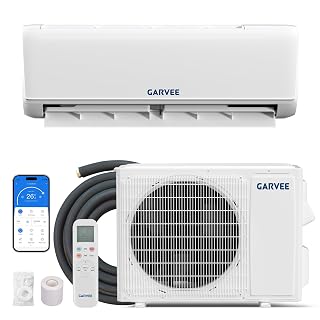 Garvee Mini Split AC with Heat PumpCheck price on Amazon
GreenhouseGearHQ earns a commission when you buy through links on this page, at no extra cost to you. As an Amazon Associate I earn from qualifying purchases. Affiliate disclosure.
How each one heats
A heat pump is an electric machine that extracts heat from outdoor air and pumps it inside, so it needs a power connection and works best when the outside air still holds warmth. A propane heater burns liquid propane in a burner, so it works anywhere a gas bottle can go and keeps heating through a power cut. The Mr. Heater listing here shows the propane shape: a 30,000 BTU vent-free blue flame heater that heats up to 750 sq ft, weighs 24.7 pounds, mounts on a wall or stands on legs, and needs no electricity and no outdoor venting. The two technologies are fundamentally different: one moves heat, the other makes it.
Power and coverage
Propane delivers big heat in one box. The Mr. Heater puts out 30,000 BTU for spaces up to 750 sq ft, with a built-in thermostat that cycles the burner to hold temperature and an 85°F max temperature setting. Electric resistance heaters in the listings show the smaller end: the COMFORT ZONE milkhouse runs 1500 watts for 150 to 300 sq ft, and the shinic runs 1500 watts on high and 1300 watts on low for up to 200 sq ft. A heat pump typically matches or beats resistance electric on efficiency in mild weather, but its output falls as the outside temperature drops; propane output does not depend on the weather at all. For the electric side of this debate, our heat pump vs electric greenhouse heater guide goes deeper.
Running cost and fuel logistics
Propane heat costs whatever the gas bottle costs, and the bottle must be refilled or swapped. A heat pump costs whatever the electricity costs, drawn through a cord. The diesel listing here shows the fuel-logistics shape in miniature: the VEVOR 8KW diesel heater burns 0.16 to 0.62 liters per hour from a 5-liter tank for up to 8 hours of continuous heat, so fuel is a recurring errand. Propane is the same idea at greenhouse scale. If the greenhouse has grid power and the winters are mild, the heat pump’s lower running cost wins over time; if power is unreliable or the site is remote, propane’s independence wins.
Safety and ventilation
Combustion needs air and makes exhaust. The Mr. Heater is vent-free but carries an oxygen depletion sensor that shuts it off if room oxygen drops, plus a thermostat and a 1-year limited warranty. Even so, a propane heater in a sealed greenhouse needs fresh air, and plants plus people share the space. A heat pump has no flame and no exhaust, so it is inherently safer indoors. Electric heaters in the listings show the safety baseline: the COMFORT ZONE has a tip-over switch, overheat sensor and anti-freeze setting, and the EdenPURE infrared is ETL listed. Our butane vs propane greenhouse heater guide covers the fuel side.
Control and automation
Both can be automated. The Mr. Heater’s on-board thermostat cycles the burner; a heat pump has its own controls. For either, a thermostatic outlet adds set-and-forget control: the HEATIT ET-21 energizes below 38°F and switches off at approximately 50°F, handles 15 amps, is CSA approved and carries a 2-year limited warranty. The EdenPURE infrared shows the electric feature set: remote control, 40 to 90°F settings and auto-reboot after a power outage, with a stated 80,000-hour lifespan. Set the controller, and the heater only runs when the greenhouse needs it.
Heat pump vs propane greenhouse heater: which should you choose?
Choose a heat pump if the greenhouse has reliable power, winters are mild, and you want low running cost with no flame and no fuel errands.
Choose a propane heater if you need big heat off-grid, through power cuts, or in deep cold. The Mr. Heater’s 30,000 BTU for up to 750 sq ft shows the scale; ventilate and respect the oxygen sensor.
Whichever you pick, add a thermostatic controller so the heat runs only when the temperature demands it.
In the Greenhouse
- Place combustion heaters where exhaust cannot pool around plants.
- Set a thermostatic outlet like the HEATIT to 38°F on and 50°F off for frost protection.
- Keep fuel bottles outside the growing area where possible.
- Vent the greenhouse daily even in winter to refresh the air.
- Check gas connections for leaks each season.
FAQ for growers
Does a heat pump work in freezing weather?
Less well. It extracts heat from outside air, so output falls as it gets colder. Propane output does not depend on the weather.
How big a propane heater do I need?
The Mr. Heater listing covers up to 750 sq ft at 30,000 BTU. Match the heater to the space; smaller greenhouses need far less.
Is propane safe in a greenhouse?
With ventilation and safety devices. The Mr. Heater has an oxygen depletion sensor and thermostat; still ventilate the space.
Can I automate a propane heater?
The Mr. Heater has an on-board thermostat, and a thermostatic outlet like the HEATIT ET-21 can switch any 15-amp heater at 38°F on and 50°F off.
Which costs less to run?
It depends on local gas and electricity prices. Heat pumps usually win in mild climates; propane wins where power is costly or unreliable.
Keep reading
See every greenhouse heater guide and all climate guides.
More picks: heat pump vs electric heater, kerosene vs propane heater and best propane heater.