On this page
Top picks at a glance
As an Amazon Associate I earn from qualifying purchases.
- 1
 Mr. Heater 99.7/10View on Amazon
- 2
 Avenger 189.7/10View on Amazon
- 3
 Mr. Heater 1259.7/10View on Amazon
- 4
 Sengoku HeatMate Portable Kerosene HeaterView on Amazon
- 5
 Comfort Glow Indoor Kerosene Convection HeaterView on Amazon
- 6
 9View on Amazon
- 7
 10View on Amazon
- 8
 VEVOR Kerosene Forced Air HeaterView on Amazon
- 9
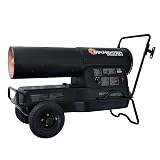 Mr. Heater 210View on Amazon
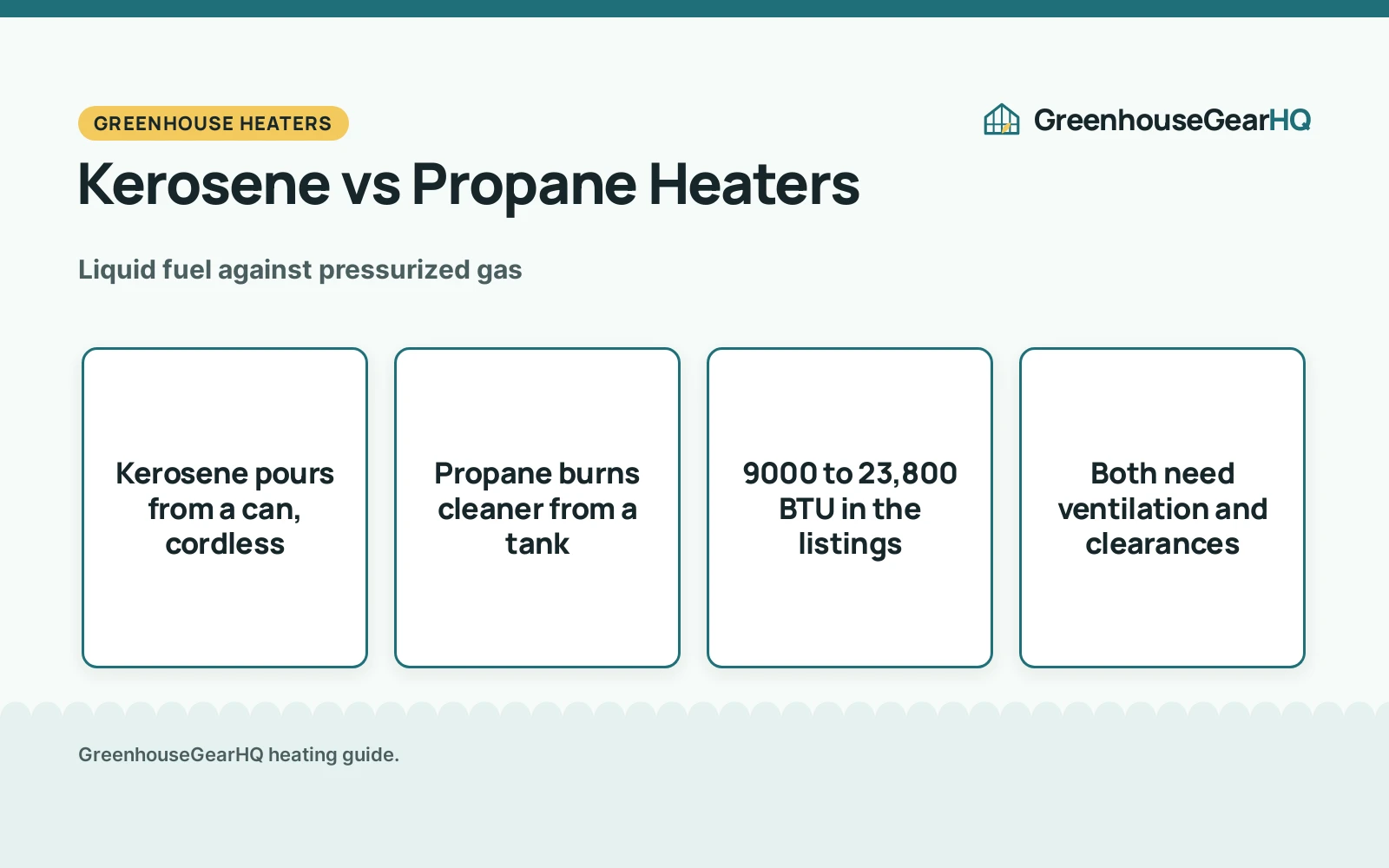
Kerosene vs propane greenhouse heater comes down to fuel form: kerosene is a liquid fuel you pour into the heater’s tank, while propane is a pressurized gas fed from a separate tank. Both heat without mains electricity, and both need fresh air in the space. All of the fuel listings here are kerosene, from 9,000 to 23,800 BTU, so the kerosene figures below come from those listings and the propane side is described in general terms. Choose kerosene for portable, cordless heat with long runtimes; choose propane for cleaner-burning gas heat where you can site a tank.
Other options worth a look
 Sengoku HeatMate Portable Kerosene HeaterCheck price on Amazon
 Comfort Glow Indoor Kerosene Convection HeaterCheck price on Amazon
 9Check price on Amazon
 10Check price on Amazon
 VEVOR Kerosene Forced Air HeaterCheck price on Amazon
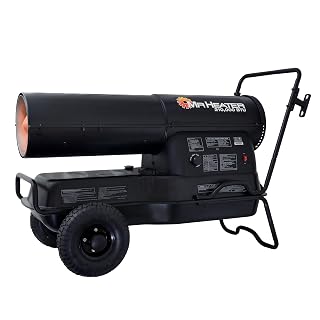 Mr. Heater 210Check price on Amazon
GreenhouseGearHQ earns a commission when you buy through links on this page, at no extra cost to you. As an Amazon Associate I earn from qualifying purchases. Affiliate disclosure.
What a kerosene greenhouse heater is
A kerosene heater burns liquid kerosene from its own tank through a wick or a forced-air burner, with no gas line and no power cord on the wick models. The Sengoku HeatMate listings state 10,000 BTU for 380 to 400 square feet and 23,000 BTU for 1,000 square feet, both cordless. The Kero World listings state 23,800 BTU models covering 1,000 square feet with run times around 12 hours, and the AHUAWA listings state 9,000 to 10,000 BTU models with run times of 20 to 21 hours. Refueling means pouring kerosene from a can, and the fuel stores in the can between uses.
What a propane greenhouse heater is
A propane heater burns gas from a pressurized tank connected by a hose and regulator. Propane burns cleaner than kerosene with less odor, and many propane heaters pair with thermostats that cycle the burner. The tradeoff is the tank: you need a safe place for it, a sound hose and regulator, and a supplier or exchange point for refills. No propane listing is in the data here, so compare propane models on their own stated BTU, coverage and tank requirements.
Fuel handling and storage
Kerosene handling is pouring: fill the tank from an approved fuel can, wipe spills and store the can away from the heater. Propane handling is connecting: seat the tank outdoors or as the maker directs, check the hose and fittings for leaks, and never store a spare tank in the heated space. Buy only the fuel you will use in a season, since both fuels degrade or invite moisture over long storage.
Heat output and runtime in the listings
The kerosene listings span 9,000 BTU on the AHUAWA 350 square foot model up to 23,800 BTU on the Kero World 1,000 square foot models, with the VEVOR forced-air torpedo at 175,000 BTU for large spaces. Stated run times run from about 12 hours on the larger Kero World models to 20 or 21 hours on the AHUAWA 10,000 BTU models. Match the stated coverage to your greenhouse size, and remember that a drafty house needs more heat than a sealed one of the same floor area.
Ventilation and safety
Both fuels burn oxygen and produce combustion byproducts, so no fuel heater belongs in a sealed greenhouse with people or plants and no fresh air. The listings state tip-over shut-off and overheat protection on several models; treat those as the makers’ statements and keep clearances as the manual directs. Never refuel a hot heater, and let a kerosene wick cool fully before moving the unit.
Kerosene vs propane greenhouse heater: which fuel suits you
Pick kerosene if you want a heater that works anywhere with no installation: fill the tank, light the wick or start the burner, and move the unit between houses as frost threatens. Pick propane if you prefer gas with less odor and already have a tank setup or a supplier nearby. Either way, size by the listing’s stated coverage, keep fresh air moving, and follow the maker’s instructions for fuel handling.
What this guide does not cover
This guide covers kerosene and propane heaters only, not electric heaters and not fuel pricing. For electric options, our electric vs propane greenhouse heater guide compares them, and our diesel vs propane greenhouse heater guide covers another fuel pair.
FAQ for growers
Which is cheaper to run, kerosene or propane?
Fuel prices vary by region and season, so compare local kerosene and propane prices per unit of heat. The kerosene listings here state run times of 12 to 21 hours per tank, which helps you estimate refills.
Can I use a kerosene heater in a greenhouse overnight?
The listings state models with tip-over shut-off and overheat protection, but follow the maker’s instructions for ventilation, clearances and unattended use.
Does propane heat cleaner than kerosene?
Propane generally burns with less odor and soot than kerosene. Kerosene wick heaters need occasional wick attention, while propane needs hose and regulator checks.
How do I store kerosene between seasons?
Keep it in an approved, sealed fuel can in a cool place away from the heater and living spaces, and use it within the season. Stale fuel burns poorly and smells worse.
Keep reading
See every greenhouse heater guide and all light and heat guides.
More picks: best propane greenhouse heater with thermostat, diesel vs kerosene greenhouse heater and best greenhouse heater.