On this page
Top picks at a glance
As an Amazon Associate I earn from qualifying purchases.
- 1
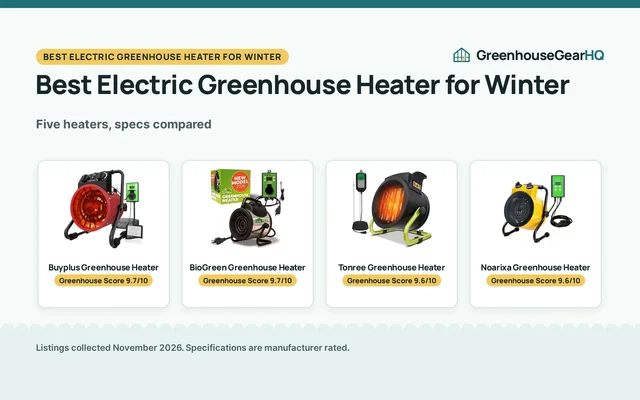
 BioGreen Electric Greenhouse Heater and Fan with Digital9.7/10View on Amazon
- 2
 Garystat Non-Programmable Heat Pump Thermostat for House 2View on Amazon
- 3
 Garvee Mini Split AC with Heat PumpView on Amazon
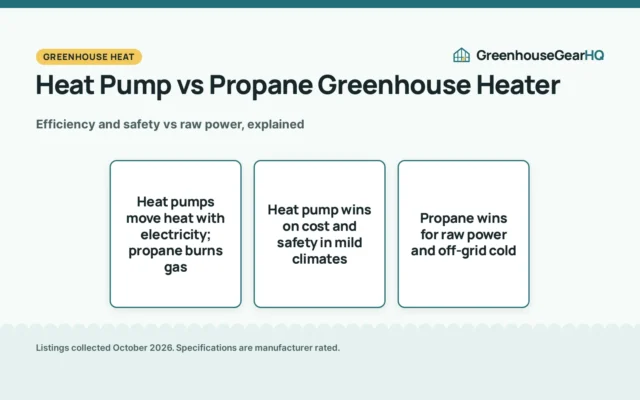
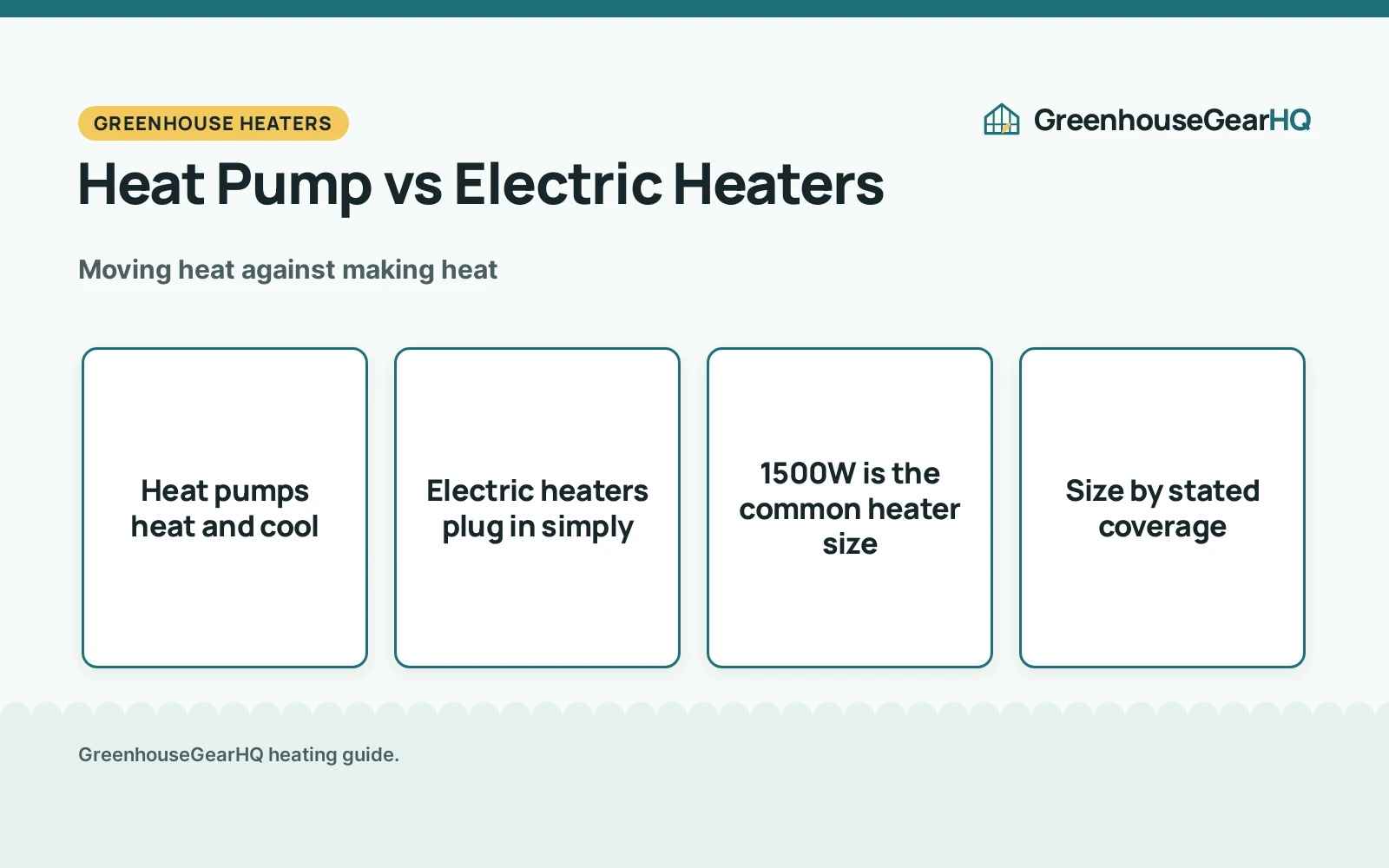
Heat pump vs electric greenhouse heater comes down to how the heat is made: a heat pump moves existing heat from outside air into the greenhouse using a compressor, while an electric heater turns electricity directly into heat through a resistive element. Both run on electricity, but the heat pump also cools in summer and needs professional-style installation. All of the listings here are electric heaters and controls, so the electric figures below come from those listings and the heat pump side is described in general terms. Choose a heat pump for year-round climate control in a permanent house; choose an electric heater for simple plug-in frost protection.
Other options worth a look
 Garystat Non-Programmable Heat Pump Thermostat for House 2Check price on Amazon
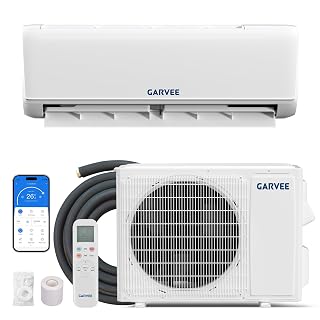 Garvee Mini Split AC with Heat PumpCheck price on Amazon
GreenhouseGearHQ earns a commission when you buy through links on this page, at no extra cost to you. As an Amazon Associate I earn from qualifying purchases. Affiliate disclosure.
What a heat pump is
A heat pump is a refrigeration cycle run in reverse: it extracts heat from outdoor air and releases it inside, which is why the same unit cools in summer. Because it moves heat rather than making it, it delivers more heat per unit of electricity than a resistive heater in mild weather. The tradeoff is complexity and cost: an outdoor unit, refrigerant lines, a wall-mounted indoor head and proper installation. Heat pump output also falls as outdoor temperatures drop, so in deep cold a backup heat source matters.
What an electric greenhouse heater is
An electric heater passes current through a resistive element and blows or radiates the heat into the room. The Comfort Zone milkhouse listings state 1500 watts for 150 square feet, the Shinic milkhouse heater states 1500 watts for 200 square feet, and the EdenPURE CopperSMART states 1000 to 1500 watts with ETL listing. Every watt becomes heat, which makes electric heaters simple and predictable: no refrigerant, no outdoor unit, just a plug and a thermostat.
Efficiency in mild versus cold weather
In mild weather a heat pump wins on efficiency because moving heat costs less energy than making it. In deep cold the advantage shrinks as the pump works harder and may need backup heat. An electric heater’s efficiency never changes: 1500 watts in always means 1500 watts of heat out. If your winters are mild and your greenhouse runs year-round, the heat pump’s efficiency pays back its higher upfront cost; if you only fight occasional frost, the simple electric heater costs less to buy and install.
Installation and controls
Heat pumps need mounting, refrigerant lines and dedicated wiring, much like the mini splits in our mini split vs greenhouse heater guide. Electric heaters plug into an existing outlet the same day. For control, the HEATIT ET-21 listing states a thermostatic outlet that switches on at 38 degrees Fahrenheit and off at 50 degrees, which pairs with any plug-in heater for automatic frost protection without a built-in thermostat.
Heat pump vs electric greenhouse heater: sizing and coverage
Size by the listing’s stated coverage. The electric listings here state 150 square feet for the Comfort Zone milkhouse, 200 for the Shinic and 300 square feet on another Comfort Zone model, against 750 and 1,000 square feet on larger units. A heat pump is sized in BTU for the structure like a mini split; compare its stated coverage the same way and remember that a drafty house needs more capacity than a sealed one of the same size.
Which one suits your greenhouse
Pick a heat pump if the greenhouse runs year-round and you want one unit for heating and cooling, and you can arrange proper installation. Pick an electric heater if you need frost protection now with no installation: plug it in, add a thermostatic outlet like the HEATIT ET-21 if it lacks controls, and you are heating the same day.
What this guide does not cover
This guide covers heat pumps and resistive electric heaters only, not fuel-burning heaters and not wiring or circuit sizing. For fuel options, our electric vs propane greenhouse heater guide compares them.
FAQ for growers
Is a heat pump cheaper to run than an electric heater?
In mild weather, yes: a heat pump moves heat instead of making it, so it uses less electricity per unit of heat. In deep cold the advantage shrinks, while an electric heater’s output per watt never changes.
Can a heat pump cool a greenhouse in summer?
Yes. A heat pump reverses to remove heat, so the same unit that warms in winter cools in summer. An electric resistive heater only heats.
Do electric greenhouse heaters need special wiring?
The listings here state 1500 watts, which runs on a standard outlet. Check your circuit load before adding several heaters, and follow the maker’s instructions.
What thermostat should I use with an electric heater?
The HEATIT ET-21 listing states a plug-in thermostat that switches on at 38 degrees Fahrenheit and off at 50 degrees, giving automatic frost protection to heaters without built-in controls.
Keep reading
See every greenhouse heater guide and all light and heat guides.
More picks: best greenhouse heater, mini split vs greenhouse heater and infrared vs ceramic greenhouse heater.