On this page
Top picks at a glance
As an Amazon Associate I earn from qualifying purchases.
- 1
 Tigvio 133-Pack Hydroponic Grow Sponges Kit9.7/10View on Amazon
- 2
 Halatool 1-Inch Rockwool Cubes9.6/10View on Amazon
- 3
 Halatool 1-Inch Rockwool Cubes for Hydroponics9.6/10View on Amazon
- 4
 Grow Sponges 100 PackView on Amazon
- 5
 CrazyTerra Rockwool Cubes 1 InchView on Amazon
- 6
 Rockwool CubesView on Amazon
- 7
 CrazyTerra Rockwool Cubes 1.5 InchView on Amazon
- 8
 Grodan Rockwool Delta GRO BlocksView on Amazon
- 9
 Grodan Delta 4 Rockwool Blocks 3" x 3" x 2.5" With Hole PackView on Amazon
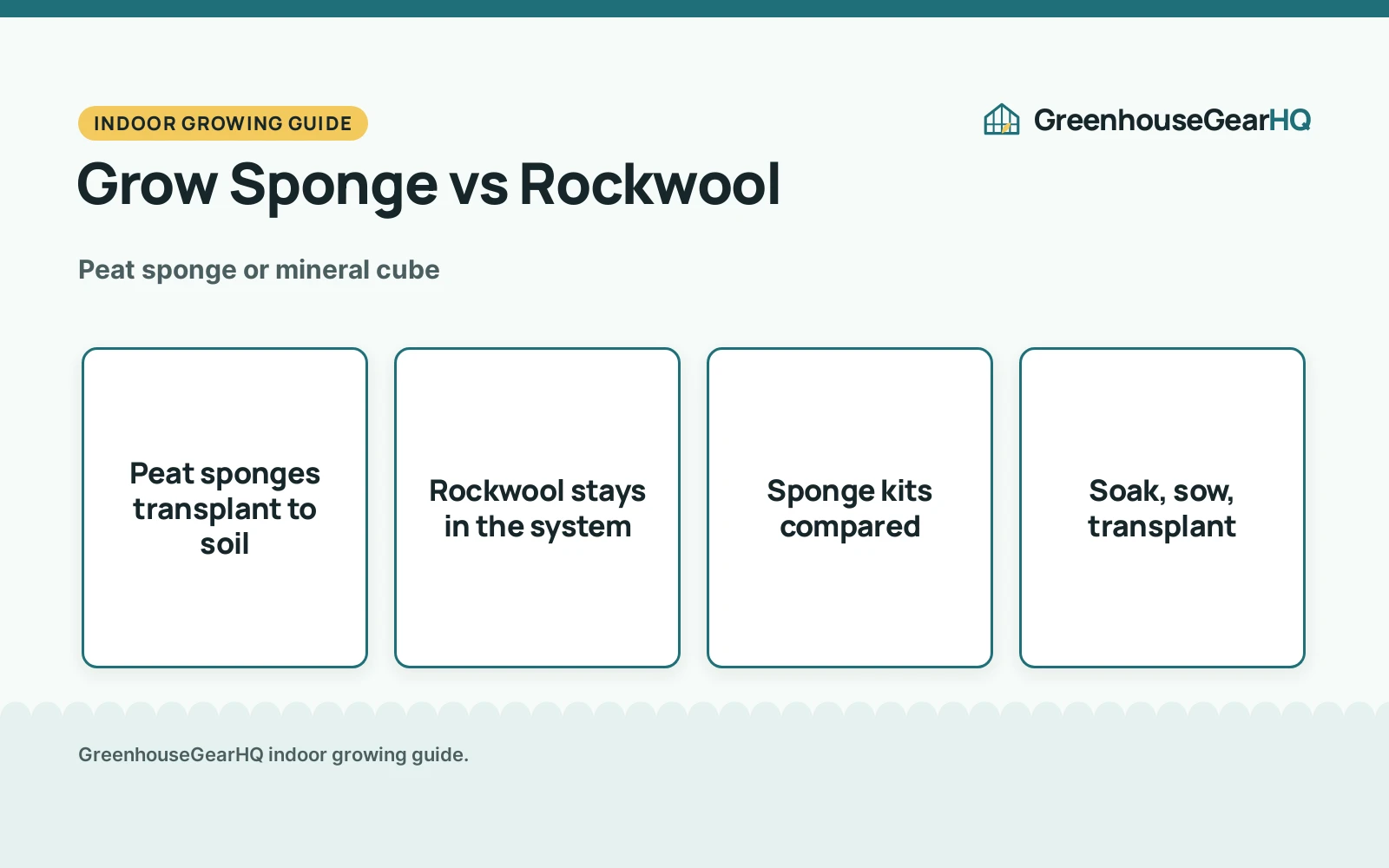
Small plugs sit side by side in the hydroponic tray, and grow sponge vs rockwool is the choice that decides how your seedlings start. The short answer: grow sponges suit peat-based kits that transplant into soil, while rockwool suits hydroponic systems that keep the cube wet. This guide compares them, then ranks the grow sponge kits below.
Other options worth a look
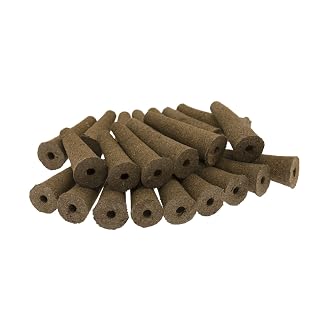 Grow Sponges 100 PackCheck price on Amazon
 CrazyTerra Rockwool Cubes 1 InchCheck price on Amazon
 Rockwool CubesCheck price on Amazon
 CrazyTerra Rockwool Cubes 1.5 InchCheck price on Amazon
 Grodan Rockwool Delta GRO BlocksCheck price on Amazon
 Grodan Delta 4 Rockwool Blocks 3" x 3" x 2.5" With Hole PackCheck price on Amazon
GreenhouseGearHQ earns a commission when you buy through links on this page, at no extra cost to you. As an Amazon Associate I earn from qualifying purchases. Affiliate disclosure.
Grow sponge vs rockwool at a glance
Both plugs hold a seed and give roots a place to grow, but they come from different materials and suit different systems. A grow sponge is peat pressed into a plug; rockwool is mineral fiber spun into a cube. The table below compares them on the points that matter when you pick.
| Grow sponge | Rockwool | |
|---|---|---|
| Made of | Sphagnum peat | Spun mineral fiber |
| Water | Soaks and swells, holds water | Holds water, drains well |
| Breakdown | Biodegradable, per the Haligo listing | Does not break down |
| Transplant | Pops out, transplants to soil | Transplants with the cube |
| pH | MAQIHAN lists 5.8-6.2 | No pH figure in these listings |
| Before use | Soak, MAQIHAN lists about 15 minutes | Soak before use |
The grow sponge kits
Ranked on count, material and stated pH, the Haligo kit leads, followed by MAQIHAN, lukandafi and Tigvio. All the kits are peat sponges for hydroponic systems, and all transplant into soil once seedlings root.
The Haligo kit lists 100 pieces with 50 sponges and 50 labels, made of sphagnum peat, listed as biodegradable with a balanced pH, and compatible with IDOO, QYO and LYKO systems. The labels block light from the pod medium, and the sponges pop out for transplanting without tools.
The MAQIHAN pack lists 100 sponges of peat with a pH value of 5.8-6.2 and nutrients for germination. The listing states good air permeability and water absorption, and a soak of about 15 minutes before use.
The lukandafi pack lists 100 sponges of imported peat from Denmark, degradable, with strong water absorption. The listing states a soak of at least a minute before use, and compatibility with AeroGarden and iDOO systems.
The Tigvio kit lists 50 pieces with mineral-rich grow sponges of pure sphagnum, compatible with various brands. It is the smallest kit here, and it suits a small indoor garden.
No rockwool cube appears in these listings, so the rockwool side of this guide comes from how the material works, not from a product card. See our best hydroponic system picks for the systems these sponges fit.
How to use a grow sponge, step by step
Soak the sponge
Soak the sponge in clean water before sowing. The MAQIHAN listing states about 15 minutes, and the lukandafi listing states at least a minute; the sponge swells as it absorbs water. A sponge that stays dry on the inside will not hold a seed well.
Sow the seed
Place the seed in the sponge and set the sponge in the pod basket, with the label on to block light from the medium. Keep the sponge damp while the seed germinates, and give the tray light once the seedling shows.
Transplant the seedling
Once roots show through the sponge, pop the sponge out of the basket and move it into soil or another medium. The Haligo and Tigvio listings both state the rooted sponge transplants into soil. See our seed starting tips guide for what comes next.
Indoors or in the greenhouse?
Grow sponges suit indoor hydroponic systems, where the tray controls water and light. The MAQIHAN listing also states the sponges suit greenhouse cultivation, so the same sponge works in a greenhouse tray. Rockwool suits systems that keep the cube wet around the clock, indoors or in a greenhouse. The choice follows the system, not the room.
What this guide does not cover
We do not give germination rates or sowing depths, because they depend on the seed and the packet. Your seed packet gives those figures, and your local extension office can advise on timing for your area. We also do not cover nutrient mixes or pH meters; follow the product label.
FAQ for growers
What are grow sponges made of?
The kits here are made of peat. Haligo and Tigvio list sphagnum peat, and MAQIHAN and lukandafi list peat, with lukandafi listing imported peat from Denmark.
Are grow sponges biodegradable?
The Haligo listing states its sponges are biodegradable, and the lukandafi listing states its sponges are degradable. The other listings state no breakdown claim.
Can grow sponges be reused?
No, a grow sponge is planted through and transplanted with the seedling, so each seed gets a fresh sponge. The kits here list 50 or 100 sponges, so a pack covers many seeds.
How do you grow seeds in a grow sponge?
Soak the sponge in clean water, place the seed in the sponge, and keep it damp until the seedling shows. Once roots show through the sponge, transplant it into soil or another medium.
Keep reading
See every indoor growing guide and all types of hydroponic systems explained.
More picks: hydroponics growing system for beginners, hydroponic system setup, seed starting chart and best hydroponic system.