On this page
Top picks at a glance
As an Amazon Associate I earn from qualifying purchases.
- 1
 Spalolen 10 Pack Quick Connect 1/4 Inch Drip Irrigation Shut9.6/10View on Amazon
- 2
 Madavoon Drip Irrigation Shut Off Valve 5 Pack9.6/10View on Amazon
- 3
 Madavoon 10 Pack 1/4 Inch Drip Irrigation Shut Off Valve9.6/10View on Amazon
On a hot July afternoon the beds dry out fast, the drip lines sit quiet, and the plants wait for water that only moves when a valve opens. This guide answers how does a irrigation valve work, in plain steps: what sits inside the valve, what makes it open and close, and how water reaches the drip lines and beds.
GreenhouseGearHQ earns a commission when you buy through links on this page, at no extra cost to you. As an Amazon Associate I earn from qualifying purchases. Affiliate disclosure.
What an irrigation valve is
An irrigation valve is a gate between the water supply and the watering lines. When the gate is shut, water waits on the supply side. When the gate opens, water moves through to drip lines, soaker hose or sprinklers. The valve does the opening and closing so the gardener does not have to stand at the tap.
Most garden valves share the same parts:
- Body: the housing that holds the water path, with an inlet and an outlet. See our types of irrigation valves guide.
- Diaphragm: a flexible seal inside the body. It drops onto a seat to stop the flow and lifts off the seat to let water pass.
- Solenoid: a small electric coil on top of the valve. When a timer or controller sends power to it, the coil pulls a plunger up and opens a narrow passage above the diaphragm.
- Flow control: a knob or screw that sets how far the diaphragm can lift, which sets how much water passes.
- Manual bleed: a small screw or lever that opens the valve by hand, with no power, so the lines can run while the timer is off.
- Bonnet: the lid that holds the diaphragm and the solenoid in place.
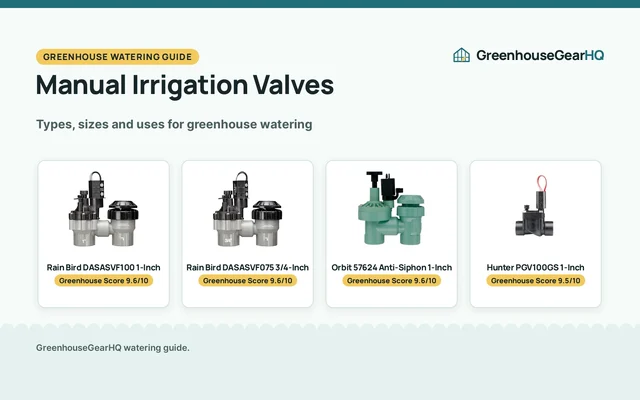
- Manual handle: on a manual valve, a handle turns a stem that lifts the seal straight off its seat. See our manual irrigation valve guide.
How does a irrigation valve work, step by step
An electric valve opens and closes by shifting water pressure across the diaphragm.
Water waits at the inlet
With the valve shut, supply water presses on the inlet side of the diaphragm and fills a small chamber above it through a narrow passage. The pressure above the diaphragm holds the seal down on its seat, so no water reaches the outlet.
The timer sends the signal
At the set watering time, the timer or controller sends low-voltage power to the solenoid. The coil pulls the plunger up, which opens the narrow passage above the diaphragm and lets the water in the upper chamber drain toward the outlet. Our how to set a water timer guide covers the timer side of this step.
The diaphragm lifts and water flows
As the upper chamber drains, the pressure above the diaphragm falls below the pressure under it. The higher pressure under the diaphragm lifts the seal off its seat, and water moves from the inlet, past the open diaphragm, and out to the drip lines or sprinklers.
The signal stops and the valve closes
When the watering time ends, the timer cuts power to the solenoid. The plunger drops, the passage above the diaphragm shuts, and the upper chamber fills again through the narrow inlet passage. Pressure builds above the diaphragm until it presses the seal back onto its seat, and the flow stops.
Manual valves skip the electric step
A manual valve has no solenoid and no timer. Turning the handle turns a stem that lifts the seal off its seat, and turning it back drops the seal shut. The gardener sets the flow by how far the handle turns. See our drip irrigation valve setup guide.
| Valve type | How it opens | Needs power | Suits |
|---|---|---|---|
| Manual valve | Handle turns a stem that lifts the seal | No | A small bed watered by hand at the tap |
| Electric valve | Timer powers a solenoid that lifts the diaphragm | Yes, from a timer or controller | Drip zones that run on a schedule |
Where the valve sits in the system
The valve sits between the supply and the watering lines, so it controls a whole zone together. Upstream of the valve, the supply line brings water from the tap or main line, through a backflow preventer and a filter that keeps grit out of the valve. Downstream, the outlet feeds drip lines, soaker hose or sprinklers for that zone. A set of valves can serve a set of zones, with the timer opening each zone in turn. See our backflow preventer guide.
Many growers house the valve in a valve box sunk into the soil, with the lid level with the ground so the valve stays easy to reach for service.
When a valve stays shut or stays open
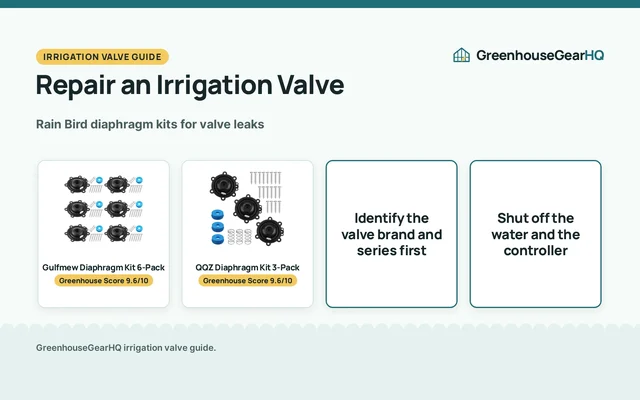
A valve that will not open may have a solenoid with no power reaching it, a timer that never sends the signal, or grit lodged under the diaphragm. A valve that will not close may have a torn diaphragm, debris holding the seal off its seat, or a manual bleed screw left open. Start with the manual bleed and the flow control, then clean the diaphragm chamber, following the valve maker manual. Our how to repair an irrigation valve guide covers diaphragms, washers and drip parts, and our irrigation pipe repair kit guide covers the lines around the valve.
What this guide does not cover
This guide does not give pipe sizes, pressure figures or wiring diagrams, because they depend on the valve and the layout. The valve maker manual gives those figures, and the local extension office can advise on watering schedules. This guide also does not cover fertilizer or pest products; follow the product label.
FAQ for growers
Can an irrigation valve run without a timer?
Yes. A manual valve opens with its handle, and an electric valve opens with its manual bleed screw, so either type can water a zone with no timer in place.
Why does water keep flowing after the timer stops?
The valve is not closing. Grit under the diaphragm, a torn diaphragm, or a bleed screw left open can hold the seal off its seat; close the bleed screw, then clean the diaphragm following the valve maker manual.
Where should an irrigation valve sit?
Between the supply line and the zone lines, in a valve box or other spot that stays easy to reach for service. Keep the solenoid out of standing water and where a mower cannot hit it.
Do irrigation valves need a filter upstream?
Many systems use a filter. A filter keeps grit out of the diaphragm chamber, where grit can hold the seal open, so follow the valve maker manual on whether a filter suits the setup.
Keep reading
See every drip irrigation kits guide and all Air and Water guides. Also see our types of irrigation valves. Also see our garden irrigation system parts. Also see our drip irrigation system diagram. Also see our how to set up a watering system for garden.
More picks: water timer for vacation, types of watering systems, misting system installation and drip irrigation valve setup.