On this page
Top picks at a glance
As an Amazon Associate I earn from qualifying purchases.
- 1
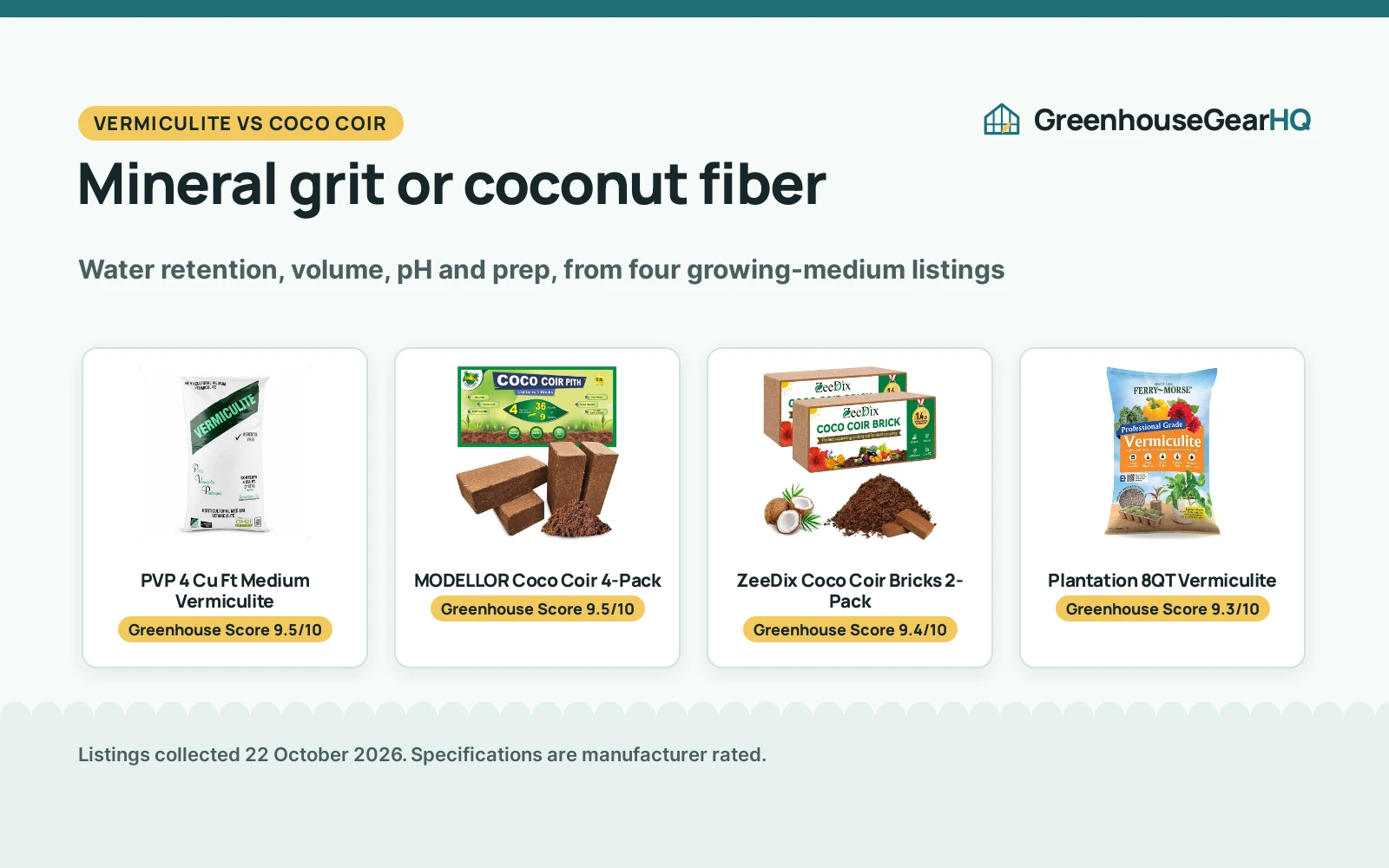
 PVP 4 Cu Ft Medium Vermiculite9.5/10View on Amazon
- 2
 MODELLOR Coco Coir 4-Pack9.5/10View on Amazon
- 3
 ZeeDix Coco Coir Bricks 2-Pack9.4/10View on Amazon
- 4
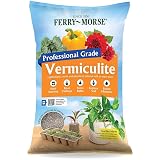 Plantation 8QT Vermiculite9.3/10View on Amazon
The vermiculite vs coco coir choice comes down to what you want the medium to do: vermiculite is a mineral that holds water and nutrients in its structure, while coco coir is a compressed coconut fiber brick that swells with water into a fluffy growing medium. We compared four listings that show the difference clearly: two vermiculite bags (PVP 4 cu ft and Plantation 8QT) and two coco coir brick packs (ZeeDix 2-pack and MODELLOR 4-pack). Quick verdict: pick vermiculite if you want a pH-neutral mineral for seed starting and hydroponics; pick coco coir if you want compact bricks that expand into quarts of renewable medium for containers and beds.
GreenhouseGearHQ earns a commission when you buy through links on this page, at no extra cost to you. As an Amazon Associate I earn from qualifying purchases. Affiliate disclosure.
Quick verdict: choose vermiculite for a sterile, pH-neutral mineral that attracts and holds nutrients, shown by the PVP 4 cu ft bag. Choose coco coir for compressed bricks that hydrate into 15 to 36 quarts of medium, shown by the ZeeDix and MODELLOR packs. Neither side states a warranty term, so buy on volume and form.
Four examples
| # | Product | Greenhouse Score | Buy |
|---|---|---|---|
| 1 | PVP 4 Cu Ft Medium Vermiculite | 9.5/10 | Buy on Amazon |
| 2 | MODELLOR Coco Coir 4-Pack | 9.5/10 | Buy on Amazon |
| 3 | ZeeDix Coco Coir Bricks 2-Pack | 9.4/10 | Buy on Amazon |
| 4 | Plantation 8QT Vermiculite | 9.3/10 | Buy on Amazon |

PVP 4 Cu Ft Medium Vermiculite
A 4 cu ft bag of medium-grade vermiculite for seed starting, hydroponics and greenhouse use.
Pros
- 4 cu ft (103 quarts), the largest volume here
- Absorbs over 3x its volume in water
- pH neutral, sterile and mold-resistant
- Attracts and holds ammonium, potassium, calcium and magnesium
Cons
- No warranty is stated
- No package dimensions are stated
- 4 pounds to lift and store
- No expanded-volume figure beyond the bag size

MODELLOR Coco Coir 4-Pack
Four compressed coco coir bricks (5 lb total) that expand to 9 gallons of growing medium.
Pros
- Expands to 9 gallons (36 quarts) from 5 lb
- Triple-washed, low-EC and pH-balanced
- 4 bricks for seed starting, containers and beds
- Organic and biodegradable
Cons
- No warranty is stated
- Brick dimensions are not stated
- Needs soaking before use
- 5 lb total is the heaviest pack here

ZeeDix Coco Coir Bricks 2-Pack
Two compressed coconut coir bricks (2.8 lb total) that expand to 15 quarts.
Pros
- Expands to 15 quarts from 2.8 lb
- Absorbs 8 to 10 times its weight in water
- Low EC and pH balance
- 8 x 4 x 2 in bricks store flat
Cons
- No warranty is stated
- Smaller expanded volume than the MODELLOR 4-pack
- Needs soaking before use
- Only 2 bricks per pack
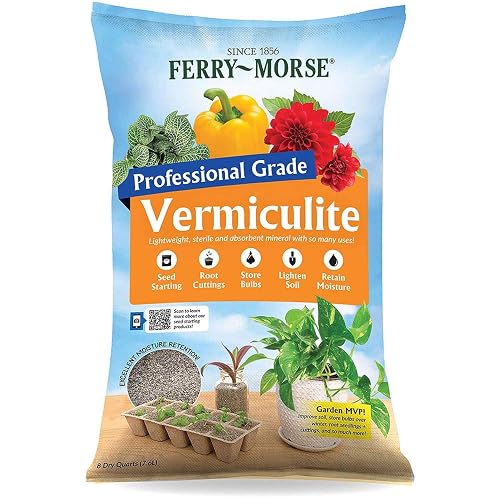
Plantation 8QT Vermiculite
An 8-quart bag of vermiculite for starting seeds, propagating cuttings and storing bulbs.
Pros
- 8 quarts, a small bag for a few trays
- Millions of cells store air and water
- Blends with peat moss and perlite
- 0.89 kg, easy to carry
Cons
- Smallest volume here at 8 quarts
- Warranty Description reads only Warranty with no term
- No water-absorption figure is stated
- 19L x 17W x 23H in package for 8 quarts
As an Amazon Associate I earn from qualifying purchases.
Other options worth a look
 Coarse VermiculiteCheck price on Amazon
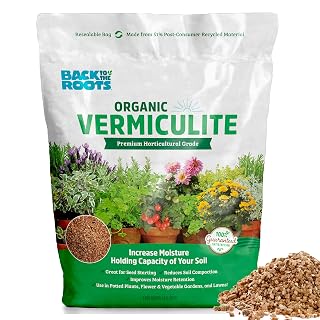 Back to the Roots 100% Organic VermiculiteCheck price on Amazon
 Coco Bliss Coco Coir 650gm BricksCheck price on Amazon
 20QT Organic VermiculiteCheck price on Amazon
 Coco BlissCheck price on Amazon
 Legigo 10Pack Organic Coco Coir Brick for PlantsCheck price on Amazon
Vermiculite vs coco coir: side by side
| Product | Side | Form | Volume | Water claim | Amazon |
|---|---|---|---|---|---|
| PVP 4 Cu Ft Medium Vermiculite | Vermiculite | Loose granules | 4 cu ft (103 quarts) | Absorbs over 3x its volume | View on Amazon |
| MODELLOR Coco Coir 4-Pack | Coco coir | Compressed bricks | 9 gallons (36 quarts) expanded | Absorbs 8 to 10 times its weight | View on Amazon |
| ZeeDix Coco Coir Bricks 2-Pack | Coco coir | Compressed bricks | 15 quarts expanded | Absorbs 8 to 10 times its weight | View on Amazon |
| Plantation 8QT Vermiculite | Vermiculite | Loose granules | 8 quarts | Millions of cells store air and water | View on Amazon |
These specifications come from the listings and are rated by each manufacturer, current to 22 October 2026.
Water retention and what it means
The listings describe water behavior in different units, so read them as maker claims, not lab figures. PVP states its vermiculite absorbs over 3x its volume in water and stores water, air and nutrients for plants to use as needed. ZeeDix states its coco coir absorbs 8 to 10 times its weight in water, then swells quickly and drains excess fluid to reduce oversaturation. The Plantation vermiculite listing claims millions of cells that store air and water but gives no ratio. Because the two sides state different bases (volume vs weight), the figures do not compare directly; treat both as “holds a lot of water” and pick by form.
Form, volume and storage
Form is the practical divide. Both vermiculite listings are loose granules in bags: the PVP bag holds 4 cubic feet (103 quarts) and weighs 4 pounds, while the Plantation bag holds 8 quarts and weighs 0.89 kg. Both coco coir listings are compressed bricks: the ZeeDix 2-pack has 8 x 4 x 2 in bricks totaling 2.8 lb that expand to 15 quarts, and the MODELLOR 4-pack totals 5 lb and expands to 9 gallons (36 quarts). Bricks store flat and small, then grow; bags arrive ready to use but take shelf space. If storage is tight, the brick form wins; if you want to fill trays today, the loose bags win.
pH, salts and prep
Both sides claim grower-friendly chemistry. PVP lists its vermiculite as pH neutral, garden-safe, sterile and mold-resistant. ZeeDix lists low EC and pH balance; MODELLOR lists triple-washed, low-EC, pH-balanced coir with reduced salts. Prep differs: vermiculite pours straight from the bag into seed trays or soilless mixes, while coco coir bricks must soak in water and break apart before planting. The MODELLOR listing notes its coir works for seed starting, potting mixes, raised beds and hydroponics; the Plantation listing suggests blending vermiculite with peat moss and perlite for a custom soilless mix.
Listing gaps to check
Several useful figures are missing. No listing states a warranty term: PVP states “No Warranty” and the Plantation spec table reads only ‘Warranty’ with no term, so neither earns warranty points. The Plantation listing gives package dimensions of 19L x 17W x 23H in but no granule size; the PVP listing gives medium granule but no package dimensions. Neither coco coir listing states brick dimensions for the MODELLOR 4-pack, and the ZeeDix spec table lists 1.24 kg while the bullets state 2.8 lb total. None of the four states a nutrient content beyond the PVP claim on ammonium, potassium, calcium and magnesium.
Which should you choose?
Choose vermiculite if you want a mineral medium that holds water and nutrients, pours ready to use, and suits seed starting, propagation and hydroponics. The PVP 4 cu ft bag covers large jobs; the Plantation 8QT bag covers a few trays. See our seed starting mix picks for more options.
Choose coco coir if you want compressed bricks that store small and hydrate into 15 to 36 quarts of renewable, pH-balanced medium for containers, raised beds and grow bags. The MODELLOR 4-pack gives the most expanded volume; the ZeeDix 2-pack is the smaller starter. A potting mix for seedlings guide compares more bagged options.
If you only need to start a handful of seeds, the smallest bag or pack that meets your tray count is the sensible buy; both media get replaced each season.
In the Greenhouse
- Hydrate coco coir bricks in a tub before filling trays; the ZeeDix bricks expand to 15 quarts and the MODELLOR bricks to 9 gallons.
- Blend vermiculite with peat moss and perlite for a custom soilless mix, as the Plantation listing suggests.
- Store unopened coco coir bricks dry; they keep their 8 x 4 x 2 in compressed form until soaked.
- Use the PVP 4 cu ft bag for large seed-starting runs; reseal the bag between uses to keep the granules clean.
Scoring notes
| Product | Greenhouse Score | Perf. /35 | Build /25 | Value /25 | Safety /10 | Warranty /5 |
|---|---|---|---|---|---|---|
| PVP 4 Cu Ft Medium Vermiculite | 9.5 | 29 | 21 | 21 | 0 | 0 |
| MODELLOR Coco Coir 4-Pack | 9.5 | 28 | 21 | 21 | 0 | 0 |
| ZeeDix Coco Coir Bricks 2-Pack | 9.4 | 27 | 20 | 20 | 0 | 0 |
| Plantation 8QT Vermiculite | 9.3 | 24 | 20 | 19 | 0 | 0 |
Weighted points are mapped straight onto the 9.2 through 9.8 range, so the order of the totals is the order of the scores.
The Greenhouse Score weighs performance, build, value, safety and warranty, as explained on our How we pick page. For growing media, safety reflects a stated certification or safety detail; none of the four listings states one, so none earns safety points. No listing states a warranty term, so none earns warranty points either. The PVP 4 cu ft vermiculite scores highest for the largest stated volume and the pH-neutral, sterile claim. The MODELLOR 4-pack follows for 36 quarts of expanded medium and triple-washed, pH-balanced coir. The ZeeDix 2-pack scores on the 8 to 10 times water absorption claim and compact brick form. The Plantation 8QT trails on volume but suits a few trays.
FAQ for growers
Is vermiculite or coco coir better for starting seeds?
Both work. Vermiculite is a pH-neutral mineral that holds water and nutrients; the PVP listing calls it sterile and mold-resistant. Coco coir is a renewable fiber that hydrates into a fluffy medium; both coco listings claim pH balance. Pick vermiculite for a mineral mix and coco coir for an organic one.
How much medium do coco coir bricks make?
The ZeeDix 2-pack expands to 15 quarts and the MODELLOR 4-pack expands to 9 gallons (36 quarts), per the listings. Soak the bricks in water and break them apart before planting.
Can I mix vermiculite and coco coir together?
The listings do not describe a combined mix. The Plantation listing suggests blending vermiculite with peat moss and perlite. Either medium can anchor a soilless mix on its own.
Does vermiculite or coco coir need fertilizer?
PVP states its vermiculite attracts and holds ammonium, potassium, calcium and magnesium, but no listing gives a nutrient analysis. Seedlings generally want a light feeding schedule once true leaves appear, regardless of medium.
Which is easier to store?
Coco coir bricks store flat and small until hydrated. Bagged vermiculite takes more shelf space; the PVP bag holds 4 cubic feet. Buy the form that fits your storage.
Keep reading
See every seed starting guide and all greenhouse guides.
More picks: seed starting mix, humidity domes and seedling heat mats.