On this page
Top picks at a glance
As an Amazon Associate I earn from qualifying purchases.
- 1
 Mr. Heater 99.7/10View on Amazon
- 2
 Tomersun Wood Stove Fan Heat Powered Stove Fan HeaterView on Amazon
- 3
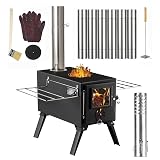 Hot Tent StoveView on Amazon
- 4
 US Stove MH6View on Amazon
- 5
 Dual Motors Heat Powered Fireplace FanView on Amazon
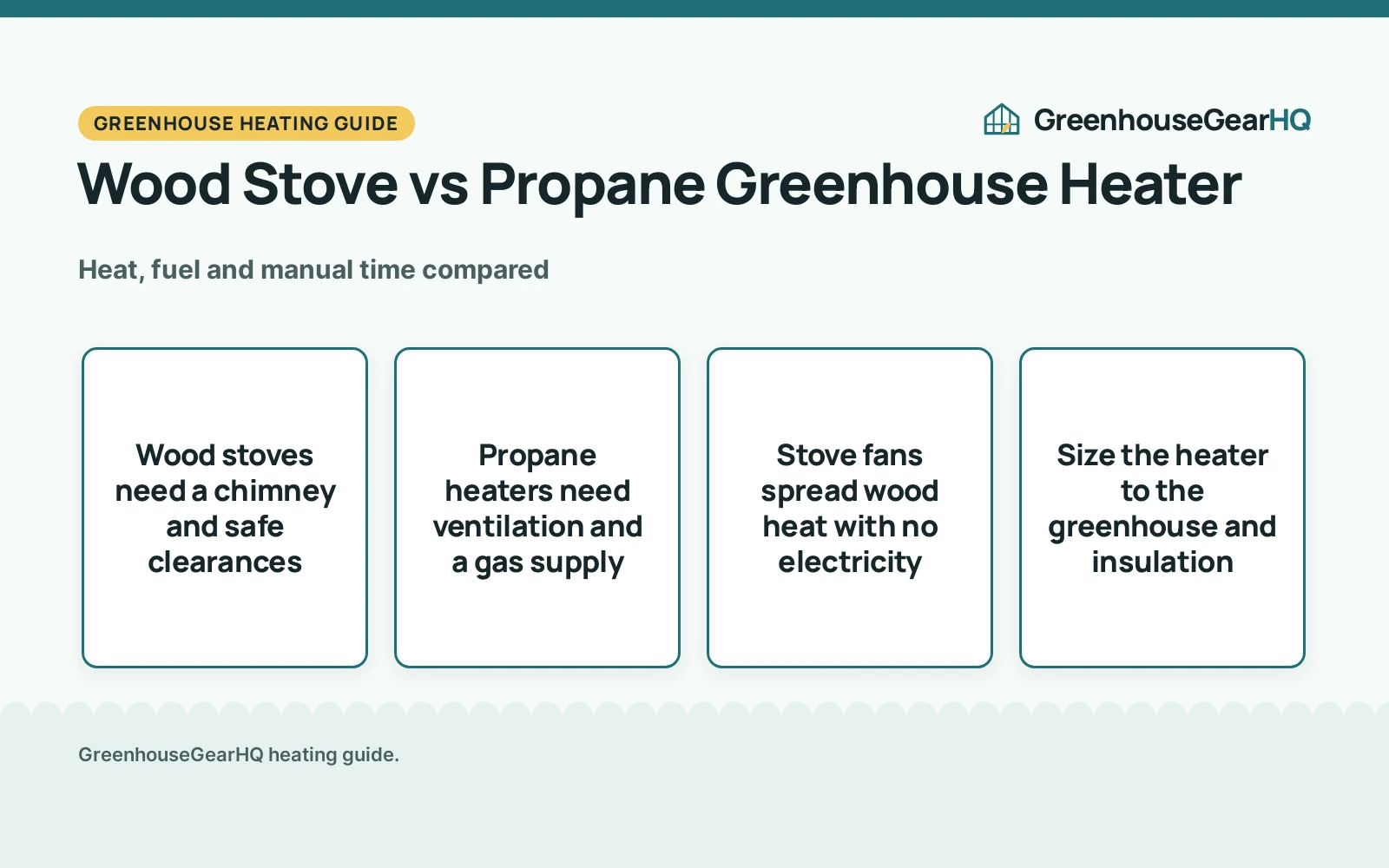
Choosing a wood stove vs propane greenhouse heater comes down to how you heat: a wood stove suits growers with cheap firewood and time to tend a fire, while a propane heater suits those who want steady warmth without feeding a stove. Wood stoves give radiant heat and keep working when the power goes out, but they need a chimney, safe clearances and regular stoking through the night. Propane heaters light fast, hold a set temperature and shut down cleanly, but they need ventilation, a gas supply and a plan for refills. This guide compares the two on heat, fuel, ventilation and daily effort, then looks at four listings: a portable wood stove, an electric cabinet heater, and two heat-powered stove fans.
Other options worth a look
 Tomersun Wood Stove Fan Heat Powered Stove Fan HeaterCheck price on Amazon
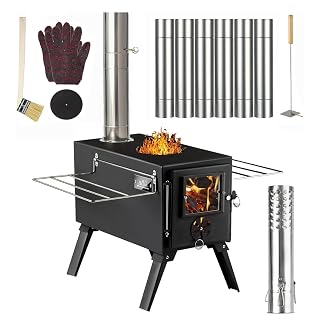 Hot Tent StoveCheck price on Amazon
 US Stove MH6Check price on Amazon
 Dual Motors Heat Powered Fireplace FanCheck price on Amazon
GreenhouseGearHQ earns a commission when you buy through links on this page, at no extra cost to you. As an Amazon Associate I earn from qualifying purchases. Affiliate disclosure.
Wood stoves: steady heat, manual work
A wood stove heats by radiation and convection, warming the air, the soil and the structure itself. That stored warmth carries through a cold night longer than forced air alone, which matters when a late frost threatens seedlings. The tradeoff is labor: someone has to split wood, load the stove, manage the draft and clear ash. An overnight burn needs a stove sized to hold enough wood, and a small greenhouse can overheat fast if the stove is too big for the space.
Installation is the other cost. A wood stove needs a chimney through the roof or wall, non-combustible clearances on all sides, and a hearth under it. In a plastic or polycarbonate greenhouse, that means cutting the covering and flashing the penetration so rain stays out. Once it is in, though, the fuel can be nearly free for growers with their own woodlot, and the stove works through any power outage. For more heater options, see our greenhouse heater for 8×20 greenhouse roundup.
Propane heaters: control and convenience
A propane heater trades the woodpile for a gas bottle and a thermostat. It lights with a switch, holds the set temperature through the night, and needs no stoking at 2 a.m. That control suits growers who work off site or want to hold a precise minimum for tender plants. The running cost depends on propane prices and how tight the greenhouse is; a leaky house burns far more gas than a sealed one.
Ventilation is non-negotiable. Propane combustion produces water vapor and carbon dioxide, and an unvented heater in a sealed greenhouse can deplete oxygen. Most greenhouse propane heaters are vented or rated for the space, but check the listing and the manual before you buy. A gas supply also needs planning: bottles run out on the coldest night, so keep a spare. Our infrared vs propane greenhouse heater guide compares two propane-adjacent options in more depth.
The gear: four listings compared
None of these four is a propane heater, so read them as the wood-stove side of the comparison plus one electric alternative. The Guide Gear portable wood stove is the only actual stove: it lists 20 by 11 by 13 inches, 42.4 pounds, wood fuel and a chimney pipe, and the whole stove fits inside itself for transport. That portability suits a grower who wants heat in more than one structure, though at 42.4 pounds it is still a two-person lift.
The Heat Storm cabinet heater is electric, not propane, but it shows the convenience a propane heater offers: it lists 1500 watts, 5200 BTU, infrared quartz heat, 300 square feet of primary coverage and a 1-year manufacturer warranty. If the greenhouse has reliable power, an electric heater like this gives thermostatic control with no fuel to haul and no chimney to cut.
The Tomersun and JossaColar are heat-powered stove fans, not heaters. They sit on top of a wood stove and use its heat to spin, pushing warm air out into the room with no electricity. The Tomersun lists 6 blades, 180 cfm of airflow and 25 db; the JossaColar lists 6 blades, 150 cfm and 25 db. Either one stretches a wood stove’s reach across a small greenhouse, but neither replaces the stove itself.
FAQ for growers
Can I put a wood stove in a plastic greenhouse?
Yes, with a proper chimney penetration and non-combustible clearances. Cut the covering to fit the flue, flash it against rain, and keep the stove away from the plastic walls. The Guide Gear stove lists a chimney pipe and a 20 by 11 by 13 inch footprint.
Do propane heaters need ventilation in a greenhouse?
Yes. Propane combustion uses oxygen and produces water vapor, so a sealed greenhouse needs fresh air exchange. Check the heater’s manual for its ventilation requirements before you buy.
What size heater does my greenhouse need?
Match the heater to the space and the insulation. The Heat Storm lists 300 square feet of primary coverage and 5200 BTU; a larger or leakier house needs more. When in doubt, size up and let the thermostat do the work.
Related guides: wood stove vs propane greenhouse heater
See every greenhouse heaters guide and all light and heat guides. Also see our propane heater for shed picks and our catalytic vs blue flame propane heater comparison.
More picks: see greenhouse heaters for 8×20, 1000W vs 1500W heaters and heater thermostats.