On this page
Top picks at a glance
As an Amazon Associate I earn from qualifying purchases.
- 1
 La Crosse 104-288 Analog Thermometer and Humidity GaugeView on Amazon
- 2
 AcuRite Iris Weather Station with Rain Gauge and WindView on Amazon
- 3
 Goabroa Mini Hygrometer Thermometer Digital Indoor HumidityView on Amazon
- 4
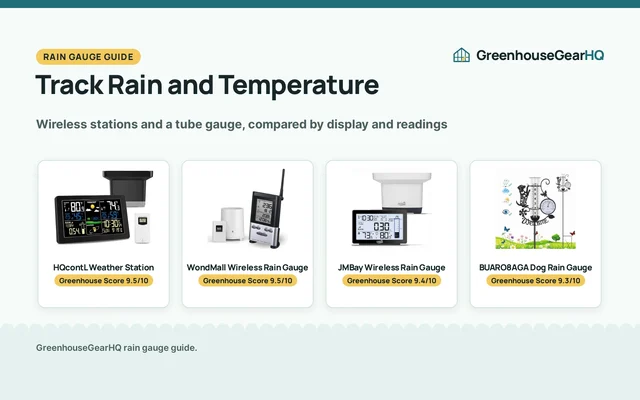
 Sainlogic 12-in-1 Wireless Weather Station with Rain GaugeView on Amazon
- 5
 Vaikby Indoor Thermometer 2PackView on Amazon
- 6
 AcuRiteView on Amazon
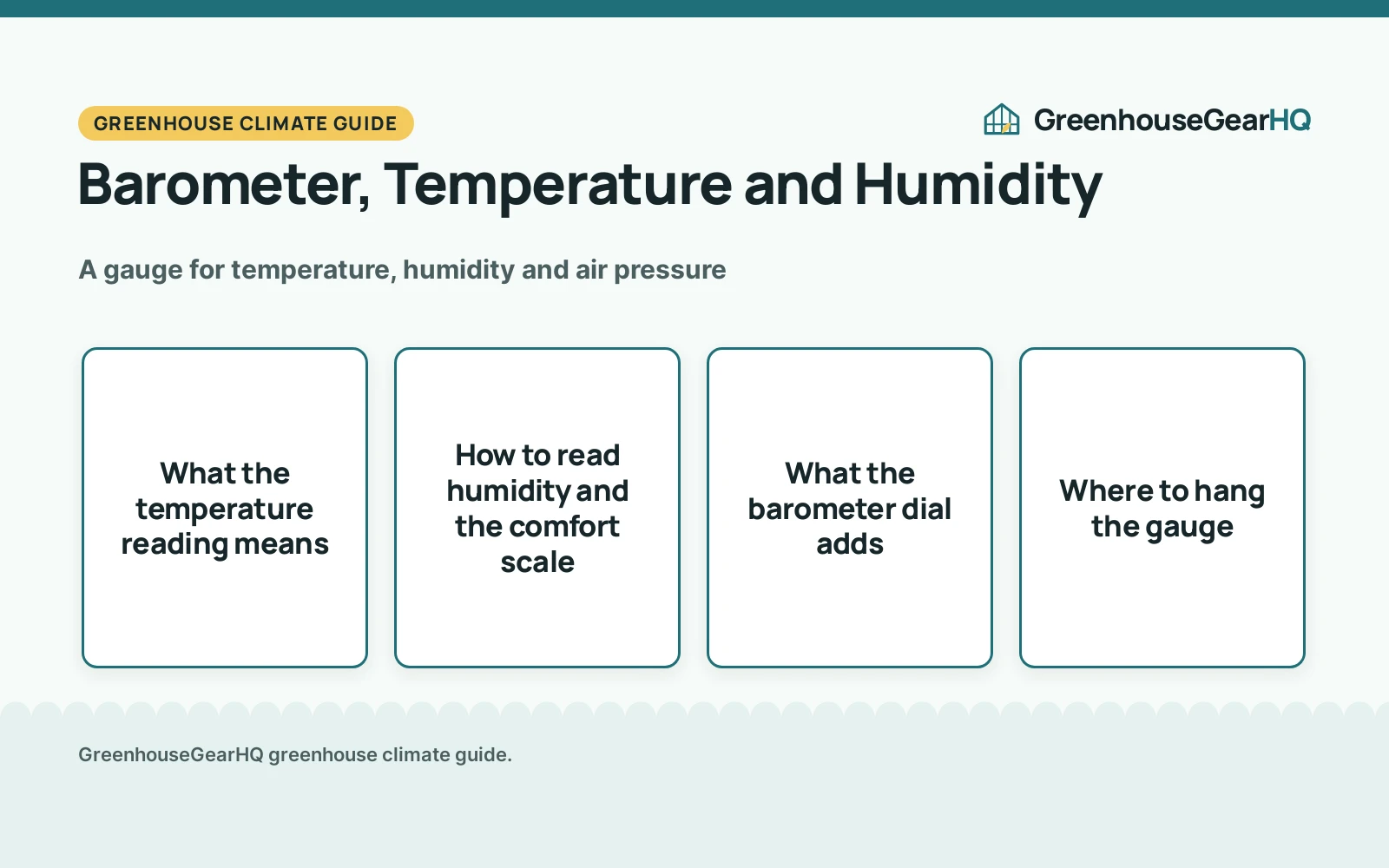
A cold snap at the end of winter can leave a greenhouse full of seed trays sitting in air that feels damp and still, and a barometer temperature humidity gauge gives a plain reading of what that air holds. The gauge shows temperature and humidity, and a barometer section adds air pressure, so the conditions around the plants are visible at a glance. This guide explains what each reading means, how to read the gauges in the reference listings, and where to hang the gauge so the reading reflects the air around the plants.
Other options worth a look
 La Crosse 104-288 Analog Thermometer and Humidity GaugeCheck price on Amazon
 AcuRite Iris Weather Station with Rain Gauge and WindCheck price on Amazon
 Goabroa Mini Hygrometer Thermometer Digital Indoor HumidityCheck price on Amazon
 Sainlogic 12-in-1 Wireless Weather Station with Rain GaugeCheck price on Amazon
 Vaikby Indoor Thermometer 2PackCheck price on Amazon
 AcuRiteCheck price on Amazon
GreenhouseGearHQ earns a commission when you buy through links on this page, at no extra cost to you. As an Amazon Associate I earn from qualifying purchases. Affiliate disclosure.
What a barometer temperature humidity gauge measures
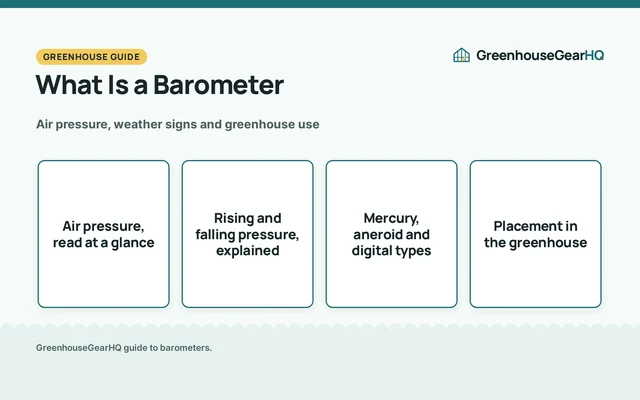
A gauge of this kind brings temperature, humidity and air pressure together in the same display, so a grower can check the air in the greenhouse without walking to a separate meter for each reading. Temperature sets the pace of growth, humidity sets how fast leaves lose water to the air, and air pressure tracks the weather outside the glass: pressure falls ahead of a storm front and rises again as the sky clears. The reference listings in this guide measure temperature and humidity; a barometer section adds the pressure reading. A combined gauge suits a grower who wants the full picture in a glance, while a plain thermometer hygrometer covers the readings that matter most day to day.
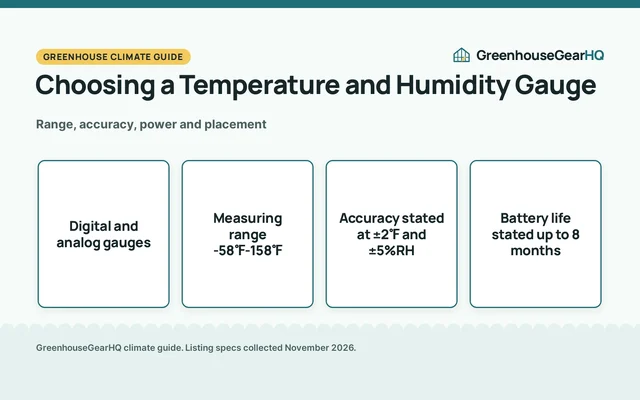
The TeqyAqs mini digital gauge (on Amazon) lists a temperature range of -58 to 158 F and a humidity range of 10 to 99% RH, with a stated temperature accuracy of ±2 F and a stated humidity accuracy of ±5% RH. The La Crosse 104-288 analog gauge lists a temperature range of 0 to 120 F, with the same range given as -20 to 50 C, and a humidity scale in %RH. The TeqyAqs gauge measures conditions every 10 seconds, while the La Crosse gauge needs no batteries and arrives factory calibrated. The table below puts the stated figures side by side.
| Gauge | Temperature range | Humidity range | Power |
|---|---|---|---|
| TeqyAqs mini digital gauge, 6-pack | -58 to 158 F | 10 to 99% RH | Two LR44 cells, up to 8 months |
| La Crosse 104-288 analog gauge | 0 to 120 F | %RH with comfort scale | No batteries |
How to read the gauge, step by step
Step 1: Hang the gauge where the plants grow
Hang the gauge at the height of the leaves, away from the door, the heater and direct sun through the glass, so the reading reflects the air the plants sit in rather than a hot or cold pocket near the wall. The TeqyAqs gauge fits an embedded opening of 1.81 by 1.06 inches or fixes in place with double-sided tape, while the La Crosse gauge hangs on the wall or stands free on a bench. A gauge near the door reads the draft from outside, and a gauge in full sun reads the heat of the glass, so pick a shaded spot in the middle of the house and leave the gauge there.
Step 2: Read the temperature
Read the temperature dial or display in Fahrenheit, the unit the TeqyAqs gauge shows, and compare it with the range the gauge covers. The TeqyAqs gauge covers -58 to 158 F, and the La Crosse gauge covers 0 to 120 F, so a reading near the edge of the range calls for a fresh look at the gauge and the vents. The La Crosse gauge also shows Celsius, from -20 to 50 C, for growers who keep records in metric units. A thermometer hygrometer guide such as Temperature and Humidity Gauge: How to Choose One covers more on picking a gauge by range.
Step 3: Read the humidity and the comfort scale
Read the humidity as %RH, the share of moisture the air holds against the most it can hold at that temperature. The TeqyAqs gauge covers 10 to 99% RH with a stated accuracy of ±5% RH, so a small shift on the display sits within the stated accuracy and the trend across the day matters more than a point reading. The La Crosse gauge adds a comfort scale with 5 levels: Dry, Comfort/Dry, Ideal, Comfort/Wet and Wet. Dry marks the dry end of the scale, Ideal marks the middle, and Wet marks the damp end. More on humidity in the greenhouse is in Hygrometer Uses: Measuring Humidity in Your Greenhouse.
Step 4: Read the barometer dial
Read the barometer dial for air pressure, the reading the reference listings do not carry: the needle moves as weather systems pass, falling ahead of rain and rising as the sky clears. A falling needle with damp air in the house points to a wet spell, so vents and watering can wait for the pressure to steady; a rising needle with dry air points to a clear spell. The dial is a weather pointer rather than a greenhouse control: it tells a grower what the sky is doing, while the temperature and humidity readings tell what the air inside the house is doing. More on pressure is in What Is Barometer Pressure: Greenhouse Roof Vents Explained.
Digital or analog
The choice comes down to how the gauge is read and powered. The TeqyAqs digital gauge updates every 10 seconds and runs on two LR44 cells for up to 8 months, with stated accuracy of ±2 F and ±5% RH, and the 6-pack lets a grower place gauges around the house. The La Crosse analog gauge needs no batteries, arrives factory calibrated, and shows the comfort scale at a glance, with a face 6.3 by 1.0 by 3.18 inches. Digital suits a grower who wants a fresh reading on the display; analog suits a grower who wants a gauge that runs without batteries and reads at a glance. More digital options are in Best Mini Thermometer Hygrometer.
FAQ for growers
Where should a greenhouse gauge hang?
Hang it at leaf height in a shaded spot away from the door, the heater and direct sun, so it reads the air around the plants. The TeqyAqs gauge fits an embedded opening of 1.81 by 1.06 inches or fixes with double-sided tape, and the La Crosse gauge hangs on the wall or stands free.
What humidity range does the TeqyAqs gauge cover?
The TeqyAqs gauge covers 10 to 99% RH, with a stated humidity accuracy of ±5% RH. The gauge measures conditions every 10 seconds, so the display stays current through the day.
Does the La Crosse gauge need batteries?
No. The La Crosse 104-288 gauge needs no batteries and arrives factory calibrated, and it measures temperature from 0 to 120 F with a humidity scale in %RH.
How often does the TeqyAqs gauge update its reading?
The TeqyAqs gauge measures conditions every 10 seconds. The stated temperature accuracy is ±2 F and the stated humidity accuracy is ±5% RH.
Keep reading
See every greenhouse thermometers guide and all greenhouse climate guides.
More picks: digital thermometer hygrometer with min max memory, greenhouse thermometer for homestead, digital temperature and humidity sensor and temperature and humidity controller.