On this page
Top picks at a glance
As an Amazon Associate I earn from qualifying purchases.
- 1
 RooTrimmer 60-Pot Plastic Seed Starting Set with 5 Nursery9.5/10View on Amazon
- 2
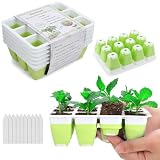 Ryscam 72-Cell Silicone Seed Starter Kit with Pop-Out Cells9.6/10View on Amazon
- 3
 alblinsy 60-Cell Silicone Seed Starter Kit with Pop-Out Cells9.5/10View on Amazon
- 4
 Handy Pantry 10-Pack 1020 Garden Growing Trays Without DrainView on Amazon
- 5
 Jiffy Plant Germination TrayView on Amazon
- 6
 VUWEZ 6 Pack Plastic Plant Tray Saucer RectangularView on Amazon
- 7
 4 Pack Square Plant Saucer Tray 12 inchView on Amazon
- 8
 4 Pack Square Plant Saucer Tray 8 inchView on Amazon
- 9
 2 Pack Square Plant Saucer Tray 12 inchView on Amazon
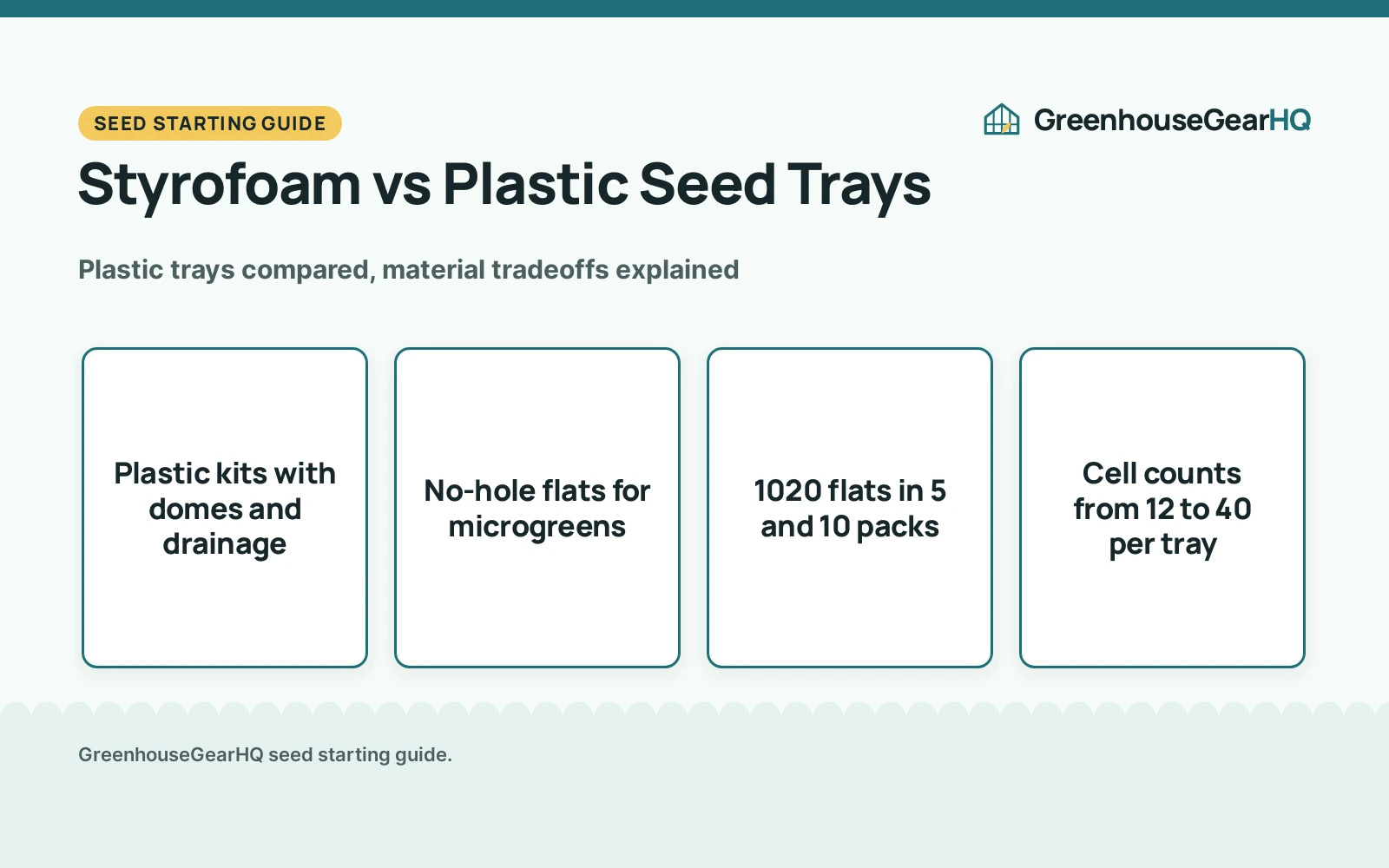
A cold snap evening with the first seed trays lined up by the window brings the material question into focus: styrofoam vs plastic seed trays. The direct answer is that plastic is the reusable workhorse in the listings below, with drainage, domes and stackable bases stated across the kits, while styrofoam is usually the lighter, more insulating side of the trade, and the side that breaks down sooner with repeated handling. All the trays featured below are plastic, so the styrofoam side is described in general terms, while every plastic figure comes from a featured listing.
Other options worth a look
 Handy Pantry 10-Pack 1020 Garden Growing Trays Without DrainCheck price on Amazon
 Jiffy Plant Germination TrayCheck price on Amazon
 VUWEZ 6 Pack Plastic Plant Tray Saucer RectangularCheck price on Amazon
 4 Pack Square Plant Saucer Tray 12 inchCheck price on Amazon
 4 Pack Square Plant Saucer Tray 8 inchCheck price on Amazon
 2 Pack Square Plant Saucer Tray 12 inchCheck price on Amazon
GreenhouseGearHQ earns a commission when you buy through links on this page, at no extra cost to you. As an Amazon Associate I earn from qualifying purchases. Affiliate disclosure.
styrofoam vs plastic seed trays: which material fits your setup
Start from how the trays will be used, not from the material name. A grower starting small seeds in cells wants drainage holes, a watertight base and a vented dome, and that is exactly what the MIXC kits below state: adjustable vents, drain holes at the bottom of each cell, watertight base trays and humidity domes. A grower raising microgreens or wheatgrass wants a flat tray with no holes, so water and soil stay put, and that is what the RooTrimmer and Handy Pantry flats below state. Plastic covers both jobs in this group, because the listings split into cell kits with domes and flat trays without holes. Styrofoam, by contrast, is a tray with no dome, base or vent stated in any featured listing, so it suits a simple sow-and-grow run where reuse and accessories matter less.
Reuse is where plastic pulls ahead on stated facts. The MIXC kits state reusable trays, and the RooTrimmer flat states durable BPA-free plastic for carrying and holding planting pots. The Handy Pantry flats state 100% BPA-free plastic for microgreens, wheatgrass, hydroponics and nursery flats. No featured listing states a reuse claim for styrofoam, and no featured listing states a styrofoam tray at all, so a buyer who wants trays that last across seasons has only plastic evidence in this guide. Weight and insulation point the other way in general terms: styrofoam is light and insulating by nature, while plastic trays rely on domes and bases for climate control rather than on the tray wall itself.
The trays in this guide
| Tray | Cells and pack | Drainage | Dome and base |
|---|---|---|---|
| MIXC 120-cell kit | 12 cells per tray, 10 packs | Drain holes in each cell | Watertight base tray, humidity dome, labels |
| MIXC 400-cell kit | 40 cells per tray, 10 packs | Drainage hole | Bottom tray, humidity dome, garden tools, labels |
| RooTrimmer 1020 flat | 1020 flat, 5 pack | No drainage holes | Flat tray for pots and microgreens |
| Handy Pantry 1020 flat | 1020 flat, 10 pack | No drain holes | Flat tray for microgreens and hydroponics |
MIXC 120-cell kit
The MIXC 120-cell kit states 10 seed trays, 10 watertight base trays, 10 humidity domes and 10 plant labels, with 12 cells in each tray and cells 1.5 inches long and wide for small seeds such as flowers, vegetables, fruits and tobacco. Adjustable vents on the trays allow regulation of temperature and humidity, and drain holes at the bottom of each cell reduce the risk of roots sitting in water. The spec table lists a size of 12 Cell-10 Packs-Clear Cover and an item weight of 1.0 pounds, while the product dimensions of 2.4 x 7.3 x 4.4 inches describe the kit parts rather than the full tray footprint, so the bullet figures guide the comparison.
MIXC 400-cell kit
The MIXC 400-cell kit states 10 seed trays, 10 bottom trays, 10 humidity domes, 1 set of garden tools and 10 plant labels, with 40 cells in each tray at 1.5 x 1.5 x 2 inches for small seeds. The bullets state a dome height of 2.75 inches and a product size of 14.6 x 9.84 x 5.1 inches, while the spec table lists 14.57 x 9.01 x 5.0 inches; the bullets are the guide here. Bottom trays stack one by one to save space before seeds germinate, and the transparent plastic cell trays allow observation without interrupting the process.
RooTrimmer 1020 flat
The RooTrimmer flat states a 5 pack of 1020 planting trays at 21.3 x 10.9 x 2.1 inches, made from BPA-free plastic, with no drainage holes. The bullets state use for microgreens, nursery pots, wheatgrass trays, bonsai trays and cat grass trays, with a design that moves the planter without leakage and keeps soil from dirtying the planter. The spec table lists 10.98 x 21.3 x 2.09 inches, a small difference from the bullets; the bullets are the guide here.
Handy Pantry 1020 flat
The Handy Pantry flat states a 10 pack of 1020 garden growing trays at 10 x 20 inches, made from 100% BPA-free plastic, without drain holes. The bullets state use for microgreens, wheatgrass, hydroponics, nursery flats and greenhouse supplies, with 10 x 10 inch growing trays nesting in a 10 x 20 inch watering tray. The spec table lists a depth of 12.5 inches that does not match the flat tray described in the bullets; the bullets are the guide here.
Drainage or no drainage: pick by crop
Drainage decides more than material does. Cell kits with drain holes suit small seeds that rot in standing water, and the MIXC kits pair those holes with watertight bases and vented domes for humidity control. Flat trays without holes suit microgreens, wheatgrass and hydroponic flood use, where the tray itself holds water, and both flat listings state no holes for exactly that use. A buyer who wants a tray for both jobs will not find it in this group: the kits drain, the flats do not, and the choice follows the crop.
What to check before ordering
Check footprint against shelf space before ordering: the MIXC 400-cell kit states 14.6 x 9.84 x 5.1 inches, the RooTrimmer flat states 21.3 x 10.9 x 2.1 inches, and the Handy Pantry flat states 10 x 20 inches. Check cell count next: 12 cells per tray in the 120-cell kit and 40 cells per tray in the 400-cell kit, against the flat trays, which state no cells at all. Check dome height where domes matter: the MIXC 400-cell kit states a dome height of 2.75 inches, and both MIXC kits state 10 humidity domes. For more tray shapes, see the best seed starting trays roundup and the humidity domes guides.
FAQ for growers
Which lasts longer, styrofoam or plastic seed trays?
On stated facts, plastic: the MIXC kits state reusable trays, and the RooTrimmer flat states durable BPA-free plastic. No styrofoam tray is featured in this guide, so no reuse claim for styrofoam is stated here.
Do these trays have drainage holes?
The MIXC kits do: drain holes at the bottom of each cell are stated for both kits. The RooTrimmer and Handy Pantry flats state no drainage holes, which suits microgreens and wheatgrass.
What size are the 1020 trays here?
The RooTrimmer flat states 21.3 x 10.9 x 2.1 inches, and the Handy Pantry flat states 10 x 20 inches. Both are listed as 1020 flats, but the stated footprints differ, so measure against shelf space.
Which kits include a humidity dome?
Both MIXC kits state 10 humidity domes, with adjustable vents for temperature and humidity control. The flat trays state no dome.
Keep reading
See every seed starting trays guide and all seed starting guides.
More picks: seed starting trays, greenhouse shelving, seedling heat mats.