On this page
Top picks at a glance
As an Amazon Associate I earn from qualifying purchases.
- 1
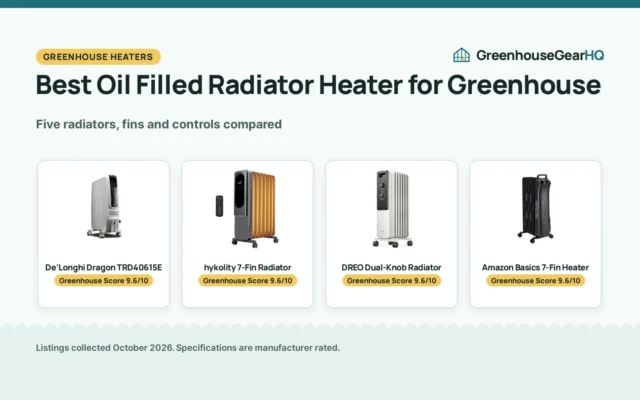
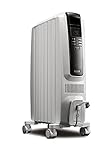 De'Longhi Dragon Digital Oil Filled Radiator Heater9.6/10View on Amazon
- 2
 Buyplus 1500W PTC Greenhouse Fan Heater9.5/10View on Amazon
- 3
 hykolity Oil Filled Radiator Heater9.6/10View on Amazon
- 4
 Homeleader Oil Filled Radiator Heater with AdjustableView on Amazon
- 5
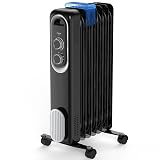 Sweetcrispy Oil Filled Radiator Heater for Indoor Use 1500WView on Amazon
- 6
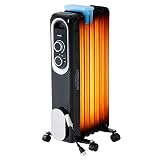 Dumos Oil Filled Radiator Heater with Adjustable ThermostatView on Amazon
- 7
 Homeleader Oil Filled Radiator HeaterView on Amazon
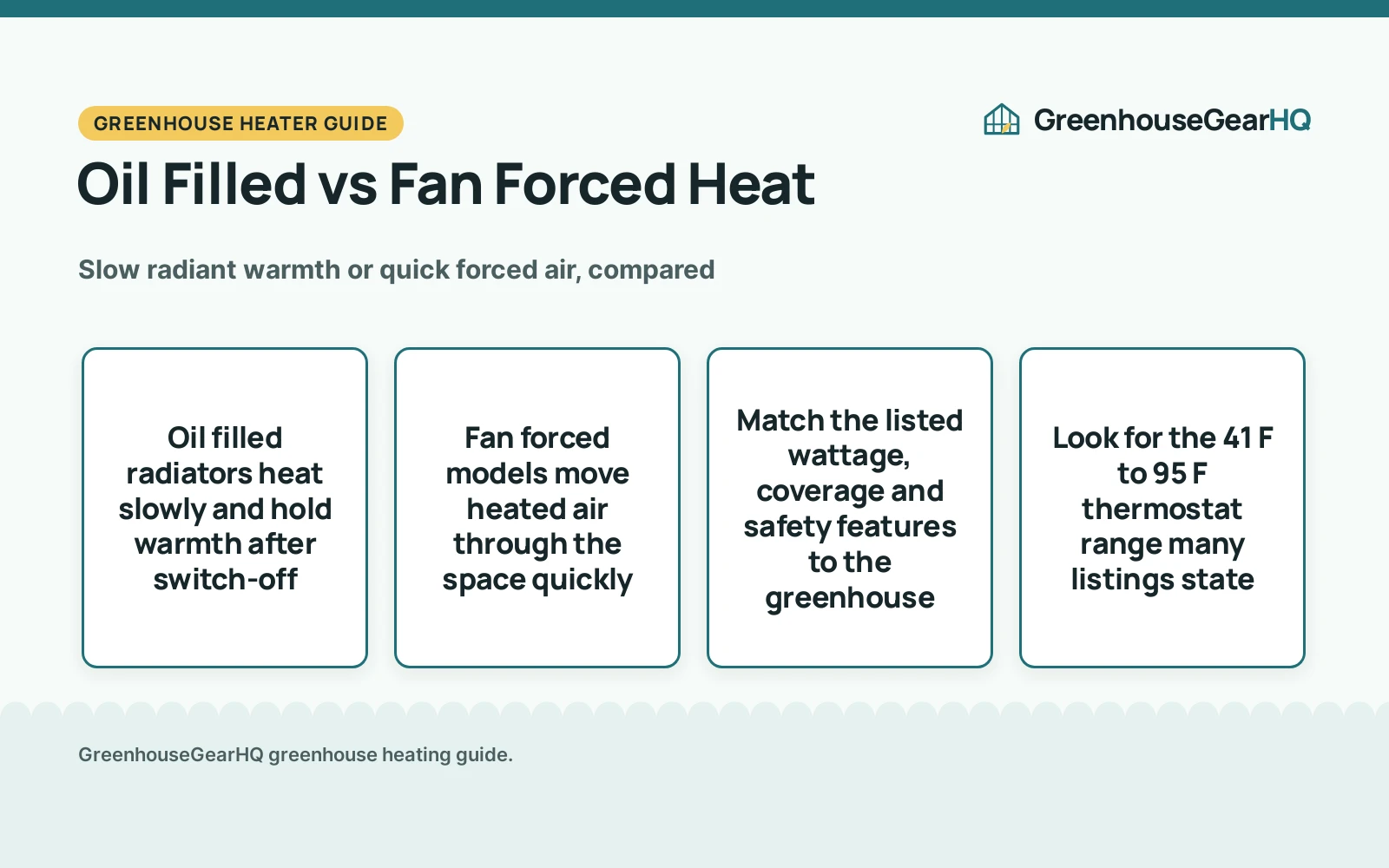
Choosing between an oil filled vs fan forced greenhouse heater comes down to timing: an oil filled radiator gives slow, steady warmth that lingers after switch-off, while a fan forced heater moves heated air through the space for a faster result. If you need overnight frost protection for seedlings, the oil filled style suits the job; if you need to warm the air quickly on a cold morning, fan forced is the more practical pick. This guide compares the two styles using only what current listings state, so you can match a heater type to how you use your greenhouse.
Other options worth a look
 Homeleader Oil Filled Radiator Heater with AdjustableCheck price on Amazon
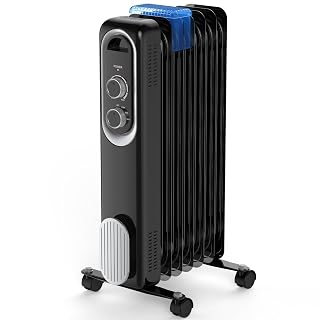 Sweetcrispy Oil Filled Radiator Heater for Indoor Use 1500WCheck price on Amazon
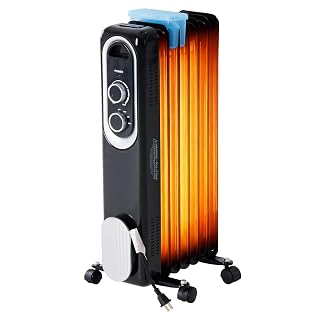 Dumos Oil Filled Radiator Heater with Adjustable ThermostatCheck price on Amazon
 Homeleader Oil Filled Radiator HeaterCheck price on Amazon
GreenhouseGearHQ earns a commission when you buy through links on this page, at no extra cost to you. As an Amazon Associate I earn from qualifying purchases. Affiliate disclosure.
How an oil filled radiator heats
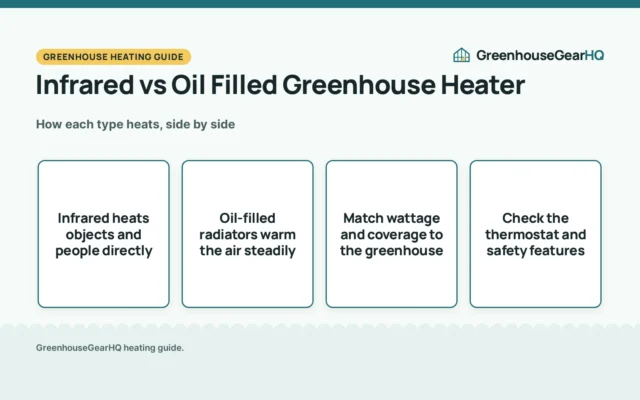
An oil filled radiator is an electric heater with a permanently sealed oil reservoir inside its fins. The oil warms up and the fins give off radiant heat with no fan, so the listings describe these heaters as silent. The De’Longhi EW7707CM lists 1500 watts with three heat settings, and the DREO, PELONIS, Sweetcrispy and Amazon Basics listings give 600W, 900W and 1500W modes plus an eco mode. The defining trait of the style is heat retention: the Amazon Basics listings note that radiator heating keeps releasing warmth after the unit is switched off, and the De’Longhi listing describes gentle heat that minimizes dry air.
The listings also show the practical limits. These heaters weigh more than fan models: the Sweetcrispy listings state 13 pounds, the DREO DR-HSH010 states 17.6 pounds and the De’Longhi states 23.2 pounds. For cold-weather control, the De’Longhi lists an anti-freeze setting that switches the heater on when the temperature dips below 41 F, while the DREO and PELONIS listings state a 41 to 95 F thermostat range adjustable in 1 F increments. On safety, the DREO, Amazon Basics and PELONIS listings state ETL listing with tip-over and overheat protection. Our best greenhouse heater picks compare more oil filled and fan forced models side by side.
How a fan forced heater works
A fan forced heater pairs a heating element with a fan that pushes warm air out into the room. The Dura Heat EUH1465, a forced air model, lists 1500 watts of PTC ceramic heating and 5,120 BTU, with a stated coverage of up to 250 sq ft and a maximum temperature setting of 120 F. It includes a fan-only setting, a pivoting base and overheat shut-off, with a stated weight of 4.4 pounds and a 6 ft power cord, plus a 1-year warranty against manufacturer defects.
The tradeoff is noise and gentleness. A fan moves air and makes sound, while the warm air mixes through the space sooner than radiant heat rising from fins. For a greenhouse that needs a fast warm-up after a cold night, that quick air movement is the main reason to choose this style. See also our fan forced vs convection greenhouse heater comparison for a related style matchup.
Oil filled vs fan forced greenhouse heater: the key differences
| Feature | Oil filled radiator | Fan forced heater |
|---|---|---|
| Heat style | Radiant heat from sealed fins, no fan | Heated air pushed out by a fan |
| Warm-up feel | Slow start, warmth lingers after switch-off | Warm air moves through the space sooner |
| Noise | Silent, with no fan in the listings | Fan noise from the blower |
| Listed weight | 13 to 23.2 lbs across the listings | 4.4 lbs for the Dura Heat EUH1465 |
| Power listed | Usually 1500W, many with 600W/900W modes | 1500W and 5,120 BTU for the Dura Heat |
| Stated safety features | ETL listing, tip-over and overheat protection on several listings | Overheat shut-off on the Dura Heat listing |
What the listings state about safety and placement
Neither style is described in the listings as safe to leave running unattended, so follow the maker’s manual for any heater you buy. The DREO listings name ETL certification, tip-over protection, overheat protection and flame retardant material; the Dura Heat listing states overheat shut-off and a thermostat. One practical warning comes straight from the Sweetcrispy listing: plug the heater directly into a grounded wall receptacle, and never use an extension cord, power strip or multi-plug adapter, since that increases the risk of electrical hazards.
Greenhouse fit is partly stated. The DREO DR-HSH010 lists Garage and Greenhouse in its recommended uses, and the Dura Heat bullets mention use in a greenhouse as well. Remember that a greenhouse is a damp space, and most of these listings state indoor use, so check the listing for your model before placing it among wet benches. A plug in thermostat can add another layer of temperature control if your heater lacks one.
How to choose the right style for your greenhouse
Overnight frost protection
For keeping a greenhouse above freezing through the night, oil filled radiators suit the task. The heat arrives slowly but continues to radiate after the unit cycles off, which fits long cold nights. The De’Longhi anti-freeze setting that switches on below 41 F and the DREO 41 to 95 F thermostat range show how these heaters hold a set temperature without running at full power all night.
Quick warm-ups on cold mornings
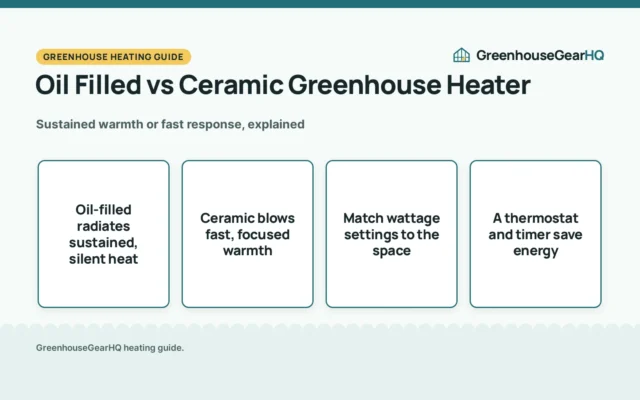
When the plan is to raise the air temperature before work in the greenhouse, a fan forced model answers faster. The Dura Heat EUH1465 states 1500 watts, 5,120 BTU and coverage up to 250 sq ft, and its fan moves the warm air around rather than waiting for it to drift from fins. The fan-only setting also lets the unit move air without heat, which is handy on mild days. See our oil filled vs ceramic greenhouse heater comparison if ceramic elements are also on your list.
Matching power and size
1500 watts is the common rating across both styles, and both the DREO and Dura Heat listings state coverage around 250 sq ft, so compare the stated coverage of any listing against your floor space. Weight matters if the heater moves between rooms: 4.4 lbs for a fan forced unit against 13 to 23.2 lbs for oil filled models in the listings. Finally, count the controls you want: remote control, 24-hour timer and eco mode appear on the DREO and PELONIS listings, while simpler listings like the Homeleader 700W model offer a single knob and a thermostat.
FAQ for growers
Can I leave an oil filled radiator on overnight in the greenhouse?
The listings describe anti-freeze and thermostat features, but none states that a heater is safe to leave running unattended. The De’Longhi lists an anti-freeze setting that switches the heater on below 41 F; follow the maker’s manual for your model.
Is a fan forced heater better for a small greenhouse?
The Dura Heat forced air listing states coverage up to 250 sq ft at 1500 watts and 5,120 BTU, so compare that stated coverage with your floor space. Fan models also circulate air, which suits a greenhouse that needs even air movement.
Which type is quieter?
Oil filled radiators have no fan, so the listings describe them as silent or quiet. The DREO and PELONIS listings mention quiet operation, while a fan forced model uses a blower that makes noise.
Keep reading
See every greenhouse heaters guide and all greenhouse climate guides. Also see our oil filled vs ceramic greenhouse heater comparison. Also see our fan forced vs convection greenhouse heater comparison. Also see our forced air vs radiant greenhouse heater comparison.
More picks: greenhouse heaters and plug in thermostats.