On this page
Top picks at a glance
As an Amazon Associate I earn from qualifying purchases.
- 1
 Shark FlexBreeze Pro Mist 2-in-1 Fan with Integrated Mist9.5/10View on Amazon
- 2
 Air Choice Greenhouse Heater with Digital Thermostat9.7/10View on Amazon
- 3
 DR. INFRARED HEATER DR218-3000W Greenhouse Heater9.6/10View on Amazon
- 4
 Dura Heat EUH1465 Electric Forced Air Heater with PivotingView on Amazon
- 5
 Dura Heat Electric Forced Air HeaterView on Amazon
- 6
 Mr. Heater 50View on Amazon
- 7
 Mr. Heater 125View on Amazon
- 8
 Mr. Heater 80View on Amazon
- 9
 Dura Heat EUH4000R Electric Forced Air Heater with RemoteView on Amazon
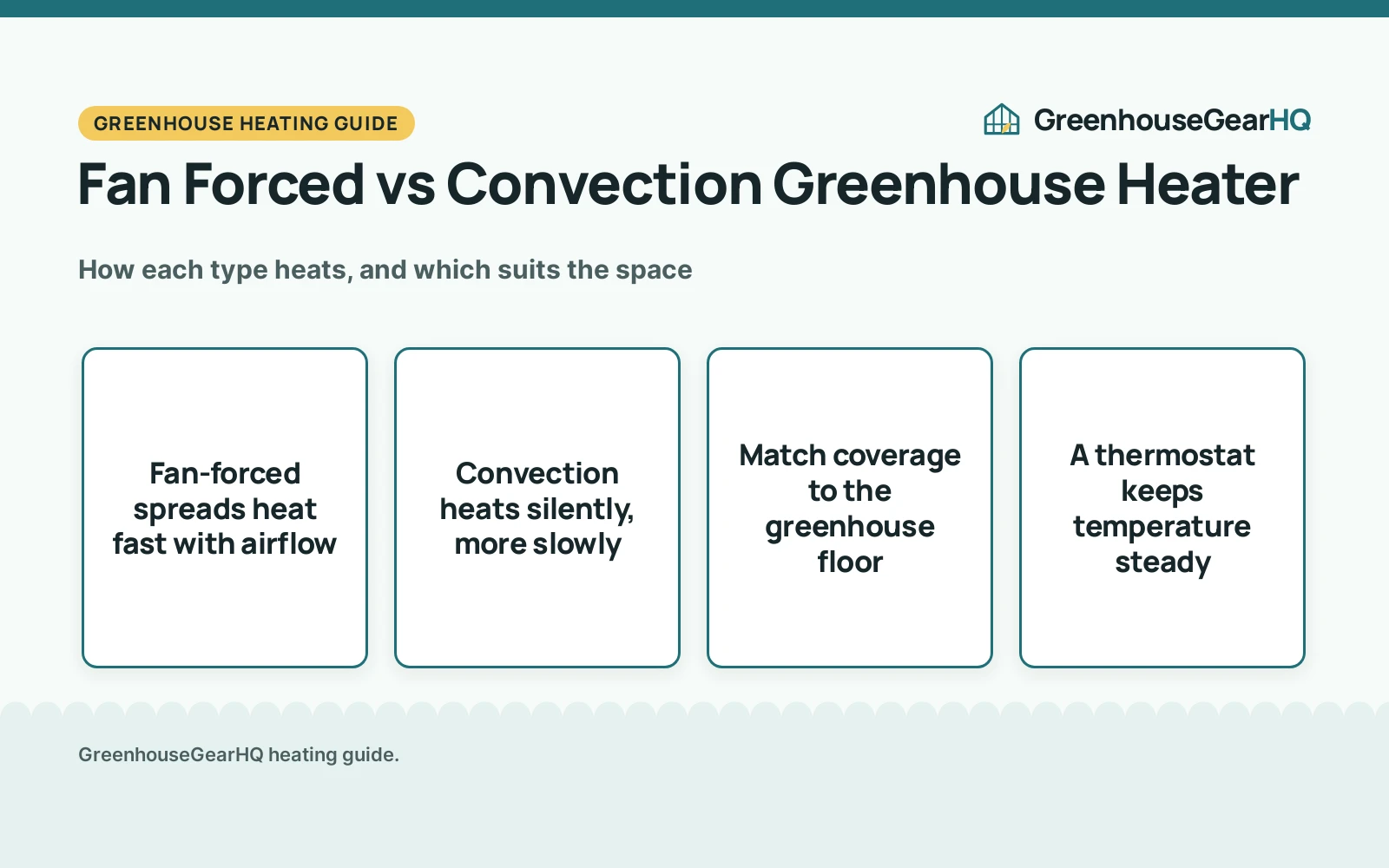
A fan-forced greenhouse heater blows air across a heating element to spread heat quickly through the space; a convection heater warms the air around it and lets it rise on its own, heating more slowly and silently. Pick fan-forced for fast, even heat across a larger floor; pick convection for quiet, steady warmth in a small space. This guide explains how each type works, what the listings state, and which suits a given greenhouse.
Other options worth a look
 Dura Heat EUH1465 Electric Forced Air Heater with PivotingCheck price on Amazon
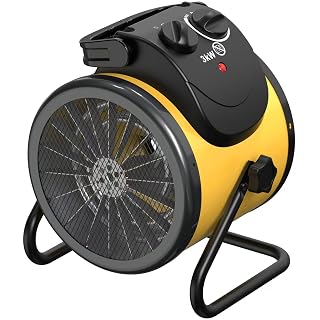 Dura Heat Electric Forced Air HeaterCheck price on Amazon
 Mr. Heater 50Check price on Amazon
 Mr. Heater 125Check price on Amazon
 Mr. Heater 80Check price on Amazon
 Dura Heat EUH4000R Electric Forced Air Heater with RemoteCheck price on Amazon
GreenhouseGearHQ earns a commission when you buy through links on this site, at no extra cost to you. As an Amazon Associate I earn from qualifying purchases. Affiliate disclosure.
Fan forced vs convection greenhouse heater: how they work
A fan-forced heater, sometimes called forced air, uses a fan to push room air over a hot element and out into the space. The BioGreen PALMA listing describes exactly this: an electric greenhouse heater and fan with a digital thermostat, moving 5800 ft³/h at 1500 watts. A convection heater has no fan; the element warms nearby air, which rises and draws cooler air in from below, creating a slow natural loop. The difference is speed and sound: forced air distributes heat in minutes and makes fan noise, while convection is silent but takes longer to warm the same space.
Heat output and coverage
Every listing here is electric at 1500 watts on high, with most offering a 750-watt low setting. Stated heat output runs 5100 BTU/hr on the BioGreen PALMA and 5,120 BTU on the Dura Heat EUH1465 and EUH1500. Stated coverage varies: the BioGreen covers 120 square feet, one listing covers around 160 square feet, and the Dura Heat listings heat up to 250 square feet. Match the listing’s coverage figure to the greenhouse floor, not the wattage alone, since 1500 watts is standard across all of them. Several listings add a fan-only or standby mode at 20 or 25 watts for air circulation without heat.
Noise and moving air
Fan-forced heat comes with airflow, which is both a benefit and a drawback. The moving air evens out hot and cold spots, which matters in a greenhouse where one corner can freeze while another bakes. It also dries the air faster, so plants that like humidity may need misting. Convection heaters avoid both issues: no fan means no noise and gentler air, but heat pools near the ceiling while the floor stays cool. None of the listings here states a decibel figure, so noise cannot be compared from the listings; expect any fan-forced unit to hum and any convection unit to run silent.
Thermostats and safety
A thermostat decides how steady the temperature stays. The BioGreen PALMA listing includes a digital thermostat that automatically starts and stops the heat; the Fanspex listing has a thermostat knob that turns the heater on and off at the set temperature. Listings here also mention overheat shut-off and tip-over protection on the Fanspex, which are worth checking on any heater placed near plants and soil. The Fanspex listing states a 1-year manufacturer warranty; the other listings in this guide state no warranty term. Place any heater where falling water cannot reach it, keep clearance around the element, and never leave a heater running unattended without a thermostat.
Which should you choose?
Choose fan-forced when the greenhouse is large or drafty and needs heat spread fast: the 250-square-foot coverage on the Dura Heat listings shows the use case. Choose convection when the space is small, quiet matters, or seedlings sit close to the heater and dislike blasts of dry air. For most hobby greenhouses, a fan-forced unit with a thermostat, like the BioGreen PALMA with its digital thermostat and 5800 ft³/h airflow, covers both heat and circulation in one box. Check the standby or fan-only wattage too: several listings here run the fan alone at 20 or 25 watts, which lets the same unit circulate air in mild weather without burning 1500 watts of heat. If the greenhouse already has good air movement from vents or fans, a convection heater adds warmth without extra drying.
FAQ for growers
Is a fan-forced heater better for a greenhouse?
It spreads heat faster and evens out cold spots; the BioGreen PALMA example moves 5800 ft³/h. For a small, quiet space, convection works fine.
How big a heater do I need?
Listings here state 120 to 250 square feet of coverage at 1500 watts. Match the listing’s coverage figure to the greenhouse floor.
Do these heaters have thermostats?
The BioGreen lists a digital thermostat and the Fanspex lists a thermostat knob. Not every listing includes one, so check before buying.
Are fan-forced heaters noisy?
The fan makes some noise, while convection heaters run silent. No listing here states a decibel figure, so noise cannot be compared from the listings.
Keep reading
See every greenhouse heaters guide and all greenhouse climate guides.
More picks: best greenhouse heater and geothermal vs propane greenhouse heater.