On this page
Top picks at a glance
As an Amazon Associate I earn from qualifying purchases.
- 1
 EAGLE PEAK 8x8 Pop Up Greenhouse9.8/10View on Amazon
- 2
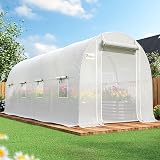 KING BIRD 15x7x7 Walk-in Greenhouse9.8/10View on Amazon
- 3
 Outsunny 20x10x7 Walk-in Greenhouse9.8/10View on Amazon
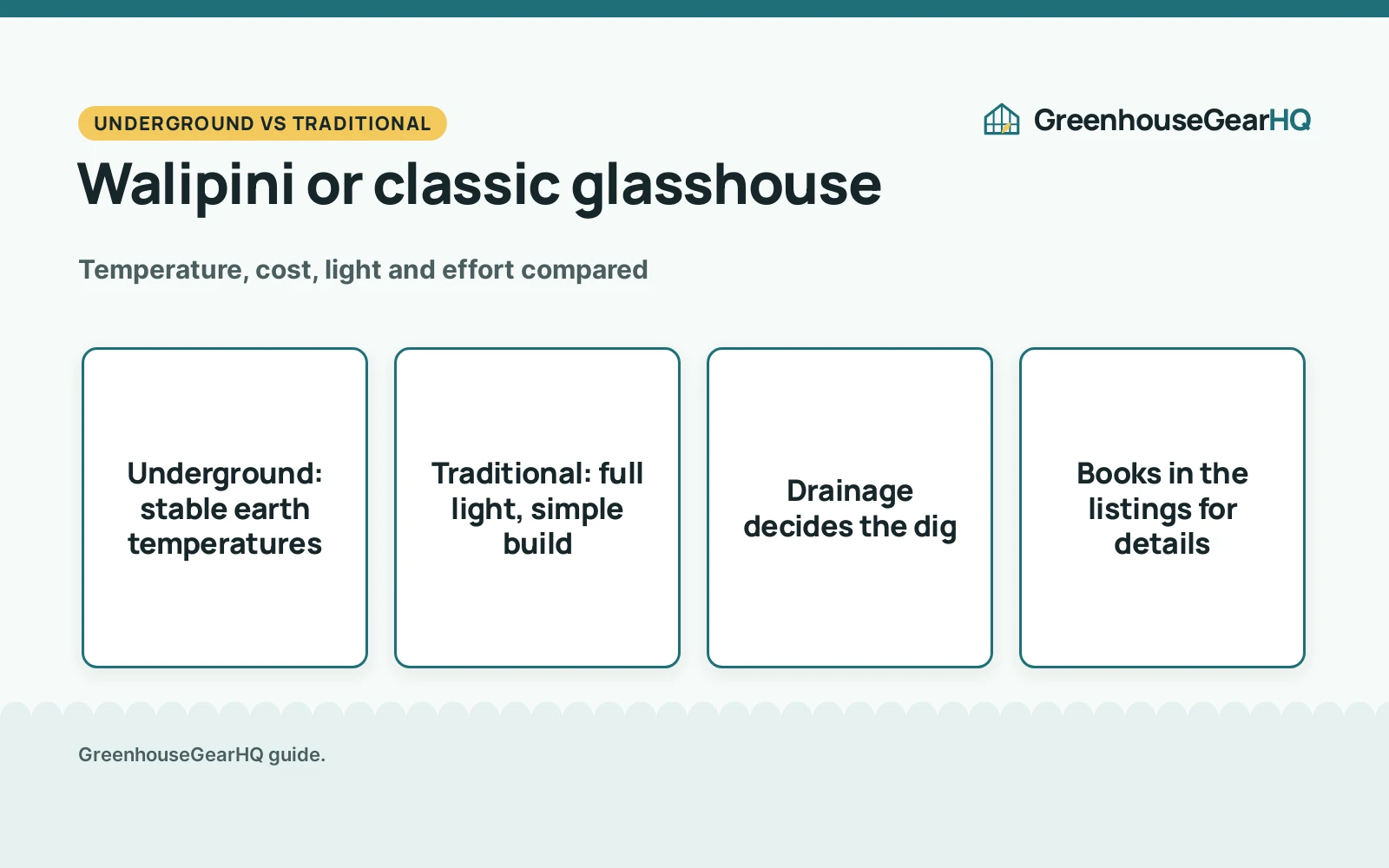
Underground greenhouse vs traditional greenhouse comes down to where the growing happens: an underground greenhouse, often called a walipini, is dug into the earth to borrow its stable temperature, while a traditional greenhouse stands above ground on light and air. Underground houses stay warmer in winter and cooler in summer with little heating; traditional houses are cheaper to build and easier to work in. The listings here are greenhouse books, not structures, so this guide explains both from general knowledge and points you to the books for build details. Choose underground for year-round growing on stable temperatures; choose traditional for simplicity and light.
GreenhouseGearHQ earns a commission when you buy through links on this page, at no extra cost to you. As an Amazon Associate I earn from qualifying purchases. Affiliate disclosure.
What an underground greenhouse is
An underground greenhouse is excavated into the ground, with only the roof glazing above grade. The earth’s thermal mass keeps the interior far more stable than the outside air: warmer on winter nights, cooler on summer days. Mike Oehler’s The Earth Sheltered Solar Greenhouse Book in the listings is the classic text on the concept. The tradeoff is the dig itself: excavation, drainage and retaining walls make this a serious construction project, not a weekend kit.
What a traditional greenhouse is
A traditional greenhouse is an above-ground glazed structure: frame, transparent cover, door, vents. It is the shape everyone pictures, and it goes up fast from a kit or simple framing. The listings hold several build guides, including The Year-Round Solar Greenhouse and Greenhouse Gardening for Beginners. Traditional houses win on light: full sun on every side, where an underground house gets light only through the roof. They lose on temperature stability and need heating in cold climates.
Temperature and growing season
This is the underground greenhouse’s whole reason to exist. Below the frost line, soil temperature barely moves through the year, so a walipini can keep growing through winters that shut down a traditional house. A traditional greenhouse follows the outside air much more closely: glorious on a sunny March day, freezing on a clear January night without heat. If your goal is true year-round growing without a heater, underground is the only passive option.
Cost, drainage and effort
Traditional wins on build simplicity: no excavation, no retaining walls, no drainage engineering. Underground wins on running cost but demands serious upfront work: the hole must drain, or you have built a pond. Water management decides the project: a high water table or poor drainage rules out underground entirely. The Chinese Greenhouse in the listings covers the low-cost passive solar approach that splits the difference.
Underground greenhouse vs traditional greenhouse: which suits you
Match the house to the site and the ambition. Got a well-drained slope, a big dream and a backhoe budget: the underground greenhouse gives you year-round growing on stable earth temperatures. Want to start growing this season with a kit: the traditional greenhouse is up in a weekend and grows plenty nine months a year. Renters and the cautious should always choose traditional; only owners with the right soil should dig.
Light deserves its own warning. An underground greenhouse gets sun only through its roof glazing, so orientation is everything: face the glazing at the winter sun and keep it clear of snow and shade. A traditional house is forgiving by comparison, catching light from every side. If your site is shaded or far north, the traditional house’s light advantage may outweigh the walipini’s temperature advantage. Walk the site in December before you decide.
FAQ for growers
What is a walipini?
A walipini is an underground greenhouse dug into the earth, using soil thermal mass to stabilize temperature for year-round growing.
Do underground greenhouses need heating?
Far less than traditional ones: the earth’s stable temperature does most of the work. In very cold climates some supplemental heat still helps on the coldest nights.
Can I build an underground greenhouse anywhere?
No. You need well-drained soil and a low water table; otherwise drainage becomes the project. Traditional greenhouses work on any level site.
Permits are the unglamorous decider. A traditional kit greenhouse often needs little more than a level site, while an excavated structure with retaining walls can trigger building permits, inspections and setback rules. Check with the local building department before renting the excavator: the paperwork can cost more than the digging.
Which is cheaper to build?
The traditional greenhouse: no excavation or retaining walls. The underground house costs more upfront but less to heat.
Whichever you build, start with the books: the listings here include dedicated guides to both approaches, and an evening of reading beats a season of rebuilding.
Keep reading
See every greenhouse guide and all light and heat guides.
More picks: attached vs detached greenhouse, geodesic dome vs A frame greenhouse and high tunnel vs caterpillar tunnel.