On this page
Top picks at a glance
As an Amazon Associate I earn from qualifying purchases.
- 1
 HOWE 14x9.5x9 FT Polycarbonate Greenhouse for Outdoors9.7/10View on Amazon
- 2
 YITAHOME 6x16FT Polycarbonate Greenhouse Large Heavy DutyView on Amazon
- 3
 8 x 10 FT Outdoor Polycarbonate GreenhouseView on Amazon
- 4
 Outsunny 6 x 8 FT Walk-in Polycarbonate Greenhouse forView on Amazon
- 5
 Outsunny 6 x 4 FT Walk-in Polycarbonate Greenhouse forView on Amazon
- 6
 Outsunny 6 x 10 FT Walk-in Polycarbonate Greenhouse forView on Amazon
- 7
 Outsunny 8' x 6' Greenhouse for OutdoorsView on Amazon
On the first warm weekend of March you carry the seed trays out to the new greenhouse frame and realize the glazing matters more than the frame color. Polycarbonate vs glass greenhouse is the decision that shapes everything after: how light reaches the leaves, how cold the nights get inside and how the structure handles the first hailstorm. This guide compares the two materials using figures from current greenhouse listings, so you can match the glazing to your climate and your appetite for upkeep.
Other options worth a look
 YITAHOME 6x16FT Polycarbonate Greenhouse Large Heavy DutyCheck price on Amazon
 8 x 10 FT Outdoor Polycarbonate GreenhouseCheck price on Amazon
 Outsunny 6 x 8 FT Walk-in Polycarbonate Greenhouse forCheck price on Amazon
 Outsunny 6 x 4 FT Walk-in Polycarbonate Greenhouse forCheck price on Amazon
 Outsunny 6 x 10 FT Walk-in Polycarbonate Greenhouse forCheck price on Amazon
 Outsunny 8' x 6' Greenhouse for OutdoorsCheck price on Amazon
GreenhouseGearHQ earns a commission when you buy through links on this page, at no extra cost to you. As an Amazon Associate I earn from qualifying purchases. Affiliate disclosure.
Polycarbonate vs Glass Greenhouse at a Glance
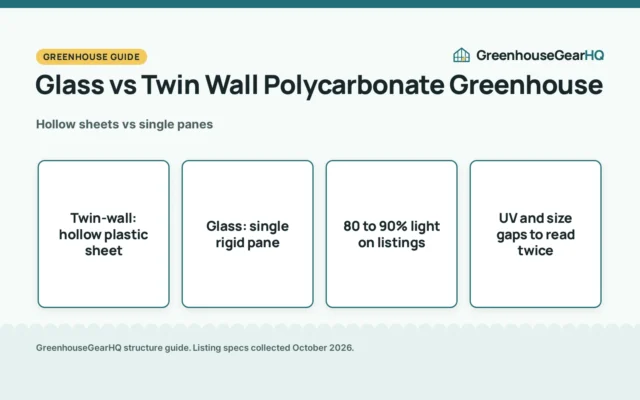
Polycarbonate panels are the ones makers build into most ready-made kits: YITAHOME lists 4mm double-wall panels that block 99% of UV on its 6x16FT house, and Sylviera lists 4mm, 580g double-wall panels on its 10×12 and 8×14 models. Glass gives the clearest view and the most direct light, but it shatters on a hard impact while polycarbonate flexes.
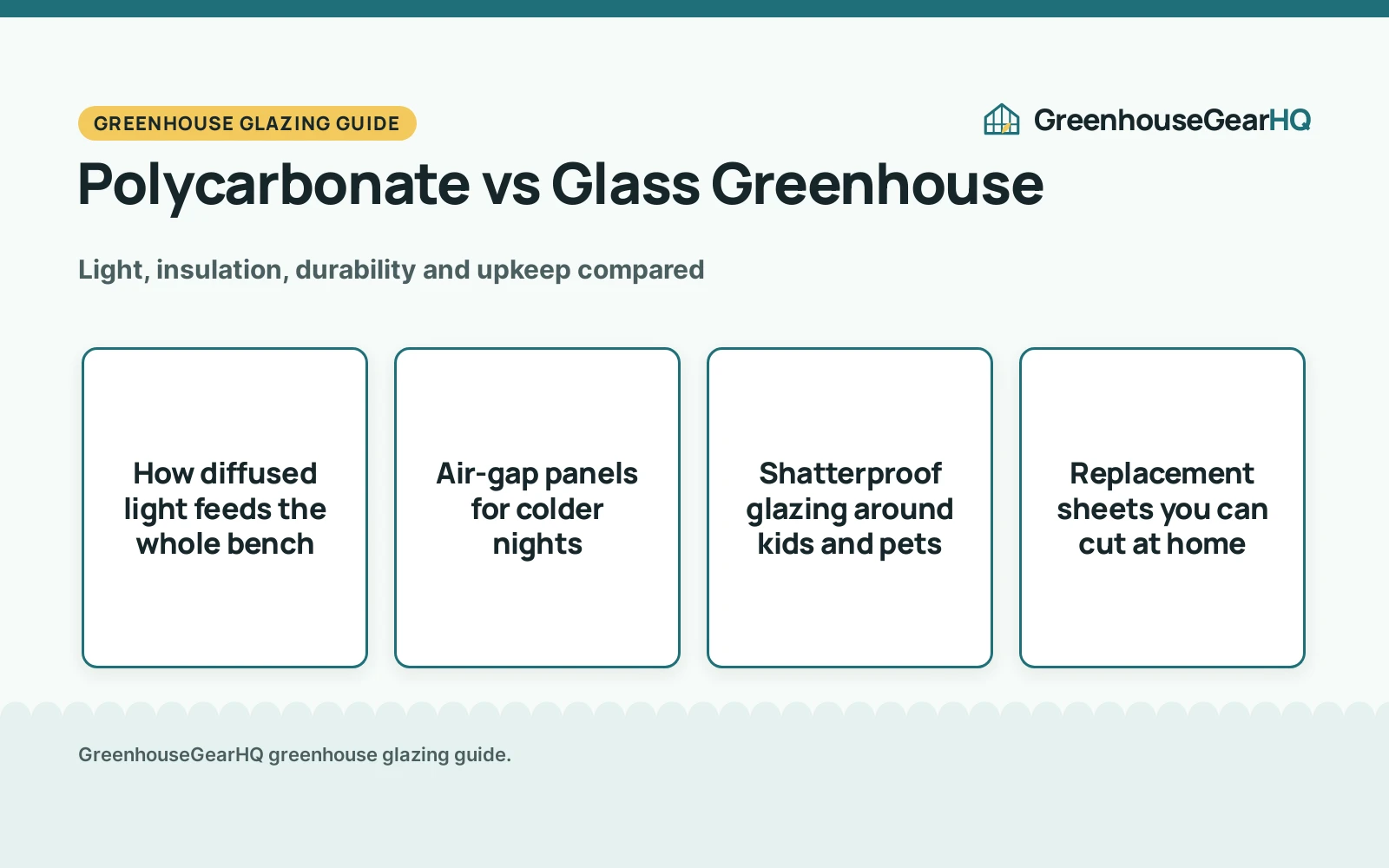
- Light: polycarbonate listings state over 90% light transmittance with diffused sunlight; glass admits direct, undiffused light.
- Insulation: twin-wall and double-wall panels trap air between layers for steadier temperatures; single glass panes lose heat faster.
- Durability: one panel maker claims impact resistance 200 times that of glass, and several kit makers list shatterproof, UV-protected panels.
- Upkeep: polycarbonate replacement sheets come in standard sizes you can cut at home; glass panes need careful handling and sized replacements.
Light: Diffusion Against Clarity
Plants care about how much light arrives and how evenly it spreads. EVERECO lists over 90% light transmittance with a UV coating that blocks 99% of UV rays, and Sinimaka lists 89% light transmission with a coating that blocks 99.9% of UV on its 0.24-inch twin-wall sheets. HOOYEAH lists semi-translucent, milky white panels that diffuse sunlight evenly for vegetables, herbs and flowers. Diffused light reaches the lower leaves instead of casting hard shadows, which helps on bright July afternoons when direct sun can scorch tender starts.
Glass wins on clarity: the pane does not diffuse, so the view stays crystal clear and every ray arrives direct. The tradeoff is hot spots, since the bright patch that warms the bench in the morning can overheat it by midday. No figures are stated for glass, so judge a glass kit on its maker’s own claims and your need for an unobstructed view.
Insulation and Cold-Weather Use
Twin-wall and double-wall polycarbonate panels hold a layer of air between their walls. Sylviera lists 4mm thick, 580g double-wall panels on its 10×12 and 8×14 greenhouses and describes them as maintaining a stable interior temperature, while Jiliusure lists double-wall panels that provide better insulation for more stable temperatures. Sinimaka and EVERECO both list a service range of minus 40 degrees C to 120 degrees C for their replacement sheets. That air gap is the reason polycarbonate is the usual pick for late-winter seed starting and for growers who keep the house running through frost nights.
Glass is a single solid pane with no air gap, so heat escapes faster after sunset. In a mild climate that matters little; in a cold one it means a shorter season or more fuel for the heater. Our polycarbonate vs polyethylene guide compares two plastic glazings if weight matters to you.
Strength, Wind and Safety
This is where the two materials diverge most. EVERECO states its polycarbonate sheets have an impact resistance 200 times that of glass, and Jiliusure describes its double-wall panels as shatterproof, UV-protected and impact resistant, and safer for families and pets. Reljofum lists a 50 mph wind rating and a 40 KGS/SQM snow load capacity on its 8×16 polycarbonate greenhouse. Hail, falling branches and a runaway wheelbarrow are the everyday hazards these figures answer.
Glass cannot match that toughness: one hard strike can crack a pane or send shards down, so glass houses call for placement away from play areas and a check after every storm. YITAHOME advises moving precious items out of its polycarbonate house in bad weather and staying out of it during storms, which is sound advice for any glazing.
Upkeep, Weight and Replacements
Polycarbonate is the easier material to live with and to fix. EVERECO lists 6-foot by 2-foot by 0.24-inch sheets that cut to size with a utility knife, and Sinimaka lists 8-foot by 4-foot by 0.24-inch twin-wall sheets in a 10-pack for replacements and DIY builds. EVERECO states its coating resists yellowing and aging, which answers the most common worry about plastic glazing. Clean the panels with water and a soft cloth, since abrasive pads can scratch the UV coating.
Glass needs no coating care and does not yellow, but it is heavy to handle and a broken pane means ordering a cut-to-size replacement rather than trimming a sheet on the bench. That is why the kit makers compared here pair aluminum frames with polycarbonate: Sylviera, Jiliusure, Garvee and HOOYEAH all list aluminum frames with polycarbonate panels, keeping assembly a two-person job.
What This Guide Does Not Cover
We do not quote prices or recommend a glass thickness, because the listings compared here publish neither. Frame choice matters as much as glazing: our wood vs aluminum guide and our aluminum vs galvanized steel guide compare the frames these panels sit in. For the ventilation both glazings need, see our greenhouse fan for summer heat picks.
FAQ for growers
Is polycarbonate better than glass for a cold climate?
Usually, yes. Double-wall and twin-wall polycarbonate panels trap air between layers: Sylviera’s 10×12 house lists 4mm, 580g double-wall panels, and replacement sheets list a service range down to minus 40 degrees C. Glass has no air gap, so it loses heat faster after dark.
Does polycarbonate block UV light?
The listings state UV protection across brands: YITAHOME lists 4mm panels that block 99% of UV, EVERECO lists a UV coating that blocks 99% of UV, and Sinimaka lists a coating that blocks 99.9% of UV on its twin-wall sheets.
How strong is polycarbonate compared to glass?
EVERECO states its sheets have an impact resistance 200 times that of glass, and Jiliusure calls its double-wall panels shatterproof. Glass can crack or shatter from a single hard impact, while polycarbonate panels flex and keep the house enclosed.
Can I replace broken glass with polycarbonate sheets?
Replacement sheets are made for that job. EVERECO lists 6-foot by 2-foot by 0.24-inch sheets and Sinimaka lists 8-foot by 4-foot by 0.24-inch sheets, and EVERECO notes they cut to size with a utility knife. Match the thickness to your frame’s channels before you order.
Keep reading
See every Polycarbonate Greenhouses guide and all Greenhouses guides. Also see our polycarbonate vs acrylic comparison. Also see our hoop house vs greenhouse guide. Also see our cold frame vs mini greenhouse guide.
More picks: greenhouses for tight budgets, polycarbonate vs polyethylene, walk-in greenhouses and wood vs aluminum.